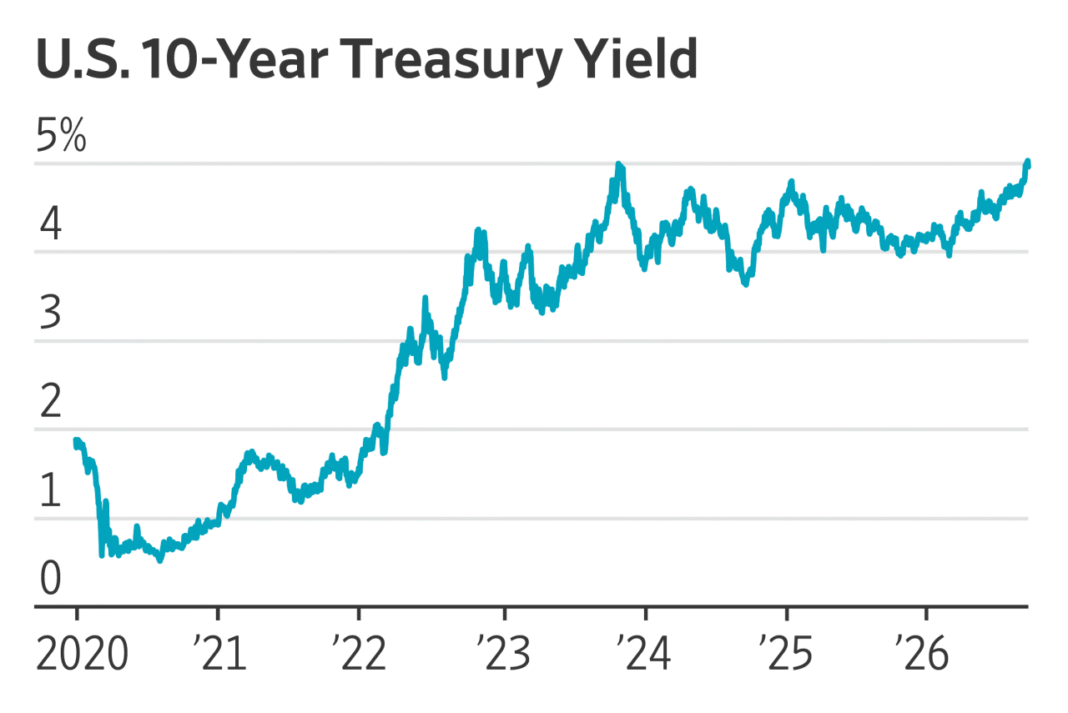
The 10-year Treasury yield has climbed back toward 5%, a level it last reached in 2023. Its path over the past five years has been unusually turbulent. The yield now sits near the top of its post-2020 range.
The pandemic triggered the first shock. In early 2020, the yield fell below 1% as investors rushed into safe assets. Massive Federal Reserve bond purchases pushed rates even lower.
Inflation returned in 2021 and 2022, forcing the Fed to raise interest rates at the fastest pace in decades. The 10-year yield surged past 4% for the first time since 2010.
War in Ukraine added pressure in early 2022. Rising energy and food prices deepened inflation fears. Bond investors demanded higher yields to offset the risk of persistent price growth.
Government deficits have also weighed on the market. Heavy borrowing by the U.S. Treasury increases the supply of bonds. More supply typically requires higher yields to attract buyers.
The yield briefly touched 5% in October 2023, then retreated as inflation cooled. It fell below 4% in 2024 before rebounding on stronger economic data. Each move has reflected shifting expectations for growth and policy.
A return to 5% would mark the highest level since 2007. That threshold matters because it raises borrowing costs for mortgages, corporate debt and credit cards. It also signals that the era of ultra-low rates remains firmly over.