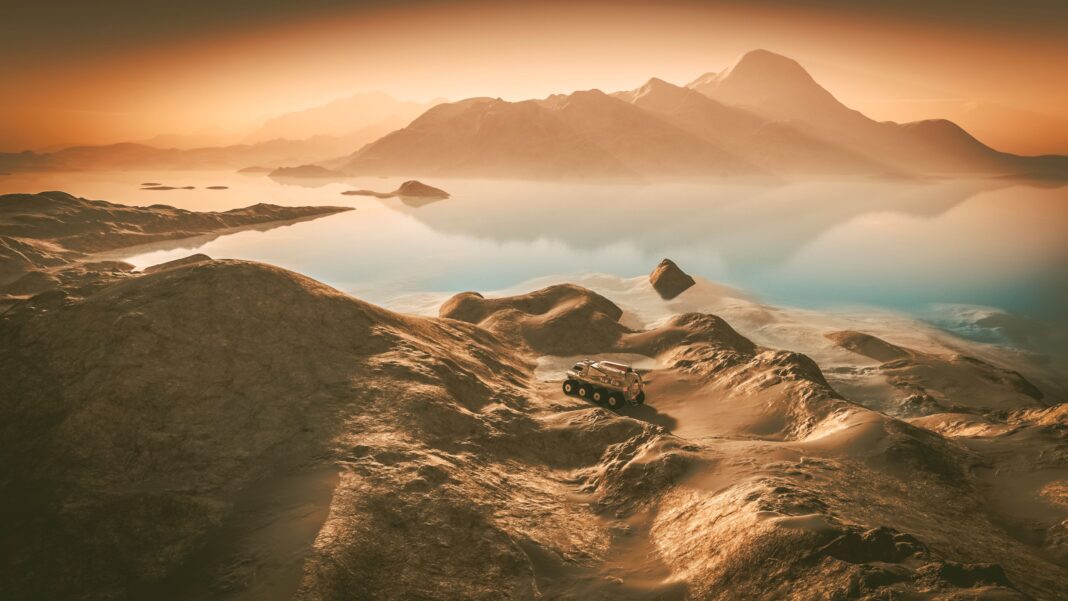
Scientists have identified a 4.1-billion-year-old Martian meteorite found in the Sahara Desert. The ancient fragment offers rare insight into the planet’s watery past.
Researchers describe the space rock as a “Rosetta Stone for Mars.” It preserves chemical clues about how the Martian environment has changed over billions of years.
The meteorite formed during the solar system’s earliest chapters. Its age makes it one of the oldest known samples of Mars ever recovered on Earth.
Laboratory analysis revealed signs of interaction with liquid water. The findings suggest Mars once held conditions far wetter than its current dry surface.
Scientists study such fragments because rovers can only examine a small fraction of the planet. Meteorites deliver a broader sample of Martian material directly to researchers.
The rock’s composition helps trace the timeline of volcanic activity and water loss on Mars. Each layer of evidence adds detail to the planet’s environmental history.
Findings like this refine models of planetary evolution across the solar system. They also guide future missions searching for signs of ancient habitability.
The study underscores the value of meteorite recovery in remote regions. Sahara finds continue to supply science with rare and well-preserved Martian samples.