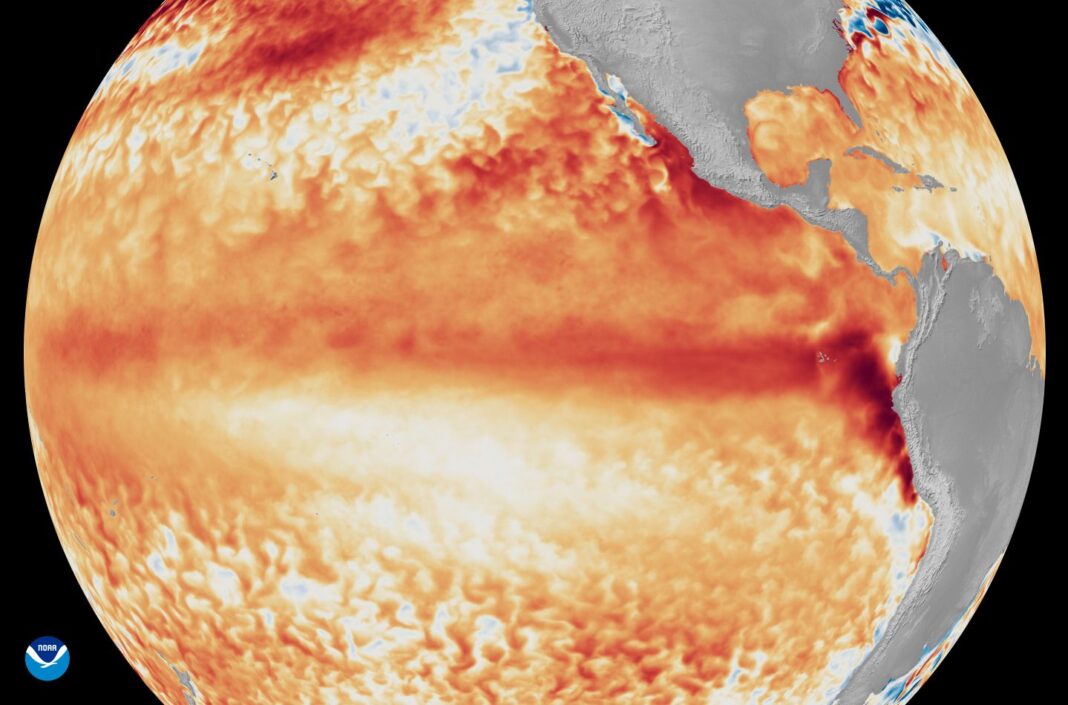
A powerful El Niño pattern is developing in the Pacific Ocean, raising the possibility of a “super El Niño” that could significantly disrupt global weather systems. Scientists are closely monitoring rising sea surface temperatures, which have already exceeded key thresholds. This natural climate phenomenon occurs when trade winds weaken, allowing warm water to shift eastward toward the coast of South America.
The current event is intensifying faster than many models initially predicted. If it continues to strengthen, it could rival the strongest El Niños on record, such as those in 1997 and 2015. These past events led to widespread flooding, droughts, and disruptions to agriculture and economies worldwide. The potential for similar impacts is now a focus for meteorologists and disaster preparedness agencies.
One of the most immediate effects in the United States would be a wetter winter across the Southwest. California and other parts of the region could see above-average rainfall, which may ease drought conditions but also raise the risk of flooding and mudslides. The change in atmospheric circulation patterns drives this shift, pulling moisture from the Pacific.
Conversely, the formation of Atlantic hurricanes could be suppressed during a strong El Niño. Increased wind shear in the tropical Atlantic tends to tear apart developing storms, reducing the overall number of hurricanes. This does not guarantee a quiet season, but it historically lowers the odds of major landfalls along the Gulf and East Coasts.
For other parts of the world, the consequences are more severe. Southeast Asia and Australia typically experience drier conditions, which can lead to droughts and wildfires. In 2015, Indonesia saw devastating fires linked to El Niño-driven dryness. Meanwhile, parts of eastern Africa may face heavier rains, increasing the risk of flooding and landslides.
The economic and social stakes are high. Global food production can suffer as farming regions adapt to unpredictable rainfall patterns. Commodity prices often fluctuate, and governments must prepare for potential humanitarian crises. Key sectors like energy, water management, and insurance are also watching the developing pattern closely.
While scientists cannot yet confirm a super El Niño, the odds are increasing. The World Meteorological Organization and other agencies continue to update their forecasts. Preparation and early warnings remain critical to mitigating the worst impacts. Understanding these dynamics helps communities and policymakers make informed decisions as the weather system evolves.