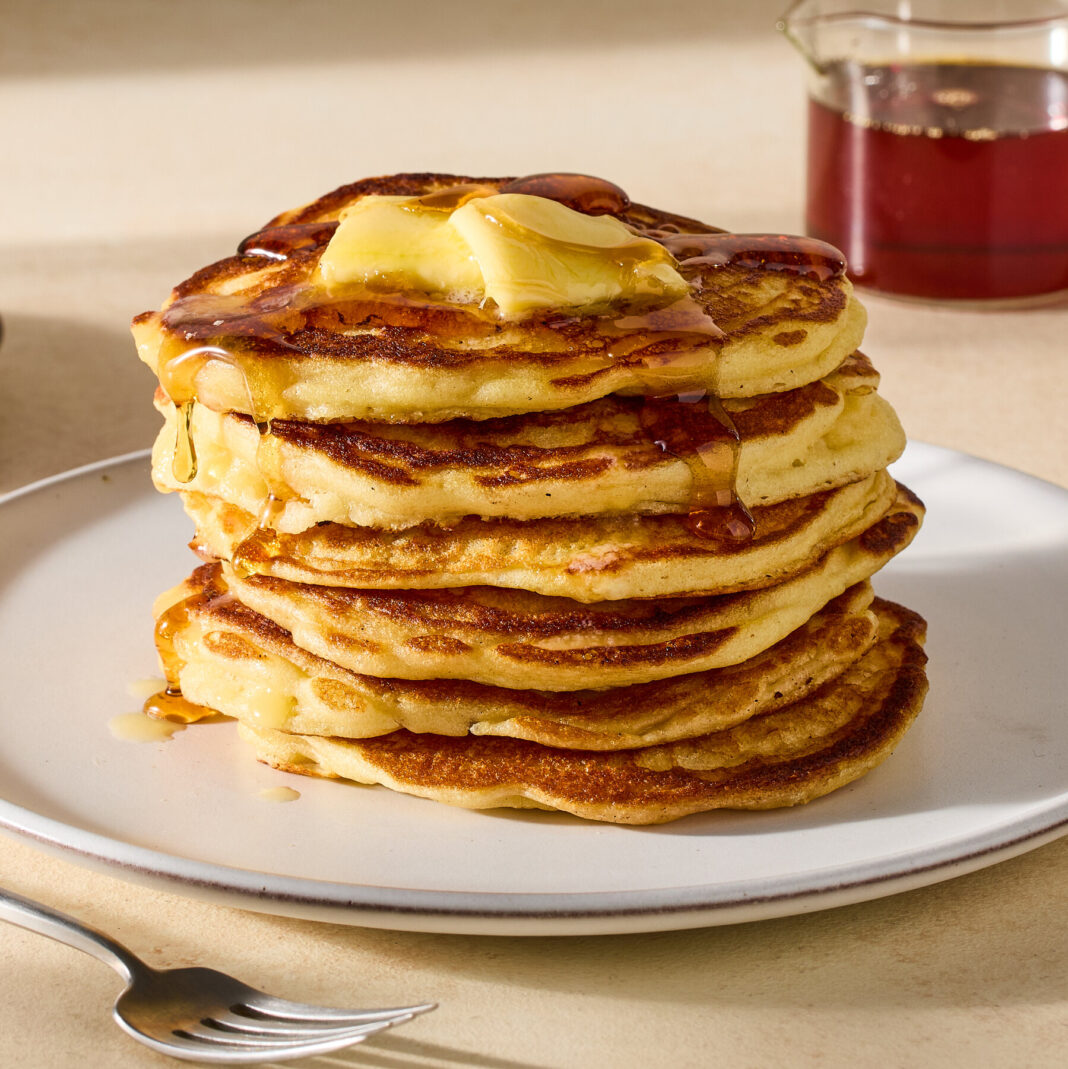
Simple adjustments can transform an average pancake into something far more impressive. Overmixing the batter is a frequent mistake that creates dense, tough pancakes. A few lumps left in the mixture are acceptable and often lead to a fluffier texture.
Letting the batter rest for several minutes before cooking allows the gluten to relax. This short pause results in lighter, more tender pancakes. Another common error involves flipping pancakes too early. Bubbles forming on the surface and edges appearing set signal the right moment to turn.
The pan’s temperature also plays a critical role. A medium heat works best, as high heat burns the outside before the inside cooks through. Testing with a small drop of batter helps gauge the ideal warmth.
Milk and butter should be at room temperature for even mixing. Cold ingredients cause the batter to seize, affecting rise and consistency. Sour milk or buttermilk adds acidity, which reacts with leavening agents for extra lift.
Overcrowding the pan leads to uneven cooking and steam buildup. Leaving space between each pancake allows heat to circulate properly. Cooking in batches ensures consistent golden-brown results.
A final trick involves adding a touch of vanilla or a pinch of salt to enhance flavor without overpowering the batter. Small refinements like these elevate the final dish without adding complexity.