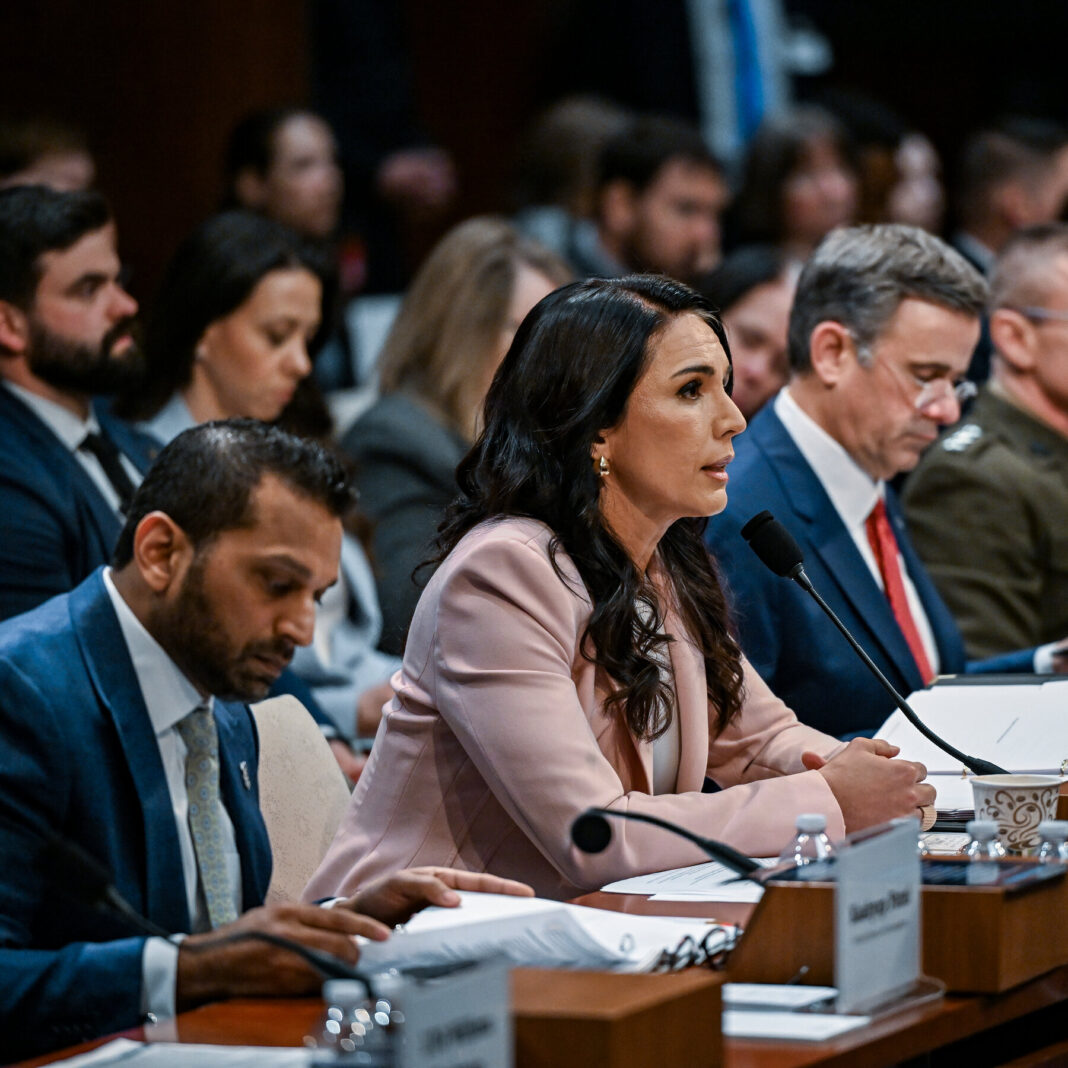
The director of national intelligence’s office was created in the aftermath of the Sept. 11 attacks. Now some lawmakers want to shrink it.
The debate has resurfaced following President Trump’s latest pick to lead the office. The nomination has reignited questions about the agency’s size and purpose.
Critics argue the office adds bureaucratic layers without improving intelligence coordination. They claim it has become an unnecessary middleman between agencies and the White House.
Supporters contend the position is essential for integrating intelligence across 18 separate agencies. They warn that cutting it could hinder national security efforts and risk repeating past failures.
The office was established in 2004 to address intelligence failures leading up to the 9/11 attacks. Its mandate was to ensure better communication and oversight among agencies like the CIA and FBI.
Some lawmakers are now proposing legislation to reduce the office’s budget or eliminate it entirely. Others advocate for revising its role rather than dismantling the structure completely.
The current administration has yet to take a formal stance on the proposed changes. The debate is expected to continue as Congress reviews the nominee’s qualifications and vision.
Ultimately, the decision will impact how the United States gathers and analyzes threat information. It also raises broader questions about balancing efficiency with accountability in national security.