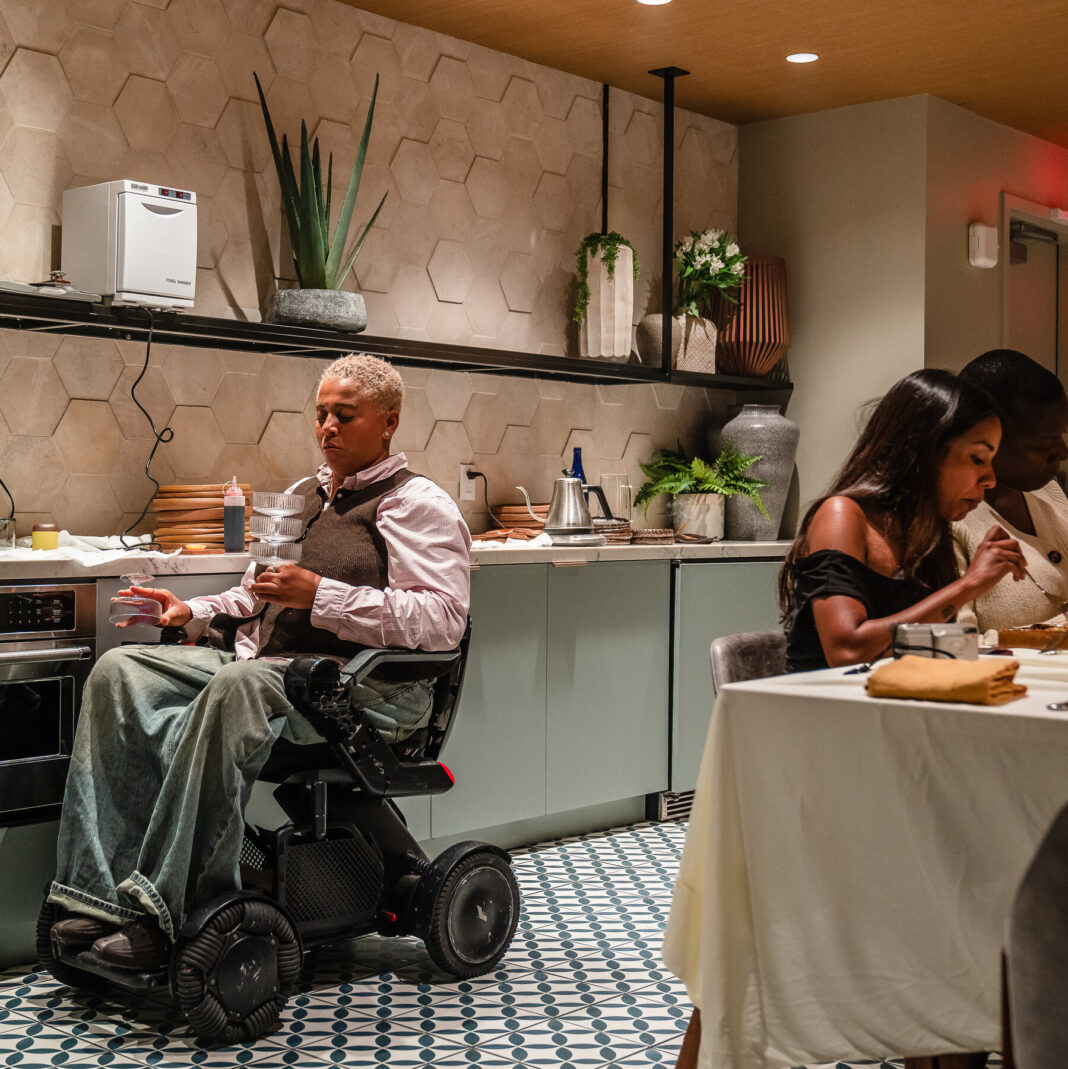
Lay Alston planned to spend her career as a performing artist. A spinal cord injury changed that path, leaving her unable to walk. She then turned to her first love: gathering people for dinner.
Alston now works as a chef focused on accessibility. She cooks meals that accommodate a range of dietary needs and physical limitations. Her approach aims to remove barriers from the dining experience.
The chef’s kitchen is designed for mobility challenges. Counters are set at lower heights. Tools and ingredients are within easy reach. Every element prioritizes ease of use for cooks with disabilities.
Alston also considers the guest’s experience. She tests table heights for wheelchair access. She ensures serving dishes are easy to pass. Her meals avoid complicated plating that requires dexterity.
Her menu adapts to common dietary restrictions. She uses clear labels for allergens. Substitutions are offered without stigma. The goal is that no guest feels left out or burdensome.
Alston’s work extends beyond her own kitchen. She consults with restaurants on inclusive design. She teaches cooking classes for people with disabilities. Her mission is to change how the food industry approaches accessibility.
The chef believes food can build community. She recalls her own isolation after her injury. Gathering people for a meal helped her reconnect. She says everyone deserves that opportunity.
Her story challenges assumptions about ability. A chef in a wheelchair may seem unusual. Alston proves that a passion for food does not require mobility. Her career is a testament to adaptation and creativity.