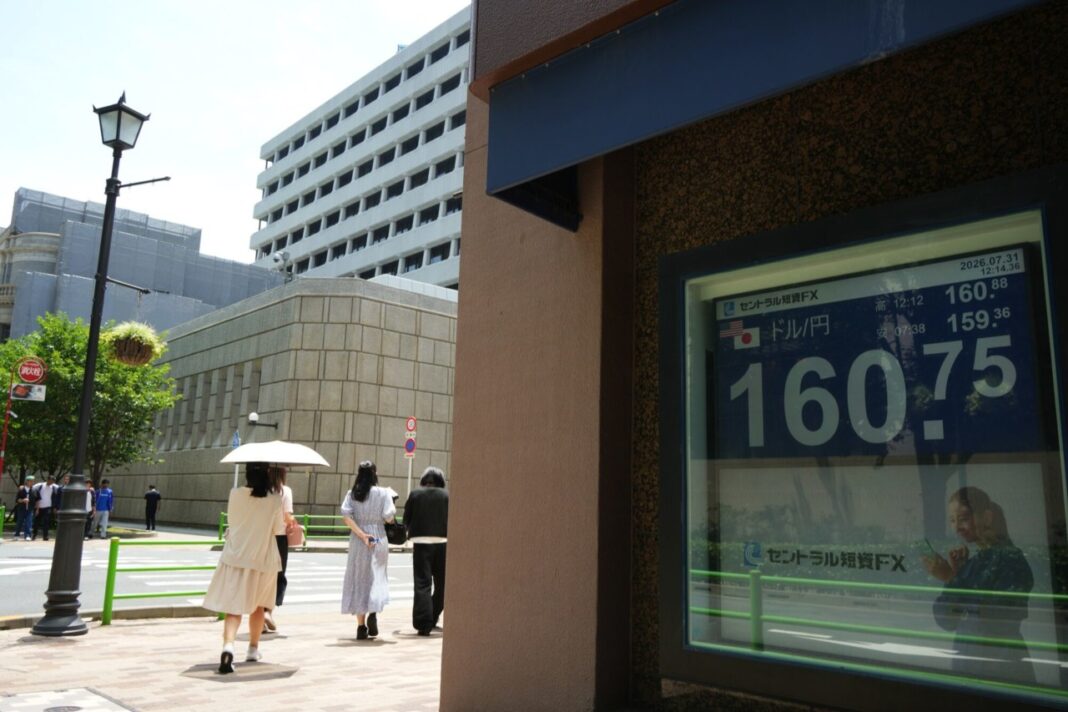
The U.S. Treasury has cautioned financial institutions that it may step in to address the dollar-yen exchange rate. This warning signals a potential shift in Washington’s approach to currency markets, which have seen significant movement in recent years.
The Japanese yen has weakened sharply against the U.S. dollar, sliding to levels not witnessed in decades. This sustained depreciation has drawn attention from policymakers on both sides of the Pacific. The currency pair now sits near a point that has historically prompted concerns about economic stability.
Banking sources indicate that the Treasury’s communication was direct, urging firms to prepare for possible intervention. Such a move would mark a rare foray into direct currency management by the U.S. government. Typically, Washington has favored a hands-off stance, allowing market forces to dictate exchange rates.
The yen’s decline stems from a wide interest-rate gap between Japan and the United States. U.S. rates have remained elevated to combat inflation, while Japan has maintained ultra-loose monetary policy to support its economy. This divergence has made the dollar more attractive to investors seeking higher yields.
Officials in Tokyo have voiced frustration over the yen’s slide, which inflates import costs and pressures household budgets. However, unilateral intervention by Japan has proven costly and often ineffective in reversing longer-term trends. A coordinated effort with the U.S. could carry more weight, but it would require rare political alignment.
Market analysts note that intervention alone rarely shifts currency trajectories without supporting policy changes. The Treasury’s warning may aim to temper speculative bets against the yen rather than signal an imminent action. Traders are now weighing the risk of sudden government moves in a market typically driven by fundamentals.
The potential for U.S. involvement adds a new layer of uncertainty for investors navigating currency exposure. Any official action would likely be swift and targeted, aiming to stabilize the yen rather than target a specific price level. The dollar-yen rate remains highly sensitive to every new policy hint from Washington or Tokyo.
Observers will watch for further signals in upcoming economic data and central bank statements. For now, the Treasury’s message serves as a reminder that currency markets are not immune to political intervention. The coming weeks could prove pivotal in determining whether this warning translates into action.