Intercontinental Exchange, the parent company of the New York Stock Exchange, has agreed to acquire MarketAxess in a deal valued at roughly $6 billion. The acquisition signals a strategic push into the growing market for electronic bond trading.
MarketAxess operates a leading platform for fixed-income trading, connecting institutional investors with dealers. The platform facilitates trades in corporate bonds, emerging-market debt, and other instruments that have historically been traded over the phone.
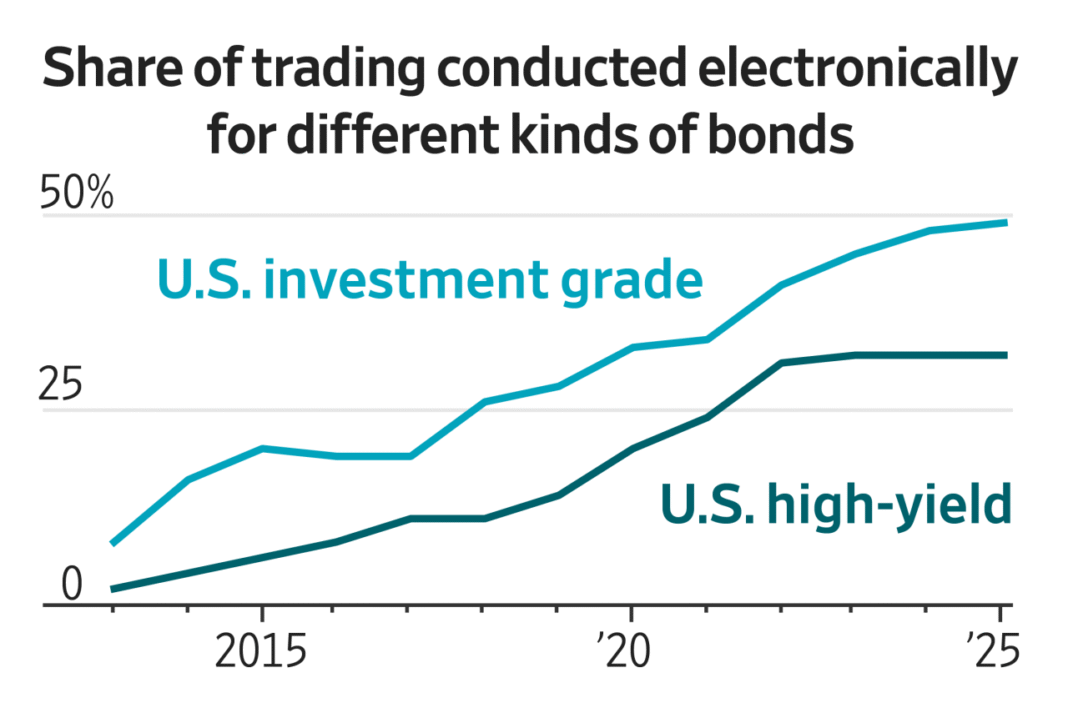
The move reflects a broader industry transition. Electronic trading has gained steady traction across fixed-income markets, driven by demand for greater efficiency, transparency, and lower transaction costs. That shift has accelerated in recent years as technology has advanced and market participants have grown more comfortable with digital execution.
Intercontinental Exchange, already a dominant player in energy and financial derivatives trading, views fixed-income as a natural expansion. The deal is expected to strengthen its portfolio by adding a significant share of the electronic corporate-bond market. Company leadership described the acquisition as a step toward modernizing a historically fragmented and opaque asset class.
MarketAxess has long been a pioneer in its field, offering a central venue for price discovery and trade execution. Its network includes a wide range of buy-side and sell-side participants across the globe. The platform’s ability to stream live pricing and facilitate anonymous trading has made it a critical piece of market infrastructure.
The acquisition also comes amid shifting dynamics in interest-rate markets. With central banks adjusting monetary policy, volatility in fixed-income instruments has increased, boosting the appeal of efficient trading tools. Investors, under pressure to manage risk and capital more effectively, have increasingly turned to automated solutions.
For Intercontinental Exchange, the deal adds scale and diversity at a time when exchange operators are seeking new revenue streams beyond traditional equities and derivatives. The company has previously expanded into mortgage services and data analytics, and this transaction deepens its reach into core debt markets.
Regulatory scrutiny may still pose a challenge. Antitrust reviews will likely examine the combined entity’s market power in bond trading. Market participants will also watch how the integration of the two platforms unfolds, particularly regarding client access and pricing.
The deal is set to close in the second half of the year, pending shareholder and regulatory approvals. Executives from both firms have expressed confidence in the strategic fit, pointing to complementary strengths and shared objectives around market innovation.
As fixed-income markets continue to modernize, the acquisition positions Intercontinental Exchange to capture long-term growth potential. Industry observers will be watching closely to see how the integration shapes the future of electronic bond trading and whether competing platforms can keep pace.