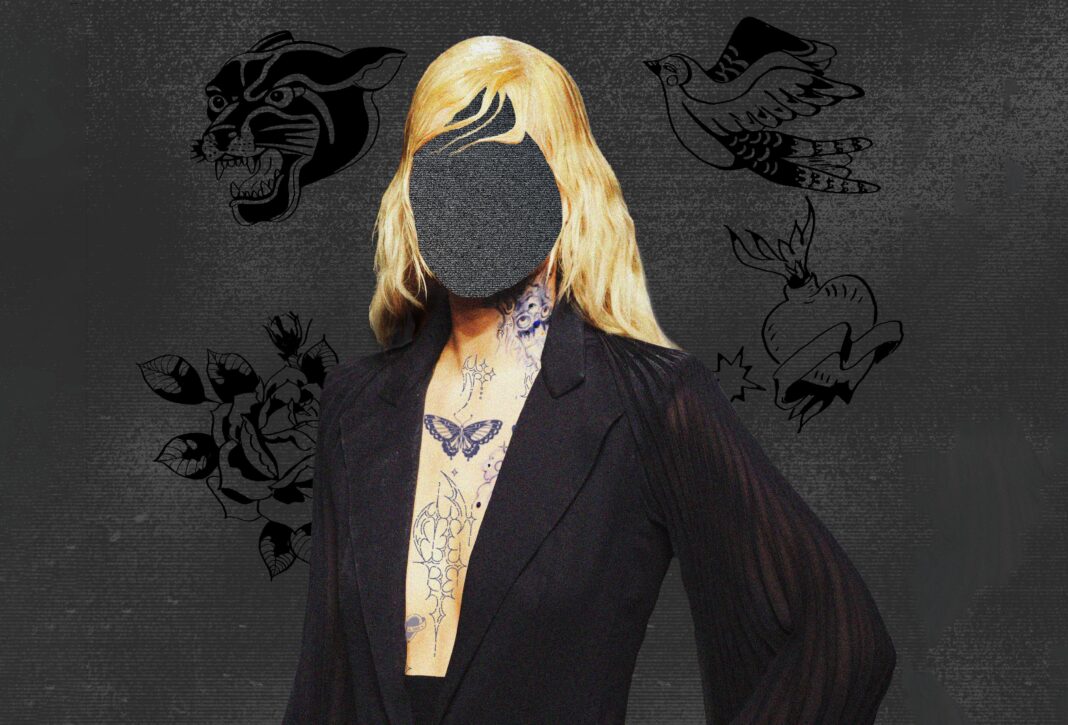
Tattoos have become the center of a viral claim suggesting they could shield individuals from AI-generated deepfake videos. The rumor, which has spread across social media platforms, proposes that distinctive body art may confuse facial recognition algorithms. This theory hinges on how AI systems analyze and reconstruct visual data. However, experts caution that the protection offered is far from absolute. The technique, if it works at all, appears to have significant limitations.
The speculation gained traction after users noticed that certain AI video generators struggled to replicate tattoo patterns accurately. In some cases, the software produced distorted or blurred ink designs on virtual subjects. This led to the assumption that real individuals with tattoos might be harder to impersonate in synthetic media. Yet, the underlying mechanics of deepfake technology do not support broad claims of immunity. AI models typically focus on facial features rather than body markings.
Researchers point out that deepfake algorithms prioritize the face for identity mapping, often ignoring peripheral details like tattoos. Even when tattoos are present, the system can simply generate a generic version or omit them entirely. The result is a deepfake that may look less convincing but does not fail outright. For a tattoo to interfere meaningfully, it would need to cover the entire face or disrupt key facial landmarks. Most tattoos, including neck and hand designs, fall outside these critical zones.
Another factor complicating the rumor is the rapid evolution of AI training methods. Newer models are increasingly trained on diverse datasets that include tattooed individuals. This means the algorithms are learning to handle such features more effectively over time. What might confuse an older system could be a non-issue for a current or future version. The window of potential protection, if it exists, is narrowing with each update.
Security experts also note that deepfake creation is not solely dependent on video input. A single high-resolution photo is often sufficient to generate a convincing fake. In such cases, tattoos play no role in preventing the abuse. The real defense against deepfakes lies in detection tools and digital watermarking, not physical appearance. Relying on body art for safety would offer a false sense of security.
The viral nature of the claim reflects a broader public concern about AI misuse. People are actively seeking low-tech solutions for a high-tech problem. While creativity in tackling digital threats is commendable, the tattoo theory lacks empirical backing. No peer-reviewed studies have confirmed its effectiveness, and anecdotal evidence remains inconclusive. Until rigorous testing is done, the idea stays in the realm of speculation.
For now, individuals worried about deepfake videos should focus on established countermeasures. These include using verification platforms, limiting public exposure of high-quality images, and staying informed about AI developments. Tattoos might make a person more recognizable in real life, but they do not offer reliable digital protection. The rumor, while intriguing, is exactly that—a rumor with a very big caveat.