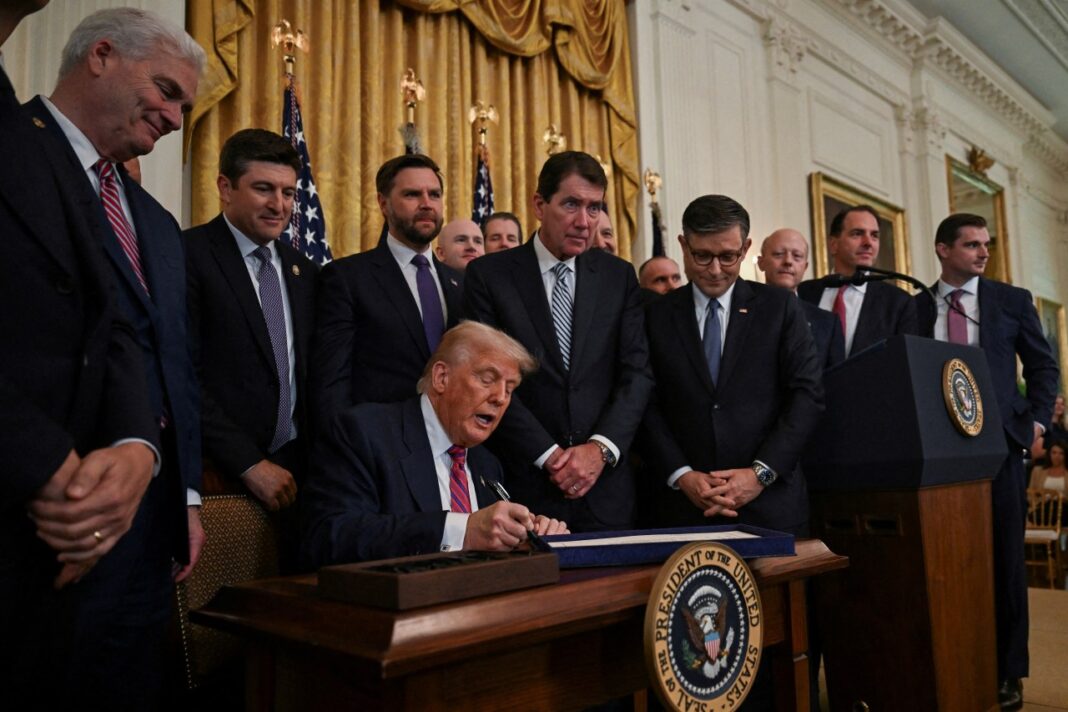
The Trump administration’s recent push to legitimize cryptocurrency is drawing attention to a potential ripple effect for U.S. government debt. At the center of this connection is Treasury Secretary Scott Bessent, who is overseeing financial policy with a focus on market stability. The link between these two areas appears to hinge on stablecoins, a type of digital asset designed to maintain a fixed value.
Stablecoins, unlike volatile cryptocurrencies such as Bitcoin, are typically backed by reserves of traditional assets. U.S. Treasury bills are a common choice for those reserves because they are considered safe and highly liquid. If stablecoin usage grows significantly, issuers would need to purchase more Treasury bills to support their tokens. This dynamic could create a steady new source of demand for government debt.
Bessent’s recent actions at the Treasury Department suggest an openness to integrating digital assets into the broader financial system. By adjusting regulatory frameworks and signaling support for innovation, the administration appears to be laying groundwork for wider stablecoin adoption. Market analysts see this as a strategic move that could benefit both the crypto industry and federal borrowing needs.
The potential for increased Treasury demand comes at a time when the government is managing a large fiscal deficit. A new buyer base for T-bills could help keep borrowing costs manageable. It also aligns with the administration’s goal of maintaining confidence in U.S. financial markets amid global uncertainty.
Industry observers note that the link is not automatic, however. Stablecoin issuers must navigate state and federal regulations, which remain fragmented. A clear federal legal framework would likely be required to unlock the full scale of Treasury purchases from this sector. Without such clarity, demand may grow more slowly than proponents expect.
Supporters of the policy point to successful examples where stablecoins already hold significant Treasury reserves. They argue that broader adoption could deepen the market for short-term government securities. Critics remain cautious, citing risks related to transparency and the potential for rapid redemptions during market stress.
The administration’s crypto-friendly stance contrasts with the stricter approach taken by regulators in previous years. This shift reflects a broader strategy to position the U.S. as a leader in digital finance. How quickly the Treasury market benefits will depend on legislative progress and investor confidence in stablecoin reliability.
Overall, the connection between Trump’s crypto agenda and Bessent’s Treasury moves represents a notable intersection of policy and finance. For now, the market is watching for signals of concrete regulatory changes. The potential for stablecoins to support government debt adds a practical dimension to what might otherwise seem like a symbolic embrace of digital assets.