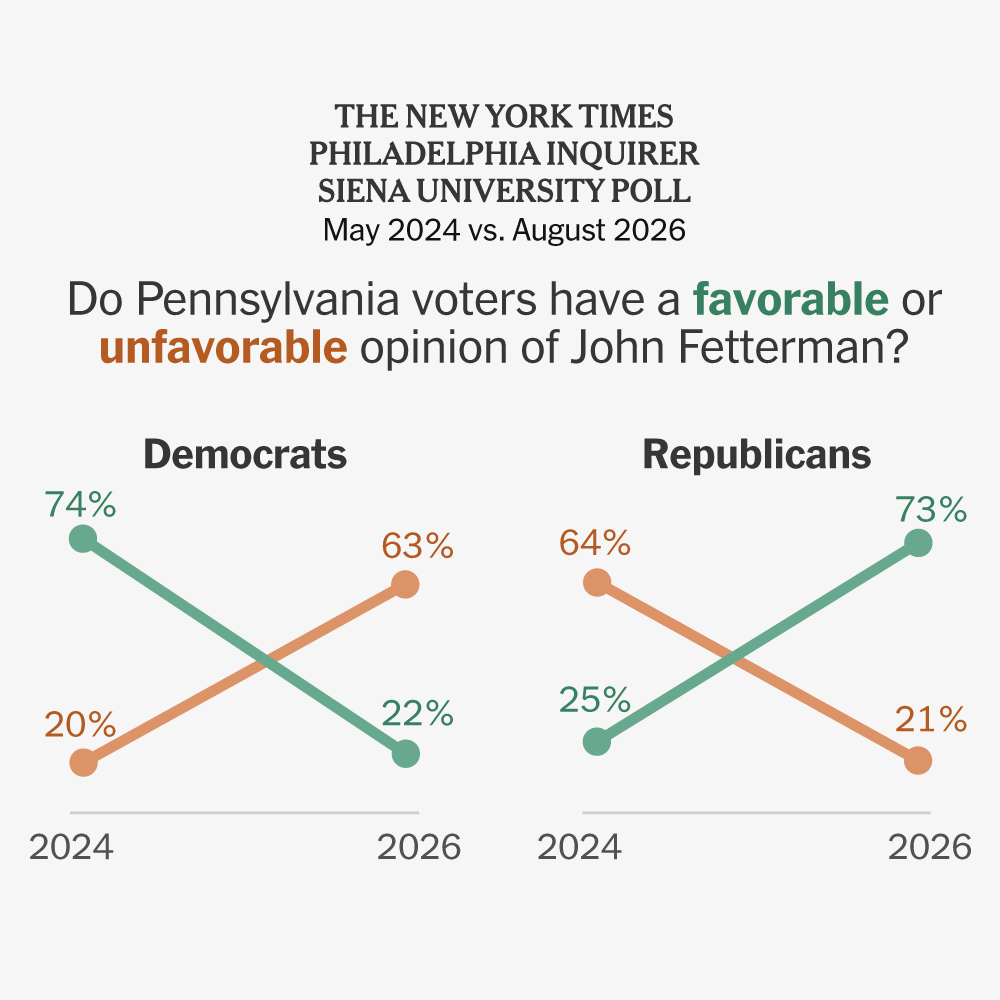
Pennsylvania Republicans now hold a more favorable view of Democratic Senator John Fetterman than of the state’s own Republican senator, according to a new poll from The New York Times, The Philadelphia Inquirer, and Siena College. The survey marks a notable shift in political perception within a key battleground state.
Fetterman’s approval among GOP voters has surged in recent months, driven largely by his public breaks with Democratic leadership on several high-profile issues. His independent stance on immigration, labor policy, and cultural matters has resonated with conservative-leaning constituents who previously viewed him with skepticism.
The same poll shows Republican Senator Pat Toomey’s successor, whose name was not cited in the data summary, trailing Fetterman in favorability among their shared constituents. Analysts suggest this reflects broader dissatisfaction within the state’s Republican base, particularly over national party messaging and local policy priorities.
Respondents cited Fetterman’s willingness to cross party lines and his direct communication style as key reasons for their improved perception. Many described him as a pragmatic figure focused on Pennsylvania’s economic and industrial needs rather than partisan posturing.
The findings are consistent with other recent surveys indicating that Fetterman has built a unique cross-party appeal since taking office. His recovery from a stroke and subsequent return to public life have also contributed to a personal narrative that some voters find compelling.
Political strategists note that such favorability gains do not necessarily translate into future electoral support, especially in a polarized environment. Still, the numbers provide a glimpse into the shifting dynamics of Pennsylvania’s electorate ahead of the next cycle.
Democrats maintain confidence in Fetterman’s base, while acknowledging that his appeal to Republicans could offer an advantage in a state known for close races. Republican leaders have downplayed the poll’s significance, pointing to broader national trends rather than individual state-level comparisons.