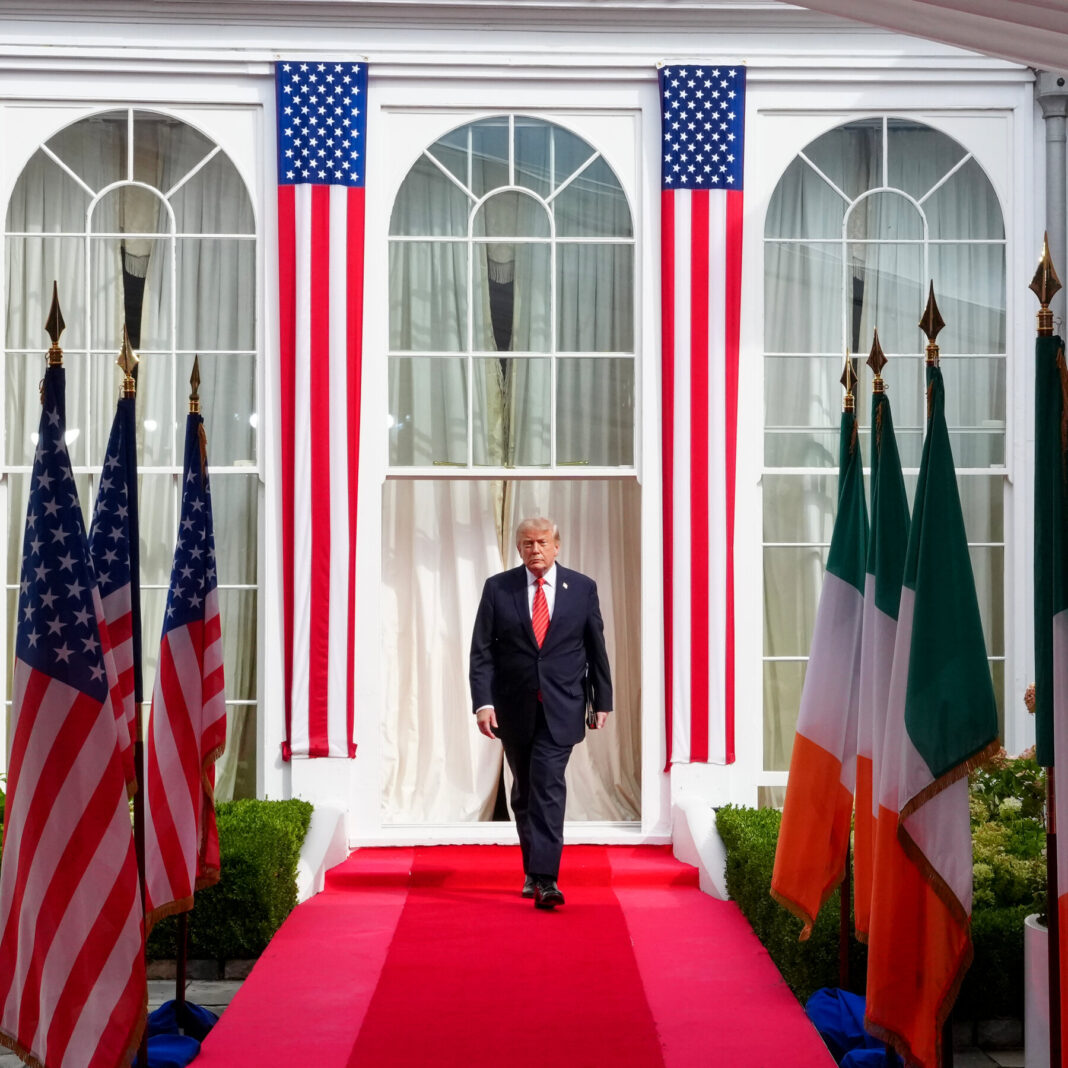
President Trump has called Irish unification “fantastic,” a remark that departs from long-standing U.S. policy.
Washington has traditionally stayed neutral on whether Northern Ireland should remain part of the United Kingdom or join the Republic of Ireland.
That neutrality dates back to decades of sectarian violence known as the Troubles, which killed more than 3,500 people.
The 1998 Good Friday Agreement ended most of the violence and established a power-sharing government in Belfast.
The deal left the question of unification to future referendums, to be decided by voters in both the North and the Republic.
Trump’s comment breaks with that careful balance, which U.S. presidents have upheld for nearly 30 years.
His remarks could unsettle unionists in Northern Ireland who want to stay part of the U.K.
They may also energize nationalist and republican communities that favor a united Ireland.
The White House did not clarify whether the president’s comment signals a formal policy shift.
Irish and British officials have not yet issued formal responses to the statement.
Analysts say the remark adds uncertainty to already delicate post-Brexit negotiations over Northern Ireland’s trade rules.
It remains unclear whether Trump’s comment will carry any practical effect on U.S. diplomacy.