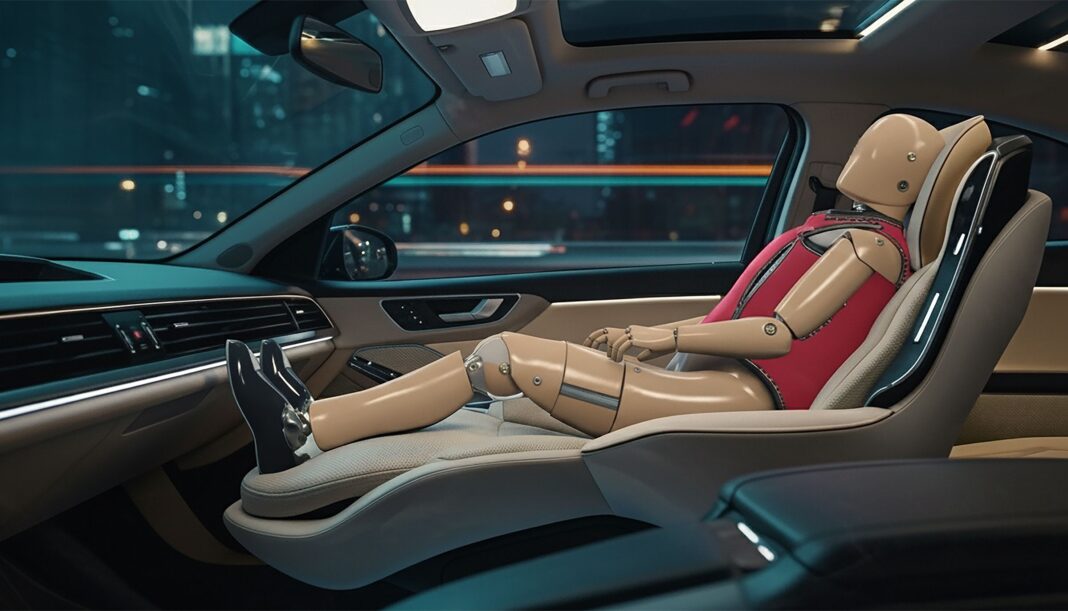
Self-driving cars could fundamentally reshape how crash testing is conducted worldwide. Traditional tests assume a human driver sits upright behind the wheel. That assumption no longer holds in vehicles designed without manual controls.
Lie-flat seating poses serious injury risks in conventional crashes. Seatbelts and airbags are engineered for upright occupants. Reclined passengers can slide under belts or strike interior surfaces at dangerous angles.
Governments are now rethinking safety standards written decades ago. Current regulations focus on driver protection in front-facing collisions. Autonomous vehicles may carry passengers facing sideways or completely flat.
Crash test dummies must also evolve to match new seating positions. Existing dummies mimic adult males in standard postures. Engineers need models that represent varied body types and reclined configurations.
Vehicle structures will change without steering wheels or pedals. Front-end crumple zones may shift to side or rear areas. Interior layouts could prioritize shared space over driver-centric design.
Software adds another layer of complexity to safety testing. Automated systems must decide how to react in unavoidable crashes. Those decisions affect which injuries occur and how severe they become.
Regulators face pressure to update rules without slowing innovation. Automakers want clear guidelines for certifying driverless vehicles. A balance must be struck between safety and technological progress.
The shift will not happen overnight. Testing protocols, dummy designs, and legal frameworks all require years of development. Self-driving cars may ultimately make roads safer, but only if crash testing keeps pace.