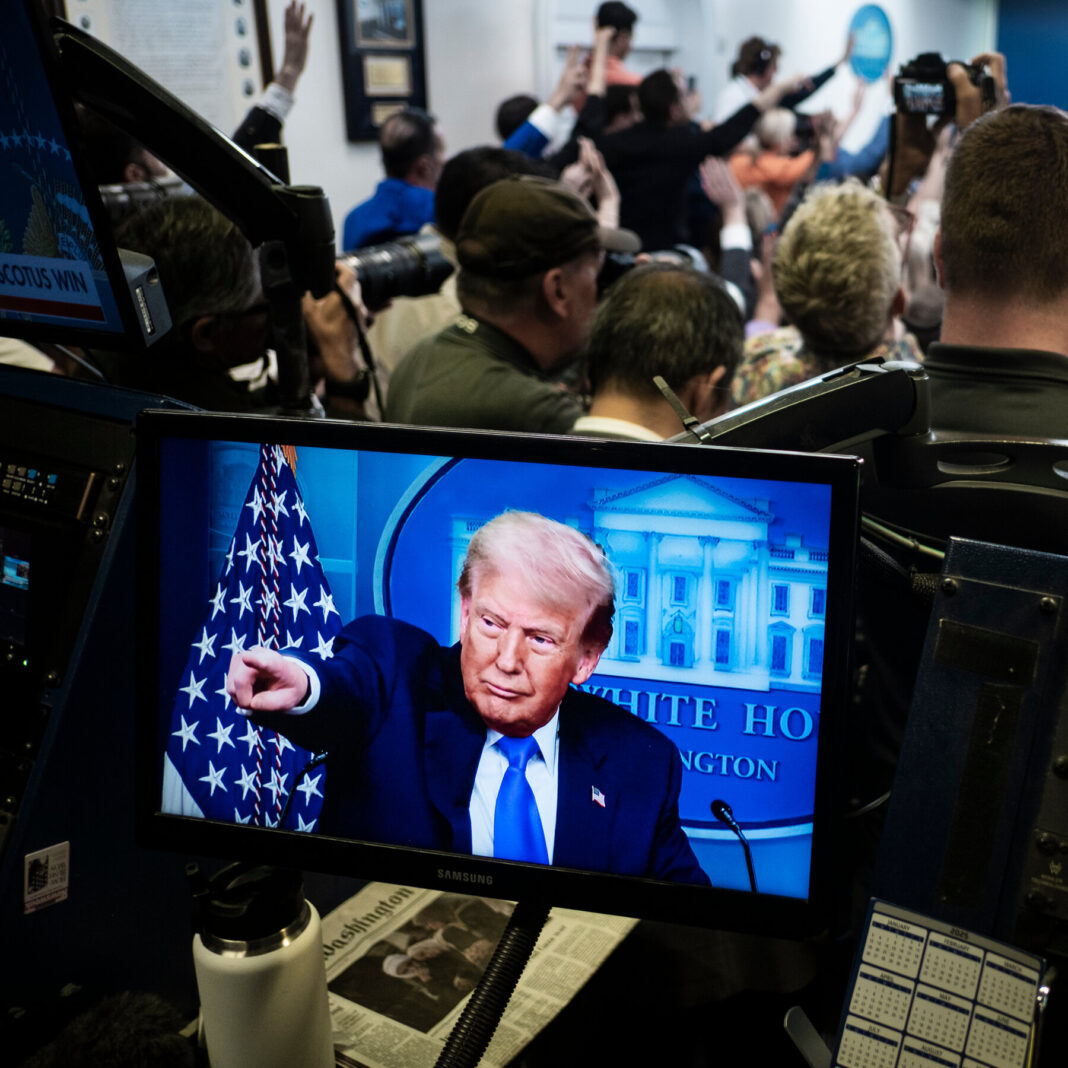
Major television networks have pulled their reporters from the White House press pool. The decision follows a dispute over camera access during presidential events. The boycott marks a rare break between the president and mainstream broadcast media.
Trump has long relied on television coverage to reach the public directly. The loss of routine pool access cuts off a key source of free airtime. The White House now faces a quieter press room and fewer live shots.
The conflict began after the administration restricted camera positions for network journalists. Networks called the move an attempt to control coverage. Talks aimed at restoring access have since stalled.
Trump has turned to alternative platforms to fill the gap. He continues to appear on friendly cable channels and online streams. These outlets provide fewer viewers but tighter message control.
The White House argues that the press pool system is outdated. Officials say new technology allows broader public access. Networks counter that pooled coverage protects independent reporting.
Media analysts describe the boycott as a test of leverage. Both sides are weighing the cost of a prolonged standoff. Neither has shown interest in a quick compromise.
The president still reaches millions through social media posts and rallies. Those events often generate clips that circulate widely online. The boycott may change how the public sees him, but not whether they hear from him.