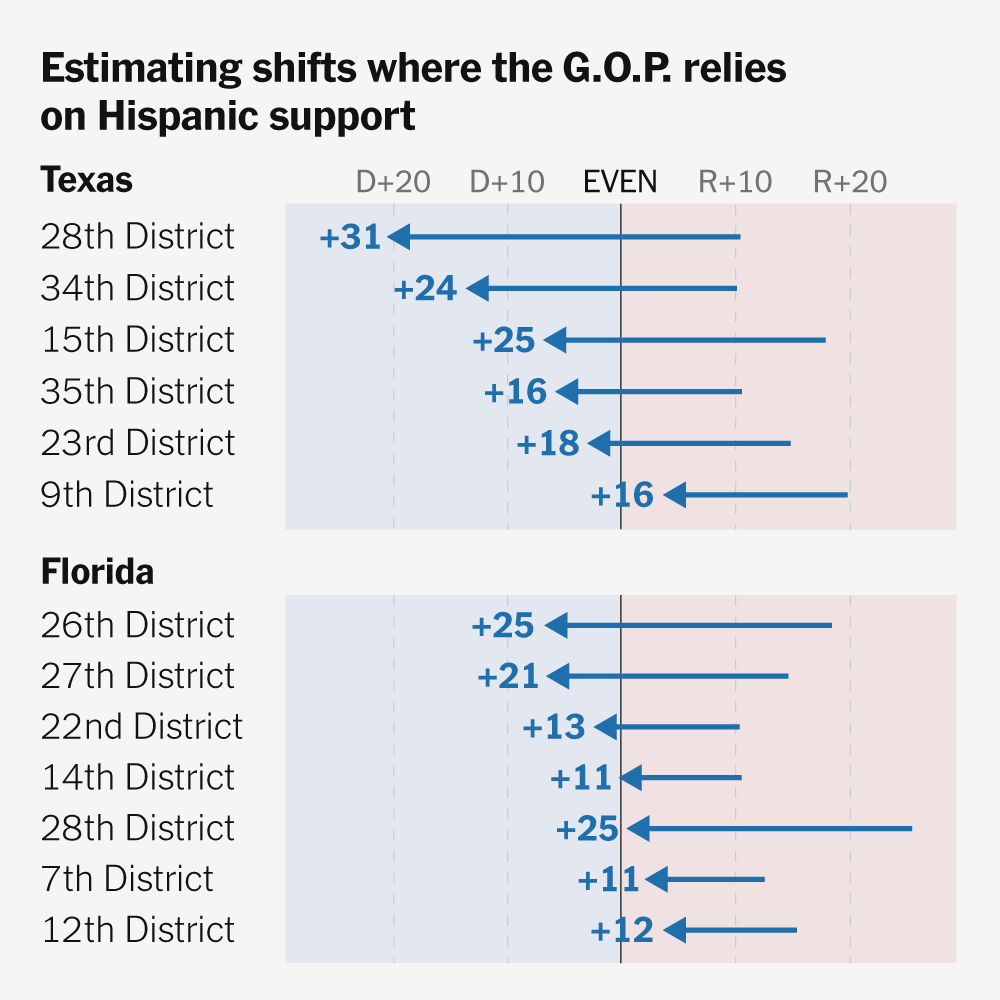
Hispanic voters are shifting away from President Trump, according to recent polling data. This change could reshape the midterm election map in November. Texas and Florida have become key states to watch.
Polling patterns show a notable decline in Hispanic support for Trump compared to previous elections. The drop appears across multiple surveys and demographic groups. Analysts say the trend could affect several competitive races.
Texas holds the largest Hispanic electorate in the country outside California. Even a small shift in this voting bloc could influence statewide contests. Democratic candidates are hoping to capitalize on the change.
Florida presents a more complex picture due to its diverse Hispanic population. Cuban American voters have historically leaned Republican, while Puerto Rican and other groups often favor Democrats. The state remains a toss-up depending on which communities shift most.
Economy and immigration policies rank among the top concerns for Hispanic voters. Many cite rising costs and workplace issues as deciding factors. Healthcare access also remains a priority for this demographic.
Campaign strategists from both parties are adjusting their outreach efforts. Spanish-language advertising and community events have increased in targeted districts. Some Republican operatives acknowledge the need to rebuild trust with Hispanic voters.
The midterm outcomes will depend on whether these polling trends translate into actual votes. Turnout among Hispanic voters has historically been lower than other groups. Mobilization efforts could prove decisive in close races.
Texas and Florida will serve as early indicators of broader national patterns. Results in these states may signal long-term realignment among Hispanic voters. Both parties are watching the numbers closely as November approaches.