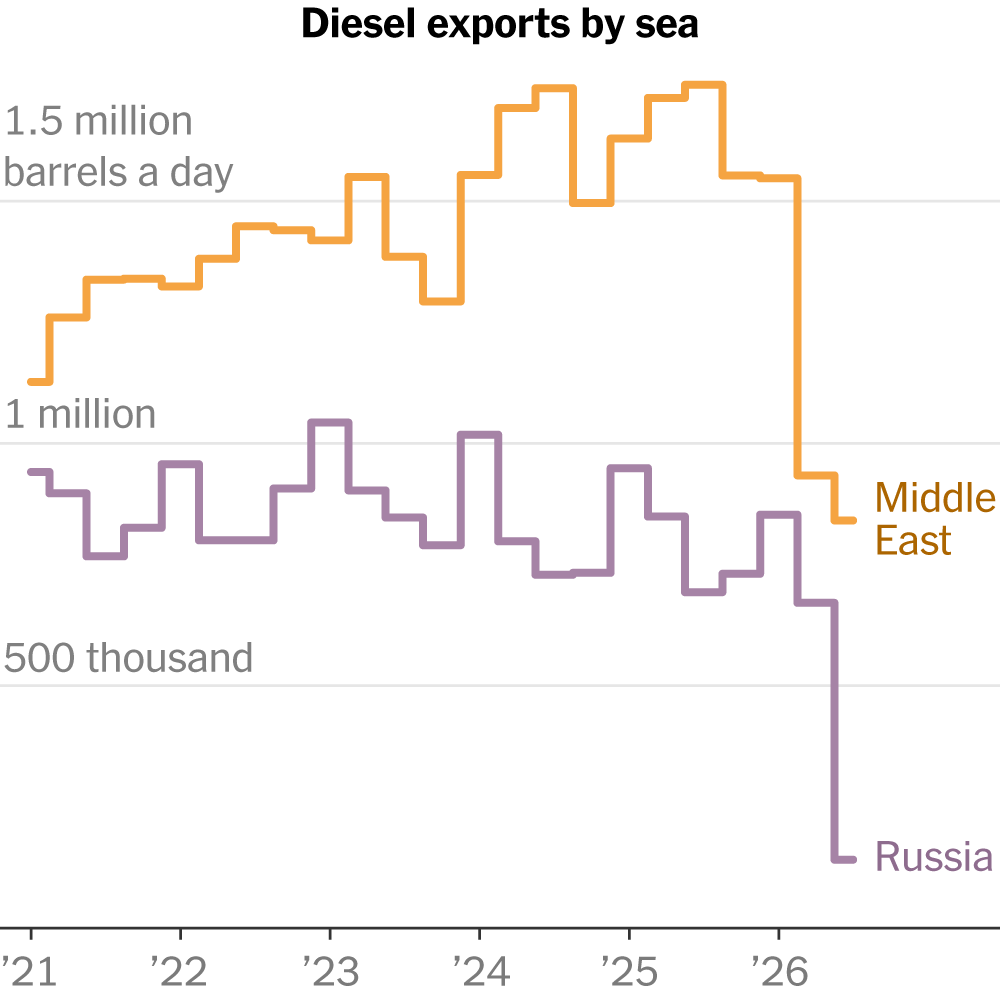
President Trump’s recent deal with Russia is unlikely to reduce diesel prices. The costs have surged due to his conflict with Iran and Ukrainian strikes on Russian refineries.
The agreement aims to ease sanctions on Russian diesel. However, market analysts doubt it will provide significant relief at the pump.
Global diesel supplies remain tight because of multiple disruptions. Refinery outages in Russia have cut into exports, limiting available fuel.
Iran-related tensions have also raised shipping and insurance costs. These expenses are passed on to buyers, keeping prices elevated.
Ukrainian attacks have targeted key Russian energy infrastructure. Repairs take time, so export volumes stay below normal levels.
Easing sanctions may allow more Russian diesel into the market. Yet logistical and financial hurdles will slow any meaningful increase in supply.
Traders remain cautious about Russian fuel due to ongoing geopolitical risks. Many buyers still avoid cargoes from the region.
Diesel demand stays strong across Europe and Asia. Competing for limited supplies keeps upward pressure on prices.
The deal alone cannot offset these broader market forces. Lower fuel costs would require sustained stability in several conflict zones.
Consumers should not expect quick relief. Structural issues in global refining and trade will keep diesel expensive for now.