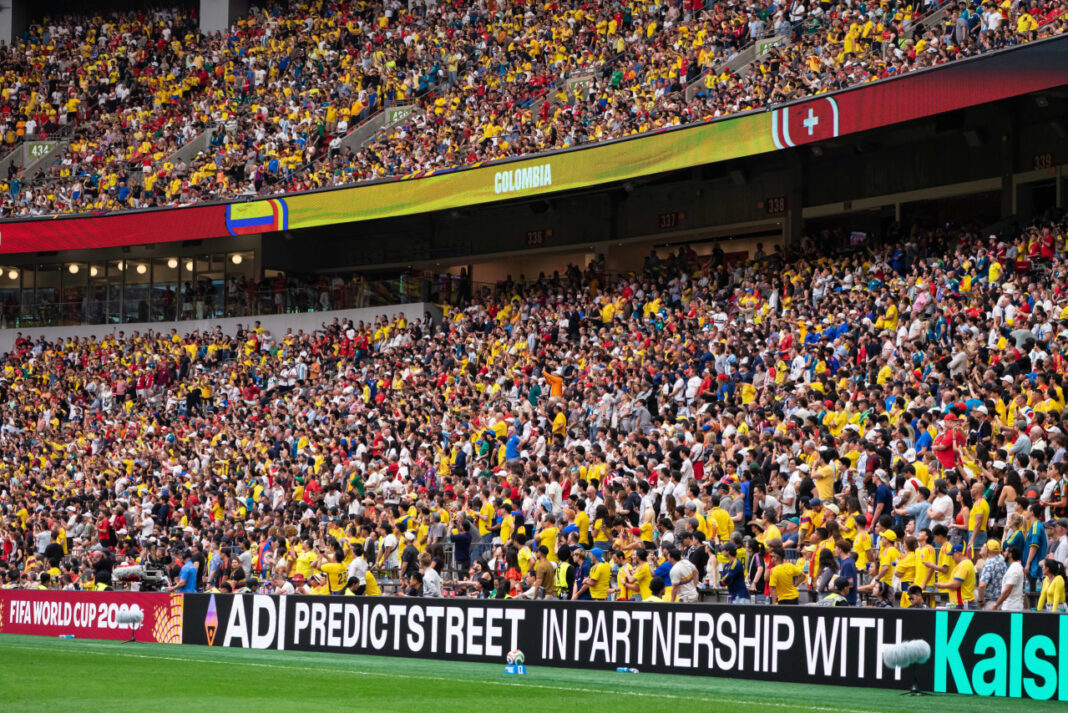
A FIFA-linked prediction market reportedly shows that nearly all its trading volume comes from circular trading. The platform, ADI Predictstreet, is backed by Abu Dhabi’s royal family. The findings raise questions about the true level of activity on the market.
Circular trading occurs when participants trade with themselves or allied accounts. This practice can inflate volume figures without reflecting genuine market demand. The report indicates that this pattern dominates activity on the platform.
ADI Predictstreet paid close to $150 million for advertising rights during the World Cup. The large spend positioned the platform prominently during one of the world’s most-watched sporting events. The advertising deal drew significant attention to the prediction market.
The volume data suggests that reported trading activity may overstate real user participation. Prediction markets rely on volume as a signal of liquidity and interest. Artificial volume can distort that signal for observers and potential users.
Regulators have increasingly scrutinized prediction markets tied to major sports events. Concerns include manipulation, transparency, and consumer protection. The FIFA-linked platform now faces questions about how it reports and monitors trading activity.
The backing of Abu Dhabi’s royal family gives ADI Predictstreet substantial financial resources. That support funded the expensive World Cup advertising rights. It remains unclear whether the backers were aware of the trading patterns described in the report.
Prediction markets let users bet on outcomes ranging from sports results to economic indicators. Accurate volume figures are central to how these platforms build trust. Circular trading can undermine confidence if left unaddressed.
ADI Predictstreet has not publicly detailed measures to detect or prevent circular trading. The report raises broader questions about oversight in the fast-growing prediction market sector. How the platform responds will likely shape scrutiny of similar markets.