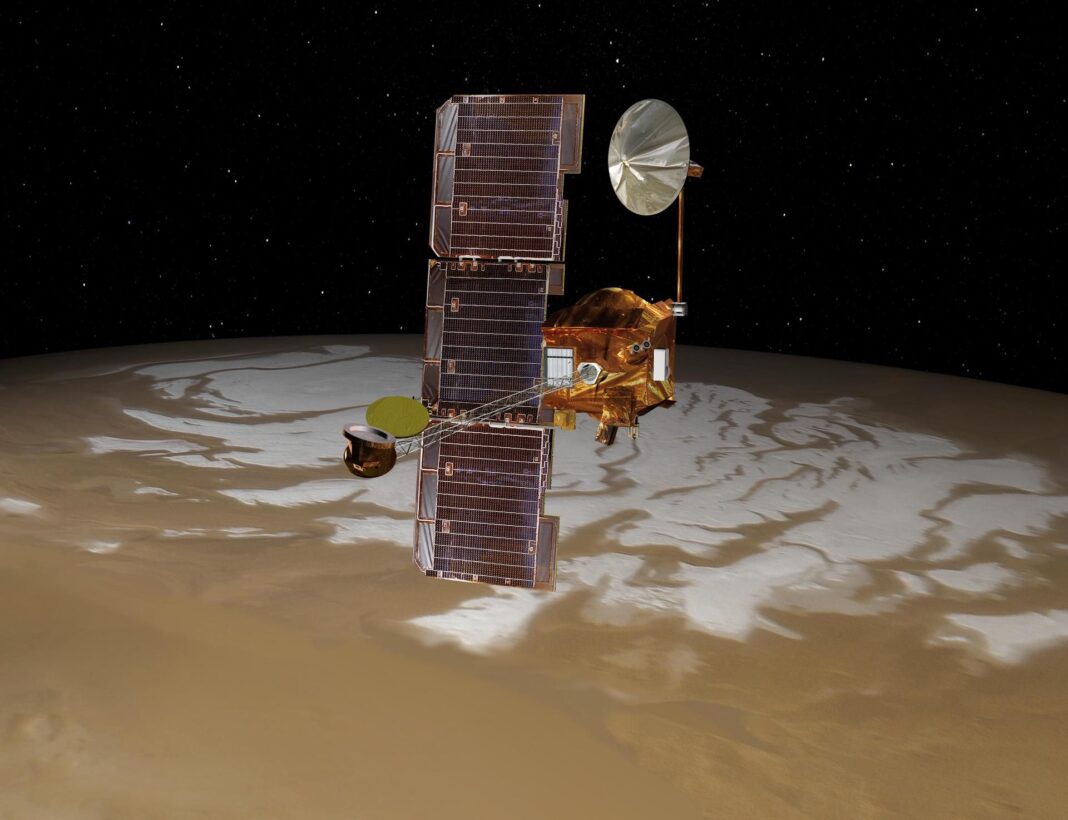
NASA’s two oldest Mars orbiters have far exceeded their planned missions. Both spacecraft continue operating roughly 140 million miles from Earth. Their long service has reshaped scientific understanding of the Red Planet.
The Mars Odyssey and Mars Reconnaissance Orbiter were designed for limited lifespans. Each has now operated for well over a decade. Engineers keep them running through careful planning and repairs.
Odyssey launched in 2001 with a prime mission of about three years. It now serves as a communications relay and science platform. Its instruments have mapped water ice and surface minerals across the planet.
The Mars Reconnaissance Orbiter arrived in 2006 with a planned mission of about five years. It carries the most powerful camera ever sent to another planet. Its images have guided rover landings and revealed changing surface features.
Longevity depends on managing aging hardware and limited fuel. Teams monitor power, thermal systems, and instrument health. Software updates and revised procedures extend each spacecraft’s useful life.
Both orbiters also relay data from rovers and landers on the surface. This relay role makes them critical to current and future missions. Their science observations continue alongside communications work.
The missions show how careful engineering and operations can stretch spacecraft far beyond design limits. Lessons from these orbiters inform planning for future planetary missions. Both spacecraft remain active and productive.