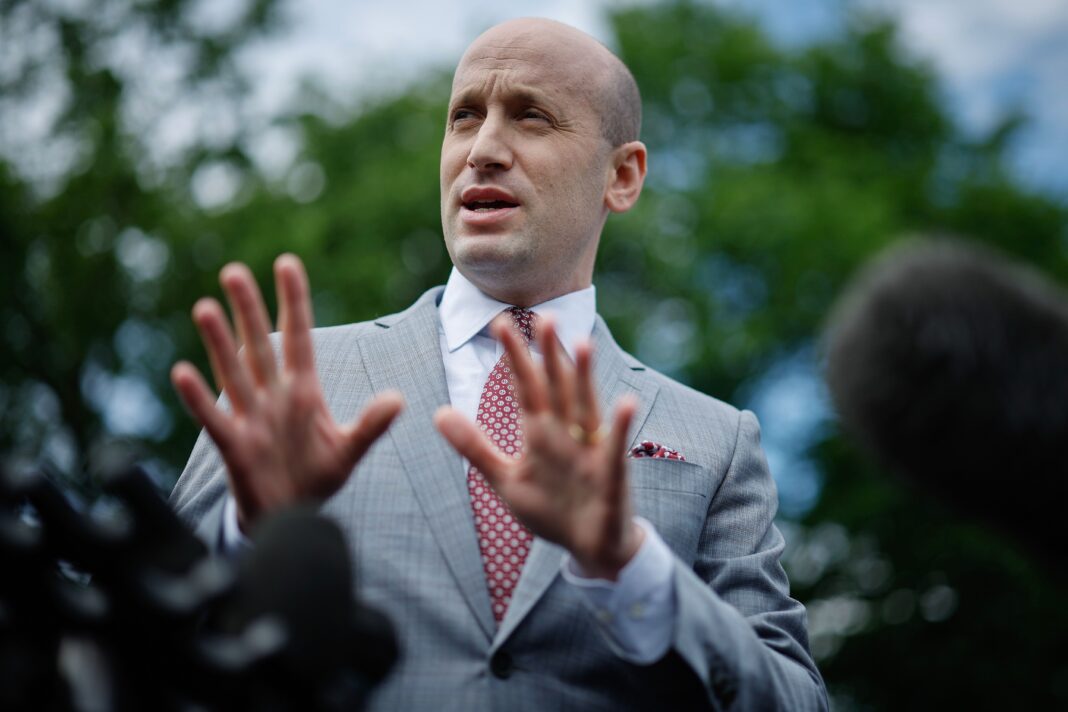
Jean Guerrero has spent years studying Stephen Miller. Her biography of the White House adviser traces how his ideology took shape. She describes him as a case study in oligarchic capture.
Guerrero argues that Miller’s influence extends beyond immigration policy. He has helped shape a broader vision of who belongs in America. That vision favors the wealthy and excludes the poor.
She points to Miller’s role in pushing hardline policies. These include family separations and tightened visa rules. Such moves carry lasting consequences for communities across the country.
The term “servant class” comes from Guerrero’s analysis. It reflects a system where workers serve the interests of a wealthy few. Miller’s politics, she says, reinforce that structure.
Guerrero also sees Miller as a tool for Donald Trump. The adviser lets Trump double down on divisive rhetoric. This approach energizes supporters while deepening national fractures.
Her research draws on interviews and public records. It places Miller within a wider network of political influence. Understanding that network helps explain how policy gets made.
Guerrero urges readers to pay attention to what comes next. Miller’s ideas may outlast any single administration. Their reach depends on who holds power and who organizes against them.