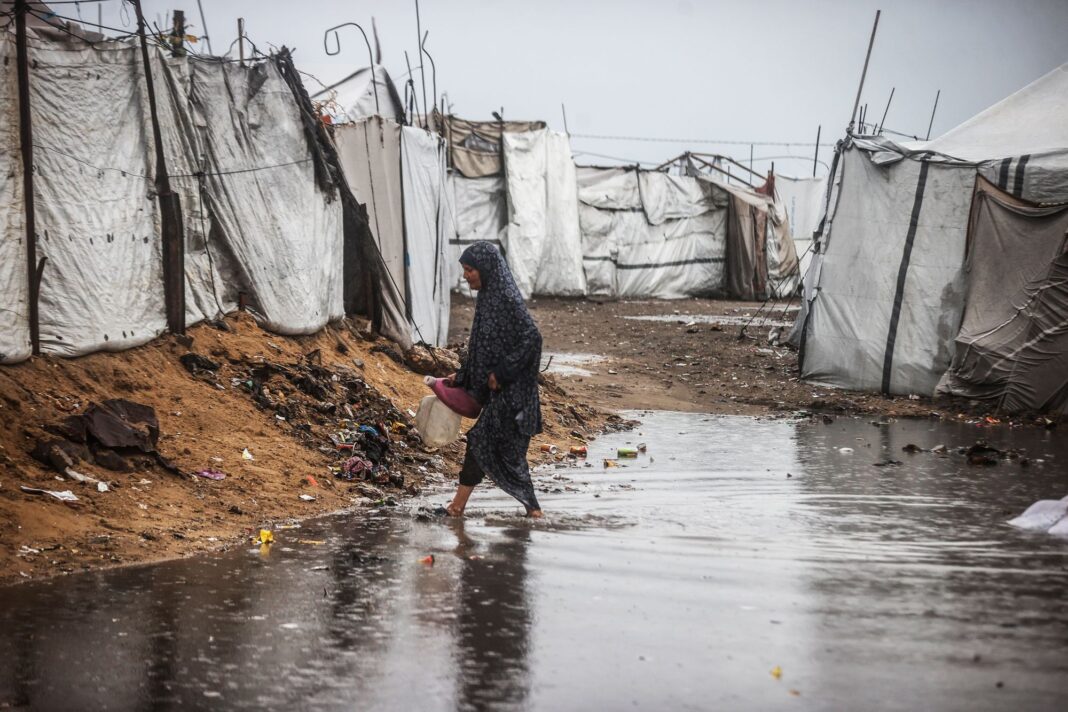
Heavy flooding in Gaza has created a difficult trade-off for local authorities. Fuel supplies are being diverted from water wells to sewage drainage pumps. The shift forces communities to choose between clean water and preventing waste overflow.
Israeli restrictions on imports have limited repair work across Gaza’s infrastructure. Spare parts and equipment remain difficult to obtain under the current blockade. The shortage slows efforts to restore damaged water and sanitation systems.
Flooding has overwhelmed drainage networks in several areas. Standing water mixes with raw sewage and raises public health risks. Officials warn that contamination could spread quickly without immediate action.
Fuel is now being redirected toward pumping stations that clear wastewater. That same fuel normally powers wells that supply drinking water. Each diversion leaves fewer resources for households already facing shortages.
Gaza’s water infrastructure was already under severe strain before the floods. Repeated conflicts and limited maintenance have weakened pipes and pumps. The current emergency compounds years of deteriorating service.
Sanitation crews are working with aging equipment and scarce supplies. Repairs often stall while waiting for approval or materials. The delays leave flooded neighborhoods exposed for longer periods.
Residents in affected areas face rising health threats from contaminated water. Stagnant pools serve as breeding grounds for disease-carrying insects. Aid groups are calling for faster access to fuel and repair materials.
A lasting solution requires sustained investment in Gaza’s water and sewage systems. Short-term fixes can only ease the immediate crisis. Without broader relief, the choice between water and waste will keep returning with each storm.