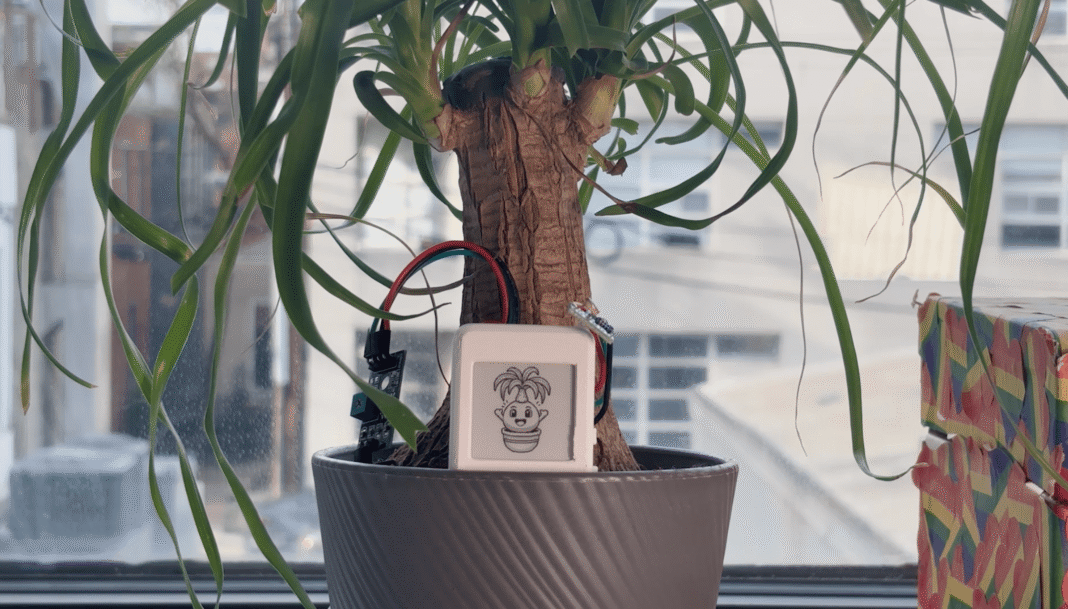
A Carnegie Mellon student has built small E Ink devices called OATs that turn ordinary household items into virtual pets. The gadgets attach to objects like houseplants, skateboards, and dumbbells. Each one gives its object a distinct personality.
The project aims to nudge people toward better habits through playful interaction. Users care for the virtual pet by tending to the object it represents. Neglecting the object leaves the pet visibly unhappy.
OATs display simple facial expressions on their E Ink screens. The low-power screens suit always-on companionship without frequent charging. Each device runs on AI that adapts to how often a user interacts.
Houseplants gain a needy companion that reacts to watering schedules. Skateboards and dumbbells express moods tied to exercise routines. The personalities are designed to feel expressive rather than robotic.
E Ink technology keeps the devices lightweight and unobtrusive. Screens remain readable in most lighting conditions. The minimal hardware keeps costs low for a prototype concept.
The project reflects growing interest in calm technology that blends into daily life. Unlike screen-based apps, OATs sit directly on the objects they monitor. This physical presence makes reminders harder to ignore.
Carnegie Mellon has a strong record of exploring playful, behavior-focused design. OATs fit that tradition by pairing simple hardware with emotional cues. The approach turns routine chores into small acts of care.
The devices remain a student project for now. Details on pricing or wider availability have not been announced. Still, OATs suggest a lighter path to habit-building than conventional apps.