
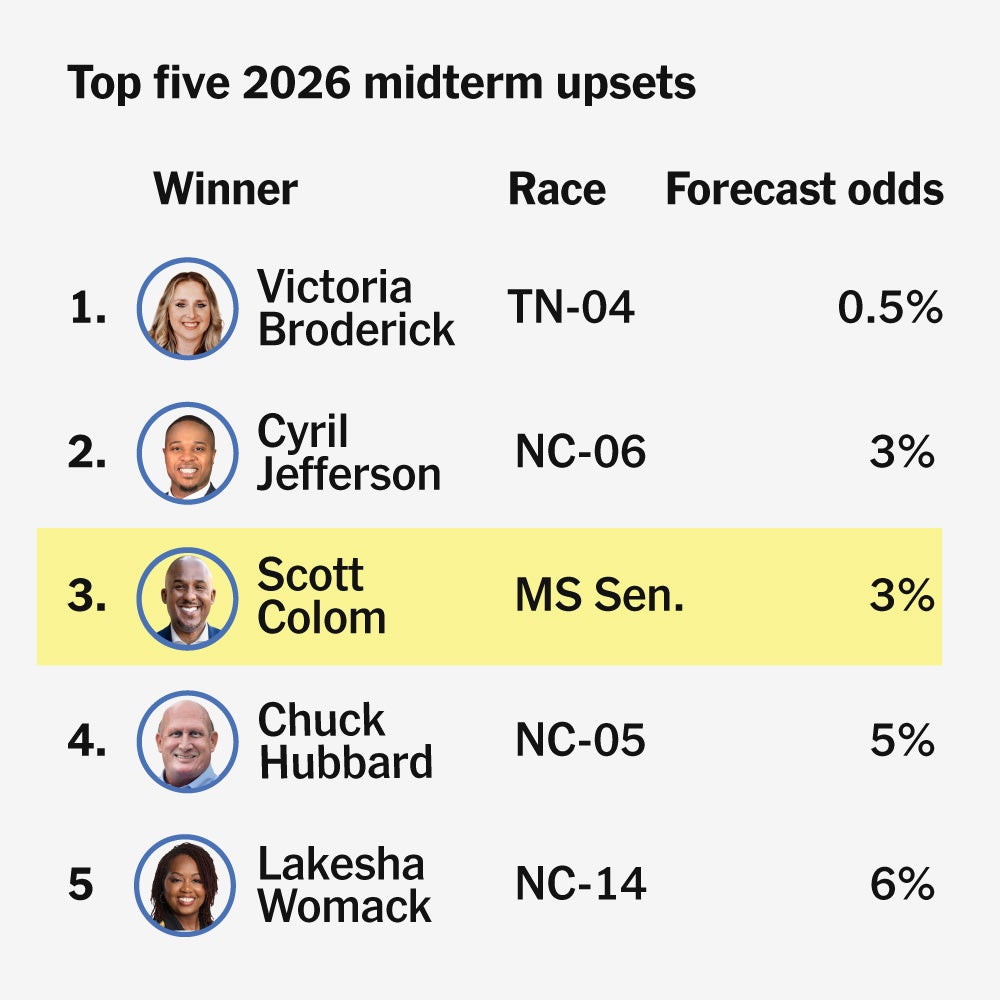
The 2026 midterm elections produced several unexpected outcomes beyond the Mississippi Senate race. Analysts had forecast many of these contests as safe seats for the incumbent party.
One of the most surprising wins came in a district where polling margins favored the incumbent by double digits. The challenger ultimately secured a narrow victory after late vote counts shifted the result.
Turnout patterns played a major role in several upsets. Rural and suburban precincts reported higher-than-expected participation, altering projected totals in key races.
Several winning candidates ran low-budget campaigns with minimal national attention. Their victories relied on local organizing and direct voter outreach rather than large advertising spending.
Pre-election models struggled to capture these shifts accurately. Many forecasts relied on historical trends that did not account for changing demographic patterns in specific districts.
The results highlight the limitations of predictive modeling in close races. Small shifts in turnout can overturn projected outcomes even when polling averages appear stable.
These upsets will likely influence how analysts approach future elections. Greater attention to local data and early voting trends may improve accuracy in upcoming cycles.