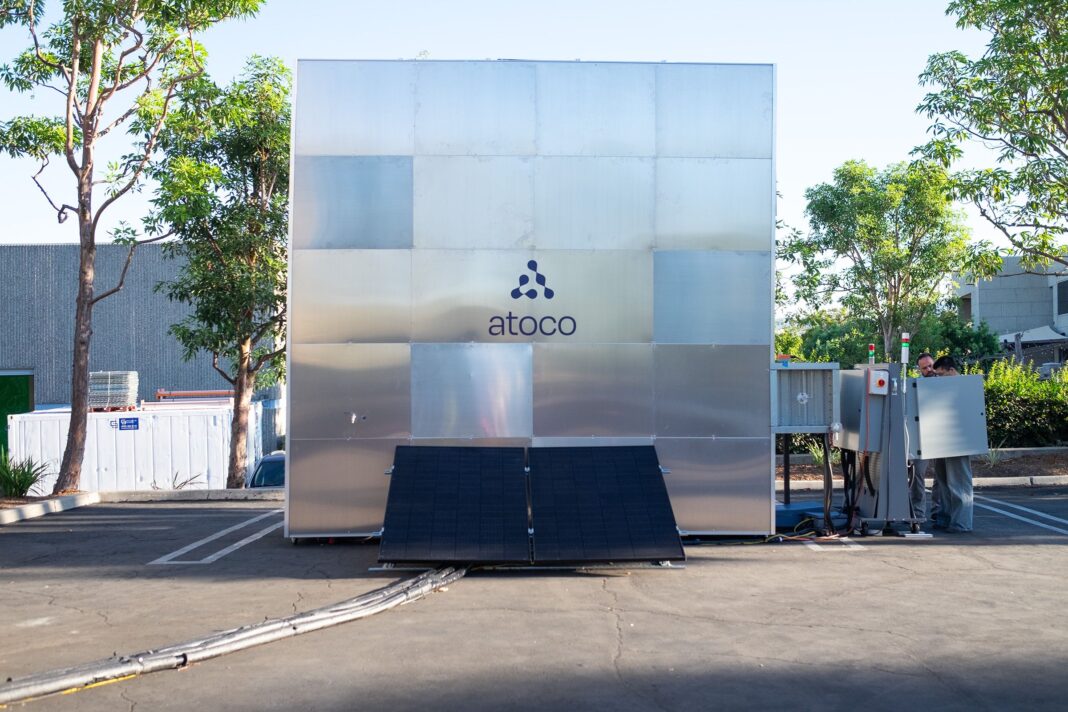
A startup called Atoco has developed machines that produce water from air using waste heat from data centers. The system relies on specialized materials that capture moisture without needing electricity.
Data centers generate large amounts of heat as a byproduct of cooling servers. Atoco’s technology redirects that heat to power its water-harvesting process. This approach turns an energy burden into a useful resource.
The core of the system is a class of materials known as metal-organic frameworks. These porous structures pull water molecules from even very dry air. Once saturated, they release the water when heated.
Atoco’s machines can operate in arid environments where conventional water harvesting fails. The materials work at low humidity levels that would defeat older techniques. This expands the range of locations where water production is practical.
By using waste heat, the system avoids adding to a data center’s electricity demand. That makes the water essentially a free byproduct of cooling operations. It also reduces the carbon footprint compared to grid-powered alternatives.
The startup has not yet announced commercial partners or pricing. It has demonstrated the technology in lab settings and small pilot tests. Scaling up will require integrating the machines with existing data center infrastructure.
Water scarcity affects many regions that also host large data centers. Atoco’s approach could provide a local water source for cooling and other uses. That dual benefit may drive interest from both tech and utility companies.
The concept fits a broader trend of turning industrial waste into valuable outputs. Several companies are exploring heat reuse for district heating, agriculture, and now water. Atoco’s specific focus on dry air harvesting sets it apart.
Challenges remain, including material durability and long-term performance. The company must prove its machines can run reliably for years without costly maintenance. Cost per liter will determine whether the technology reaches mainstream adoption.
If successful, the system could change how data centers manage both heat and water. Instead of discarding waste heat, they could generate a critical resource on site. That shift would mark a notable step toward more circular industrial operations.