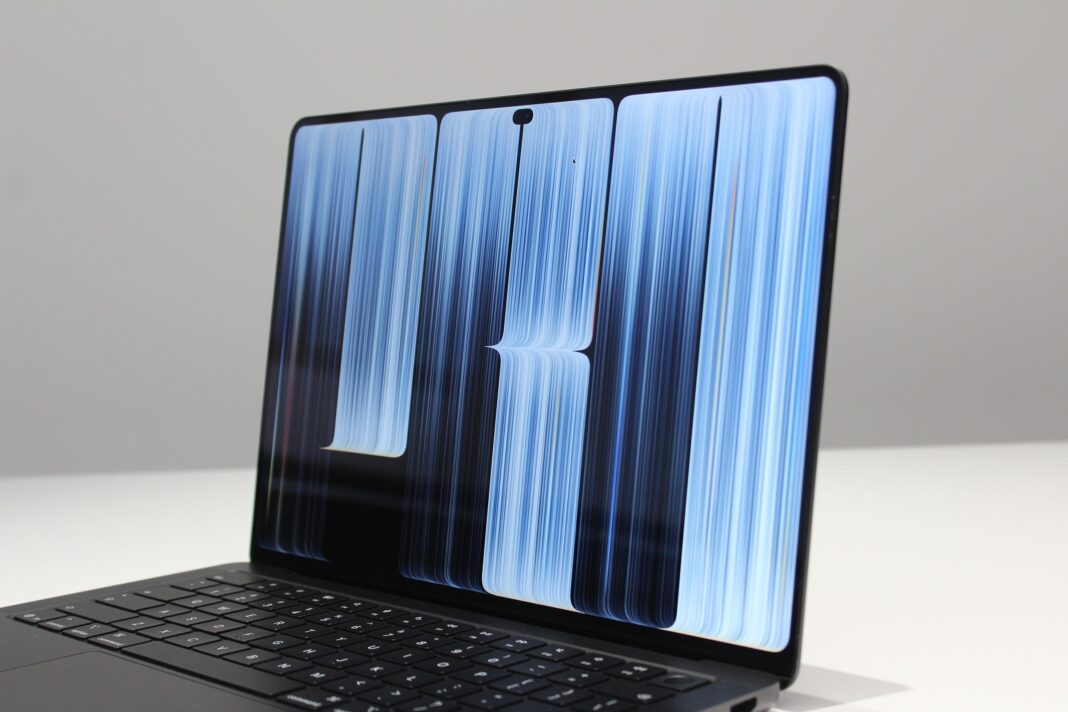
Apple’s new MacBook Pro features an OLED display that reaches 2,000 nits of peak brightness. This makes it one of the brightest laptop screens available today. The panel also delivers very deep blacks for strong contrast.
The brightness level far exceeds most competing laptops, which typically peak well below 1,000 nits. Higher brightness improves visibility in bright rooms and outdoors. It also enhances HDR content by widening the range between light and dark areas.
OLED technology allows each pixel to emit its own light. This design produces true blacks because individual pixels can switch off completely. As a result, dark scenes show more detail without the washed-out look common on traditional LCD panels.
The combination of extreme brightness and deep blacks gives the display a wide dynamic range. Colors appear more vivid and lifelike across different lighting conditions. This balance is difficult to achieve on standard laptop screens.
Apple has not released full technical details about how the panel sustains 2,000 nits. Peak brightness in short bursts is easier to achieve than sustained full-screen brightness. Heat and power consumption remain key limits for any laptop display.
The move to OLED also marks a shift for Apple’s professional laptop line. Earlier models relied on mini-LED backlighting to improve contrast. OLED offers a different approach with per-pixel control and thinner panel construction.
For buyers, the display could matter most for creative work and media viewing. Photographers, video editors, and designers benefit from accurate contrast and color. Everyday users will notice sharper visuals and better outdoor usability.
The 2,000-nit OLED sets a new benchmark for laptop displays. Competing manufacturers are likely to face pressure to match these specifications. How quickly that happens will depend on cost and power efficiency.