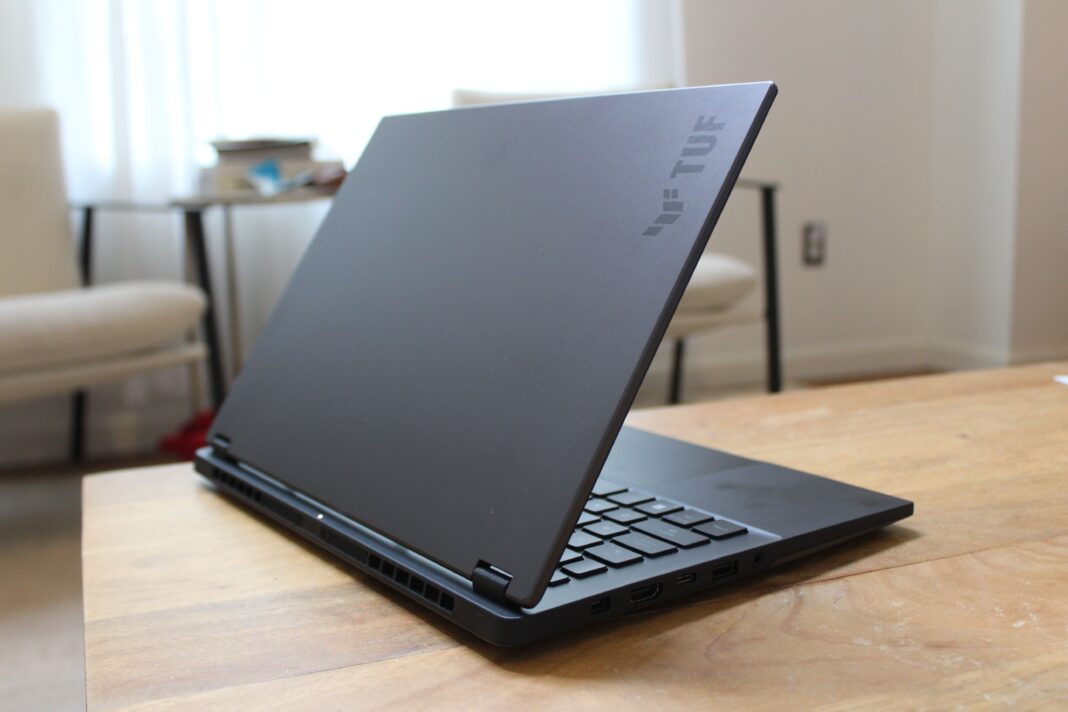
The Asus TUF Gaming A14 (2026) challenges convention by omitting a discrete graphics card. It relies solely on AMD’s latest integrated Ryzen AI silicon. This design represents a significant shift in laptop engineering philosophy.
Performance in less demanding titles is surprisingly competent. The system handles popular esports games at respectable frame rates. For many casual players, this capability will be perfectly adequate.
However, the laptop struggles with more graphically intensive AAA games. Settings often need to be reduced to low or medium presets. This limitation highlights the current ceiling of integrated graphics technology.
The chassis maintains the TUF series’ reputation for durability. Its construction feels robust and able to withstand travel. The design is functional, though somewhat conservative in appearance.
Thermal management is generally effective under moderate loads. The cooling system remains relatively quiet during everyday tasks. Under sustained gaming, fan noise becomes more noticeable.
Battery life is a clear advantage over traditional gaming laptops. The efficient chipset allows for extended use away from an outlet. This makes the device more versatile for mixed work and play.
Ultimately, this model is a compelling experiment rather than a complete revolution. It offers a glimpse into a potential future for mainstream gaming portables. The execution delivers solid value but leaves room for future refinement.