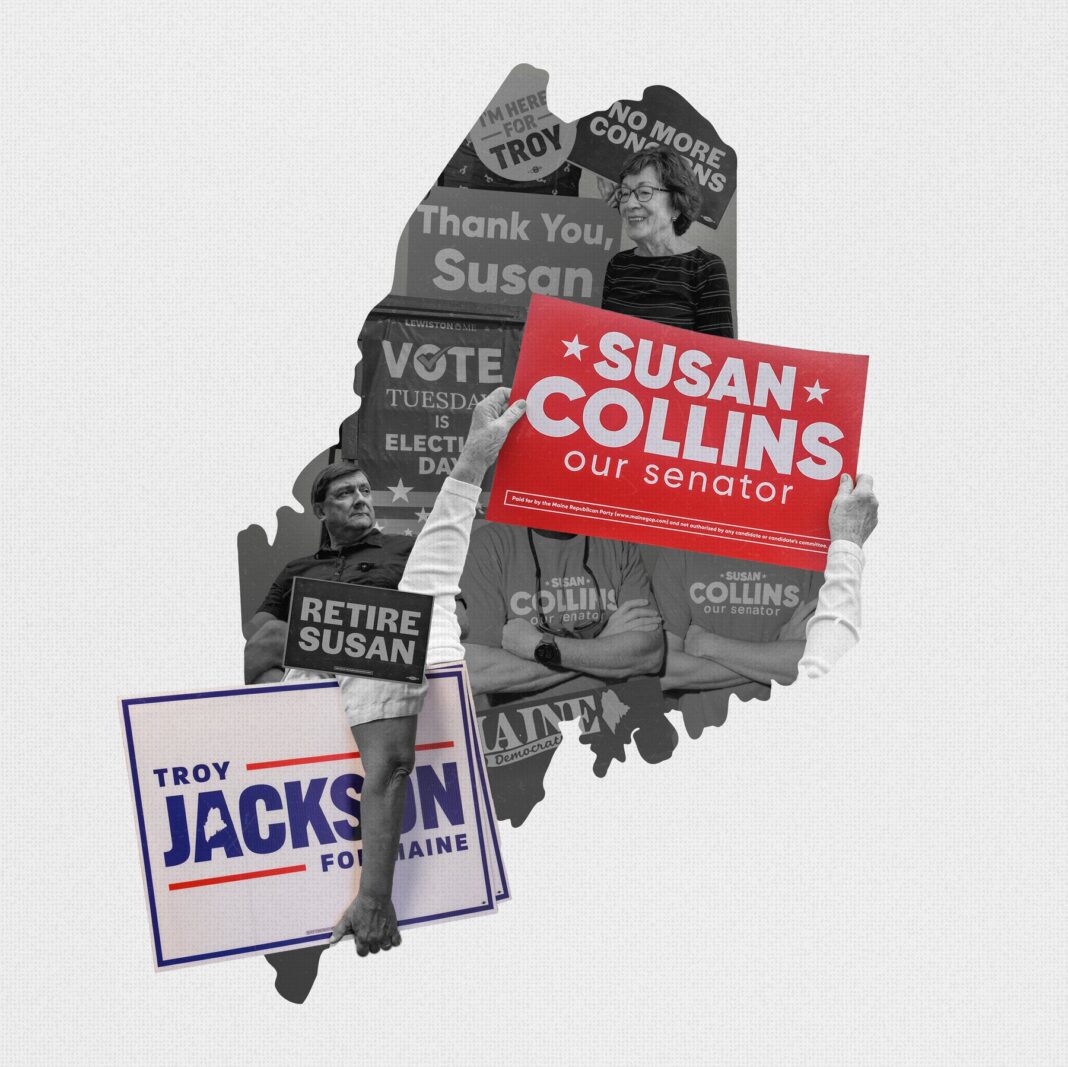
A new poll shows Senator Susan Collins leading her likely Democratic challengers in Maine. The result stands apart from other recent surveys of the race. That gap has drawn attention from analysts and strategists alike.
The Times/Siena poll places Collins ahead by a margin wider than most public polling. Other surveys have shown a closer contest. The difference raises questions about whether this poll captures something others miss.
Outliers are a normal part of polling. Random variation can push one result away from the average. A single survey often reflects a unique mix of respondents and timing. That does not make it wrong, but it warrants caution.
Methodology shapes every poll. Question wording, sample composition, and likely-voter models all affect results. The Times/Siena poll uses live interviews and specific turnout assumptions. Those choices may explain part of the gap.
Maine’s electorate is difficult to model. It includes independents, rural voters, and a sizable split-ticket tradition. Collins has historically outperformed standard partisan expectations. Polls sometimes struggle to capture that pattern.
An outlier can signal a real shift. It can also reflect noise. Distinguishing between the two takes time and more data. One survey alone cannot settle the question.
Campaigns and analysts will watch for confirming or contradicting polls. If other surveys move toward Collins, the result may be an early omen. If not, it likely remains an outlier.
Either way, the poll adds a data point to a closely watched race. It does not predict the outcome. It invites closer scrutiny of what Maine voters are thinking.