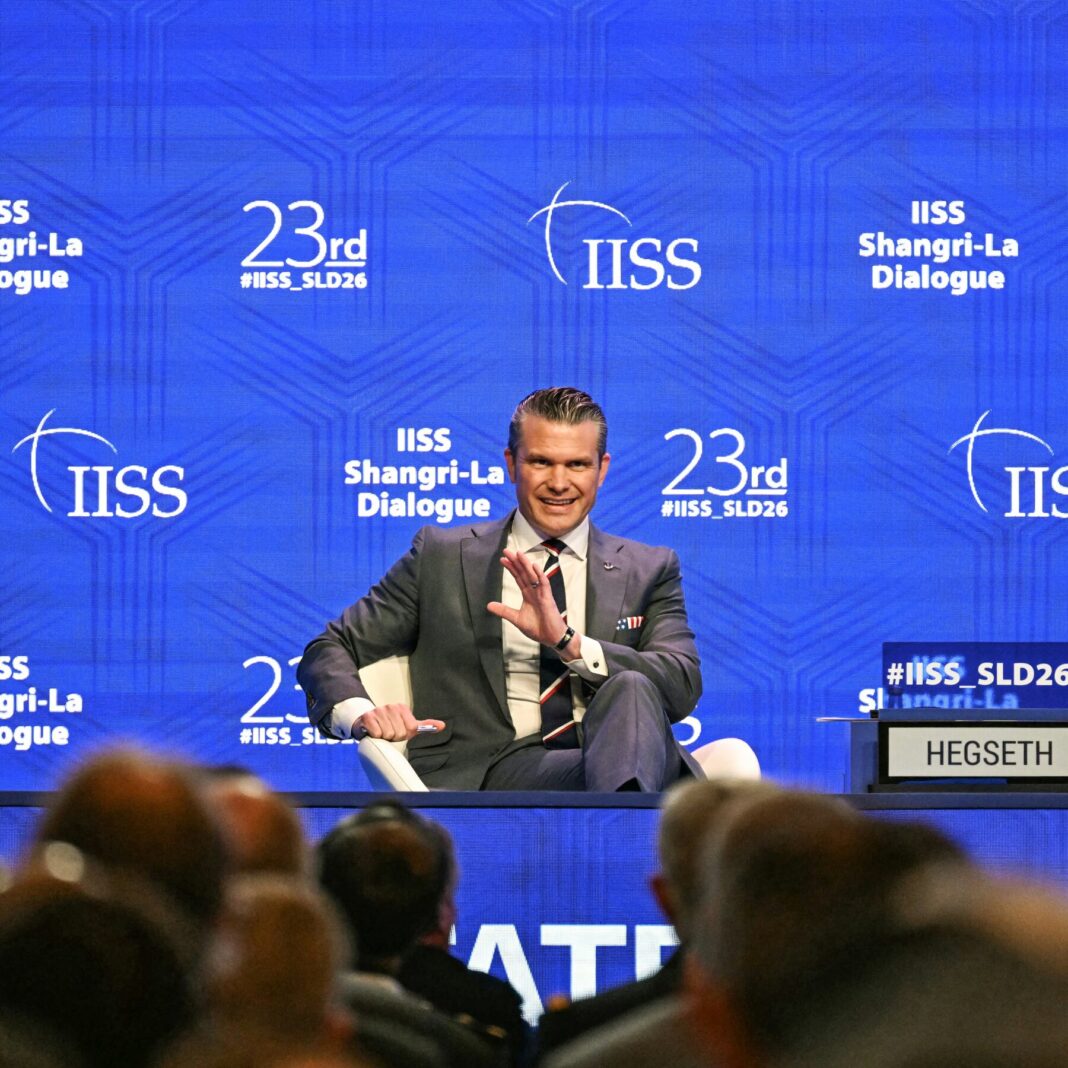
Defense Secretary Pete Hegseth delivered a direct message to Asian allies at the annual Shangri-La Dialogue security conference in Singapore. His remarks emphasized that future U.S. assistance will prioritize nations that actively invest in their own defense. The message was clear: Do more to get more from Washington.
Hegseth told Asian military leaders that the United States would grant faster access to its resources and support to partners that contribute meaningfully. He described this approach as a way to get to “the front of the line” for American aid and cooperation.
The speech underscored a shift in U.S. strategy toward burden-sharing in the region. Hegseth argued that Asian nations must increase their defense spending and take greater responsibility for regional stability. This stance aligns with broader efforts to recalibrate alliances.
The Defense Secretary did not single out any specific country but directed his comments to the broader audience of defense officials. He emphasized that the U.S. remains committed to the region but expects reciprocal efforts from partners. This reflects a pragmatic approach to security partnerships.
Several conference attendees noted the firm tone of the address. Some viewed it as a realistic push for self-reliance among Asian nations. Others expressed concern that it could strain relationships with countries still building their military capabilities.
Hegseth also highlighted the importance of collective deterrence against shared threats. He pointed to challenges such as maritime disputes and cyberattacks that require coordinated responses. The message reinforced that no country can rely solely on external support.
The speech came amid growing tensions in the Asia-Pacific region, particularly over territorial claims and military modernization. Hegseth’s remarks sought to reassure allies while setting clear expectations for future collaboration. The tone was direct but not confrontational.
Overall, the Defense Secretary’s message aimed to balance U.S. commitments with a demand for greater contributions. It signals a transactional element to future defense partnerships. Asian leaders now face the task of assessing their own readiness and willingness to step up.