
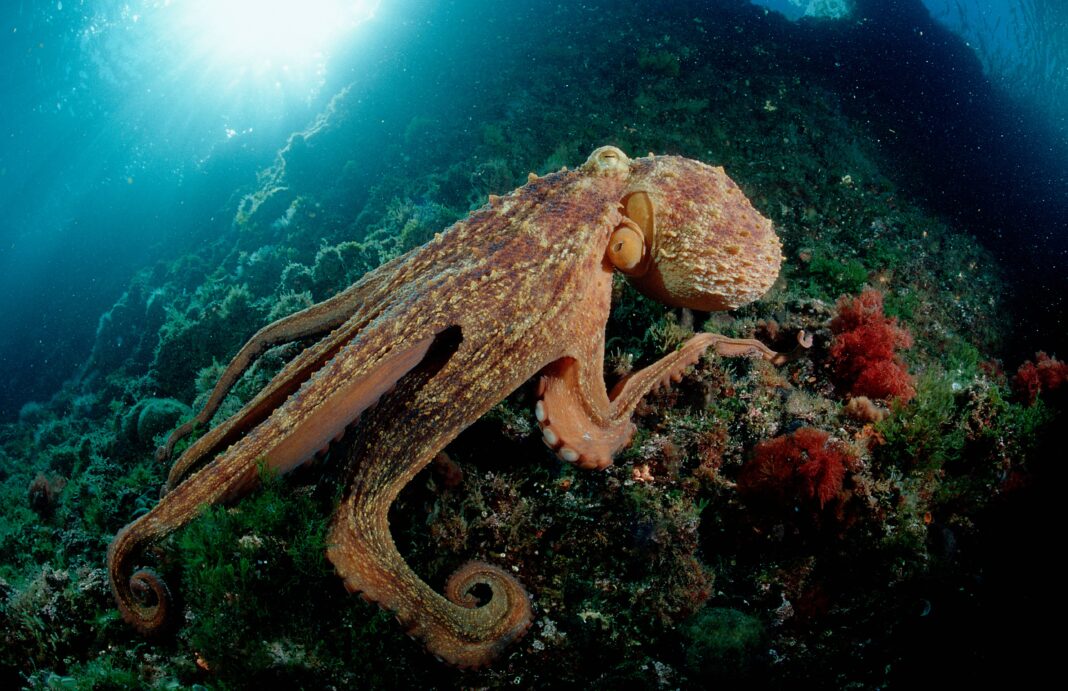
Octopuses can squeeze through openings barely larger than their eyes. New research reveals this ability relies on a deliberate, multi-step process rather than simple flexibility. The findings could influence the design of soft robots built to work in tight spaces.
The study examined how octopuses coordinate their arms and body during passage through narrow gaps. High-speed cameras captured the animals reshaping themselves in stages. Each stage serves a distinct purpose in the maneuver.
First, the octopus explores the opening with its arms to gauge size and shape. It then aligns its body and begins pushing through the smallest possible section. The arms lead the way, searching for grip on the far side.
Next, the animal uses a water-jet propulsion technique to help drive itself forward. Muscles along the arms contract in sequence to narrow the body’s profile. This combination of pushing and reshaping allows passage through gaps that seem impossible.
The process is not a single continuous motion. It involves pauses and adjustments as the octopus monitors progress. Sensory feedback from the arms guides each phase of the squeeze.
Researchers observed that the animals never force their way through blindly. They test, adjust, and proceed only when the path is clear. This suggests a level of control that scientists had not fully appreciated.
The findings offer a new model for engineers designing flexible robots. Such machines could navigate disaster sites, inspect pipes, or perform surgery. The octopus provides a blueprint for movement in spaces too small for rigid devices.