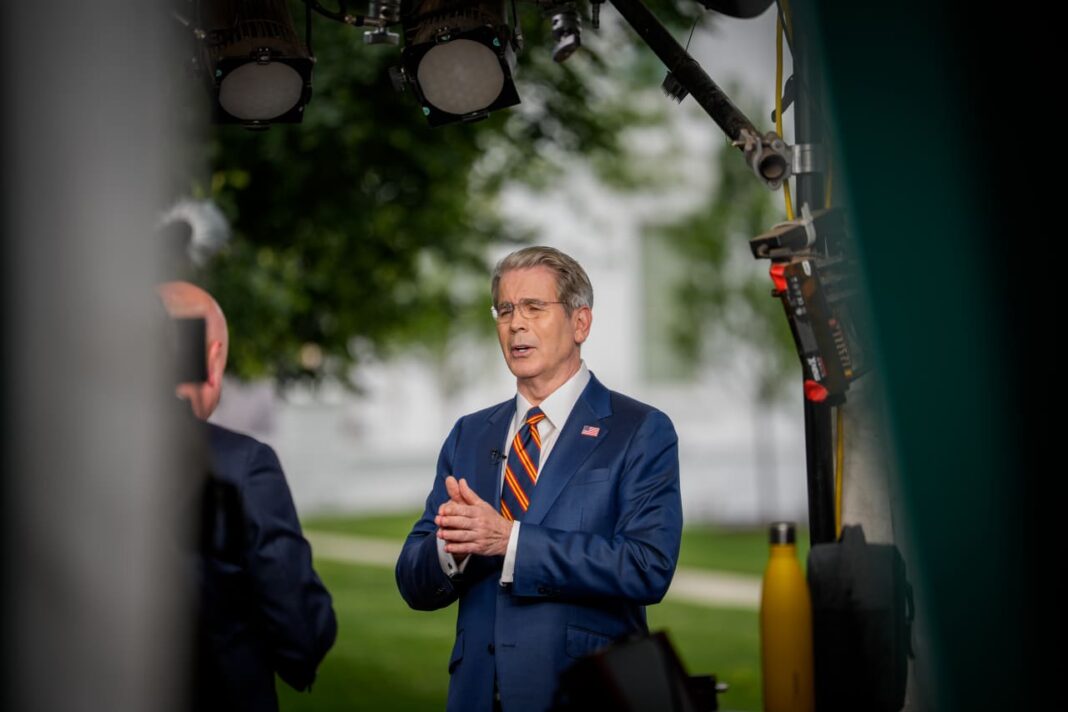
President Donald Trump, Vice President JD Vance, and Treasury Secretary Scott Bessent have attempted to soothe concerns in the bond market using statements that diverge from observable data. Their approach has drawn skepticism from investors and financial analysts, who rely on precise metrics rather than rhetorical framing.
The trio’s messaging centered on downplaying recent Treasury yield movements and economic signals. They characterized market fluctuations as temporary and framed their policies as stabilizing forces. However, market participants have pointed to concrete figures that contradict these assertions.
Bond traders have noted that yield increases over recent weeks reflect real concerns about fiscal policy and inflation expectations. The administration’s claims do not align with the quantitative evidence. Investors are watching for concrete actions, not narrative adjustments.
This disconnect highlights a broader pattern in which political messaging meets financial reality. Wall Street operates on data, such as yield spreads and auction results, which are difficult to spin. The market’s response often relies on verifiable facts rather than persuasive language.
Analysts suggest that coordinated public statements from top officials might offer short-term reassurance. Yet, without substantive policy changes, such efforts risk losing credibility. The bond market’s reaction will likely hinge on upcoming economic reports and federal borrowing plans.
Historical precedents indicate that consistent misalignment between official statements and market data can lead to volatility. Investors may demand higher premiums to compensate for perceived uncertainty. This dynamic could amplify the very pressure officials aim to reduce.
For now, the administration’s strategy remains under scrutiny. Observers recommend that policymakers align their public remarks with transparent financial metrics to rebuild trust. The gap between rhetoric and numbers will continue to shape market sentiment in the coming weeks.