Sunday, September 20, 2026
17.9 C
London

What Exactly Is a Wave Election? And Should Republicans Be Worried?

A wave election is a midterm cycle where one party makes sweeping gains across multiple levels of government. These shifts often defy normal expectations and reshape the political landscape for years. The term signals a broad voter backlash rather than isolated local wins.

Recent polling has sparked questions about whether Democrats could see such a wave in the next midterms. Historical patterns show that the president’s party typically loses seats during these elections. When losses grow unusually large, analysts call it a wave.

Several factors determine whether a midterm becomes a wave election. National mood, turnout, economic conditions, and candidate quality all play a role. Small shifts in close races can produce dramatic seat changes under the right circumstances.

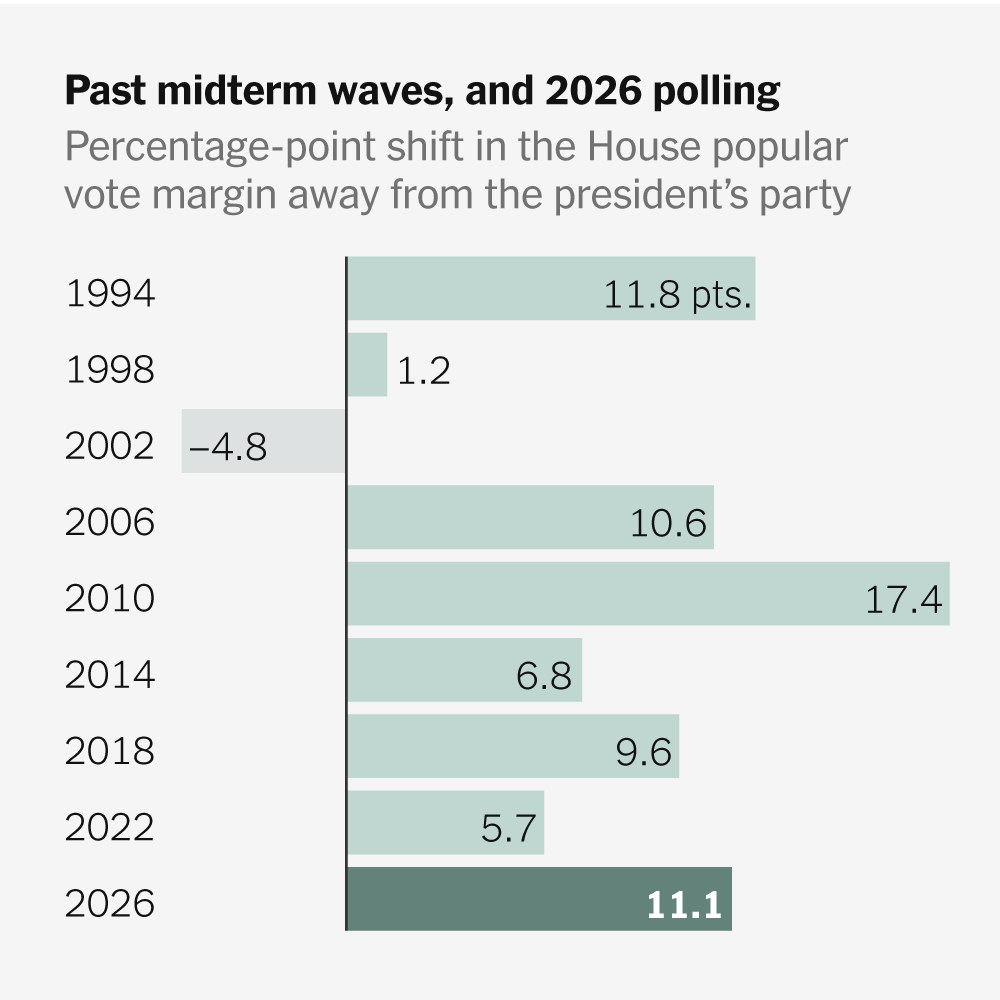
Today’s polling numbers show Democrats leading in generic congressional ballots. That lead is wider than in several recent midterm cycles. However, polls taken this far out often miss the final result by significant margins.

Comparisons to past waves offer useful but limited insight. The 1994, 2006, and 2010 elections each had distinct dynamics. No two waves follow the same blueprint, making direct forecasts risky.

Republicans currently hold a narrow House majority. That makes them vulnerable to even modest Democratic gains. A wave would require Democrats to win districts that typically favor the GOP.

Early warning signs for Republicans include retirements, weak fundraising in key races, and shifting suburban support. Democrats have outperformed in special elections since the last general election. These trends do not guarantee a wave, but they raise the odds.

A true wave would give Democrats control of the House and possibly the Senate. It would also reshape state legislatures and governorships. For now, the data suggests a competitive environment that could tip either way.


Hot this week

Troy Jackson, a Progressive Brawler, Tries to Flip a Senate Seat in Maine

Troy Jackson entered Maine’s Senate race unexpectedly. Democrats now...

How President Trump Broke the Kennedy Center

The Kennedy Center has faced significant upheaval under President...

Markwayne Mullin’s Failed ICE Nomination Exposes His Struggle to Prove Immigration Toughness

Senator Markwayne Mullin failed to secure confirmation for his...

American Culture Quiz: Test Yourself on Fast-Food Frenzy and Campaign Controversy

A weekly quiz tests knowledge of American traits, trends,...

Trump vs. MAGA: The Data Center Divide Splitting His Base

President Donald Trump continues to champion data centers and...

Topics

Troy Jackson, a Progressive Brawler, Tries to Flip a Senate Seat in Maine

Troy Jackson entered Maine’s Senate race unexpectedly. Democrats now...

How President Trump Broke the Kennedy Center

The Kennedy Center has faced significant upheaval under President...

Markwayne Mullin’s Failed ICE Nomination Exposes His Struggle to Prove Immigration Toughness

Senator Markwayne Mullin failed to secure confirmation for his...

American Culture Quiz: Test Yourself on Fast-Food Frenzy and Campaign Controversy

A weekly quiz tests knowledge of American traits, trends,...

Trump vs. MAGA: The Data Center Divide Splitting His Base

President Donald Trump continues to champion data centers and...

Meta’s Muse Is Better at Surveilling Than Helping Me

Meta’s new Muse app raises concerns over data collection...

Why It’s So Hard to Decode What the Bond Market Is Really Saying

The bond market is sending mixed signals that confuse...

Crypto’s Lost Mainstream Moment: Why the Blame Game Could Define Its Future

The cryptocurrency industry failed to capitalize on a critical...
spot_img

Related Articles

Popular Categories

spot_imgspot_img