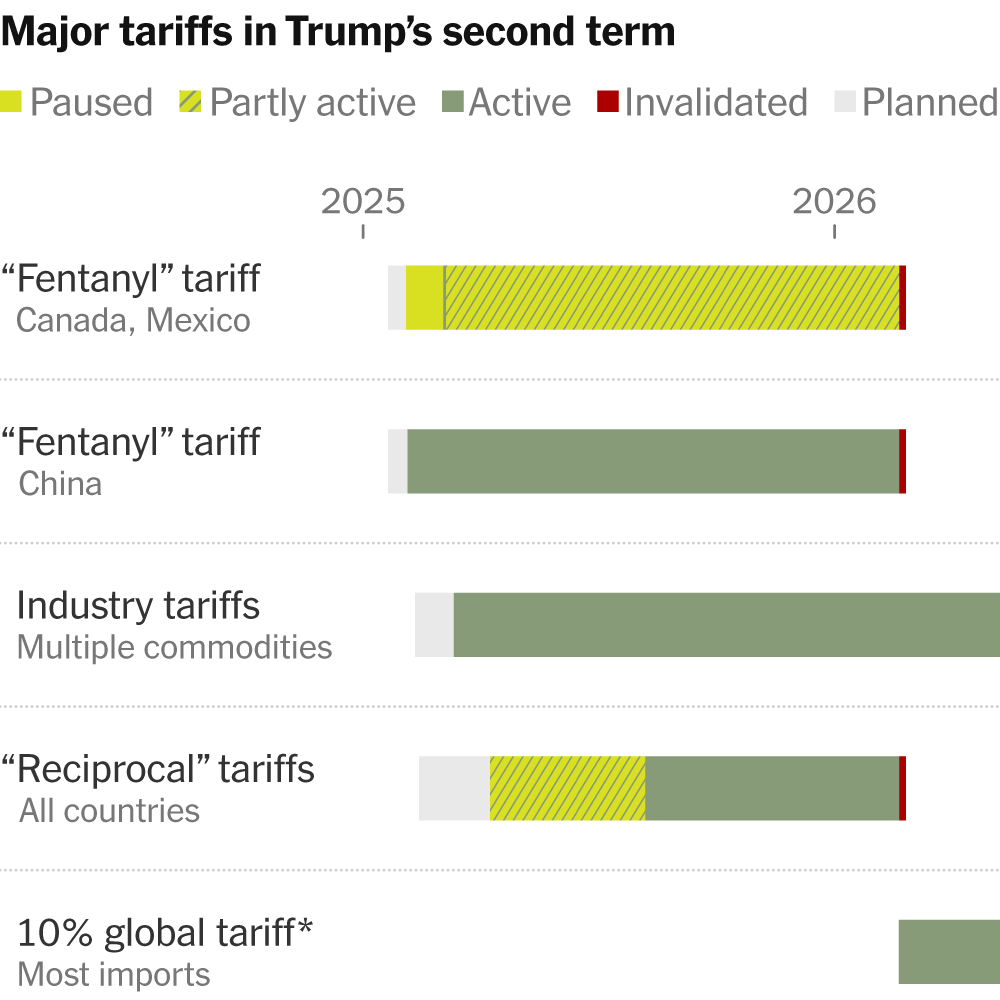
President Trump has repeatedly restructured his tariff policies, with some facing legal challenges and new measures still under development.
Several tariffs remain active, including broad duties on steel and aluminum imports. These were initially imposed in 2018 and later expanded.
New tariffs on Chinese goods have been proposed but not yet implemented. Officials have cited national security concerns and trade imbalances as justifications.
Some tariffs have been ruled illegal by international trade bodies. The World Trade Organization found certain measures violated global trade rules.
Legal rulings have forced revisions to tariff targets and rates. The administration has responded by adjusting product categories and country-specific exemptions.
Additional tariff modifications are expected in the coming months. Trade negotiations with key partners remain ongoing.
Consumer prices have increased as importers pass on tariff costs. Industries reliant on imported materials have reported supply chain disruptions.