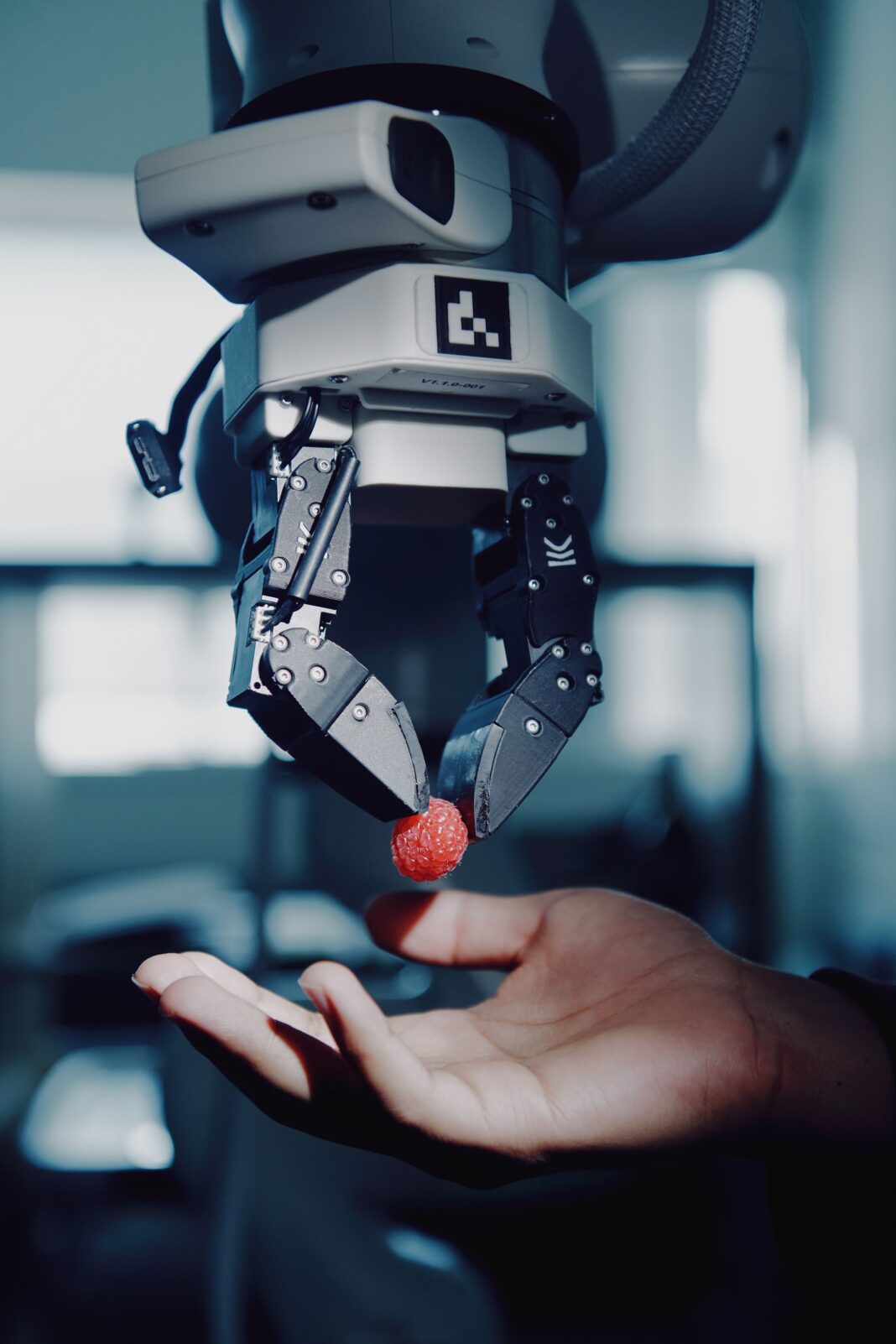
A new wave of robotic dexterity is emerging, and it looks nothing like a human hand. These machines, equipped with simple pincers, are performing surprisingly complex tasks, from sorting chicken nuggets to screwing in light bulbs.
The company behind this technology, Eka, is showcasing robots that move with an eerie, lifelike precision. Their current success raises a larger question: is true physical intelligence possible without a humanlike form?
This focus on basic grippers may appear counterintuitive in an age of advanced robotics. Yet the pincer design offers a distinct advantage: simplicity. Fewer moving parts mean lower costs and greater reliability in industrial settings.
The work signals a potential shift in the robotics industry. Many developers chase a “ChatGPT moment” for machines—a breakthrough where artificial intelligence allows them to learn and adapt like humans do.
Eka’s robots suggest that moment may arrive not with a humanoid figure, but with a humble two-fingered claw. Their ability to handle delicate items without crushing them points to sophisticated control algorithms.
The technology remains focused on practical applications for now. Factories and warehouses could see these pincer-equipped robots taking on jobs once thought too variable for automation.
Success in this domain would challenge assumptions about what physical intelligence requires. It might prove that less is more when building machines that can work alongside people.