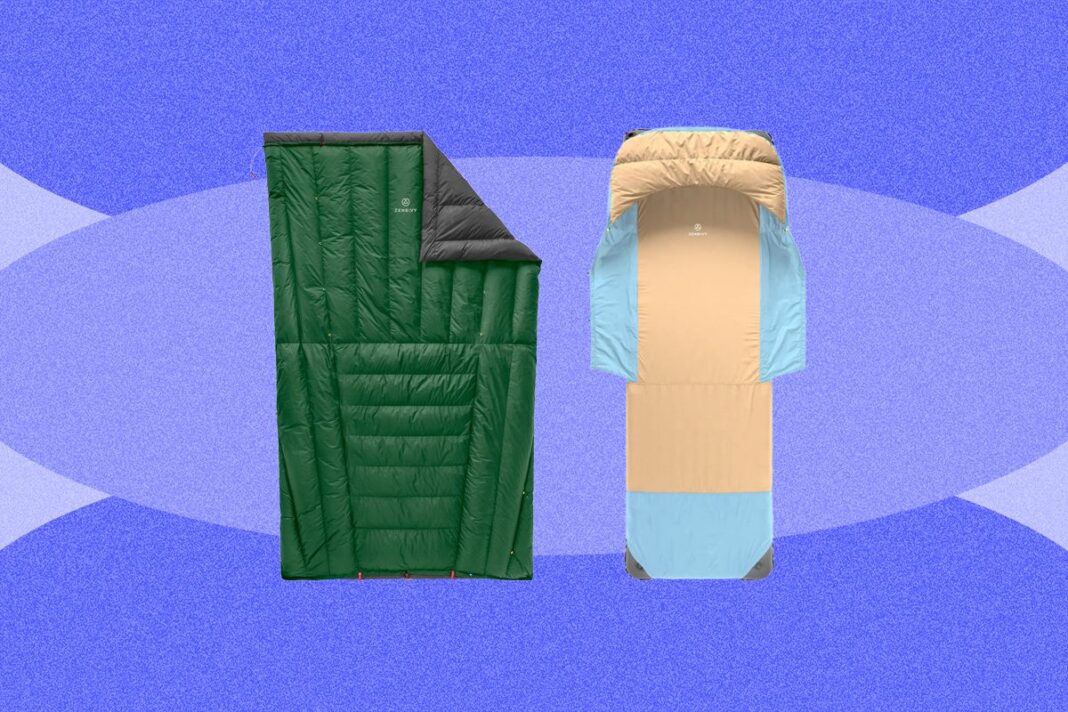
Quilts have become a popular alternative to traditional sleeping bags among backpackers. Many users find them more comfortable and lightweight for backcountry sleeping.
Sleeping bags often restrict movement due to their mummy-style design. Quilts eliminate that confinement, allowing sleepers to shift positions freely during the night.
Ultralight quilts weigh significantly less than most sleeping bags. Dropping pack weight is a key advantage for hikers covering long distances. A quilt can save several ounces without sacrificing warmth.
The design of a quilt uses insulation only where needed, on top of the sleeper. The bottom is compressed under body weight and provides little warmth, so quilts skip that material entirely. This reduces bulk and packed size.
Quilts offer better ventilation options. Users can easily kick a foot out or adjust the quilt for temperature control. This makes them suitable for a wider range of conditions compared to a sealed sleeping bag.
Setup and pack-down are simpler with a quilt. There is no zipper to catch or compress. Many models attach directly to a sleeping pad using straps or clips, creating a secure system.
For most three-season backpacking trips, a quilt provides sufficient warmth and comfort. It serves as a practical upgrade for campers seeking a lighter, more flexible sleep system.