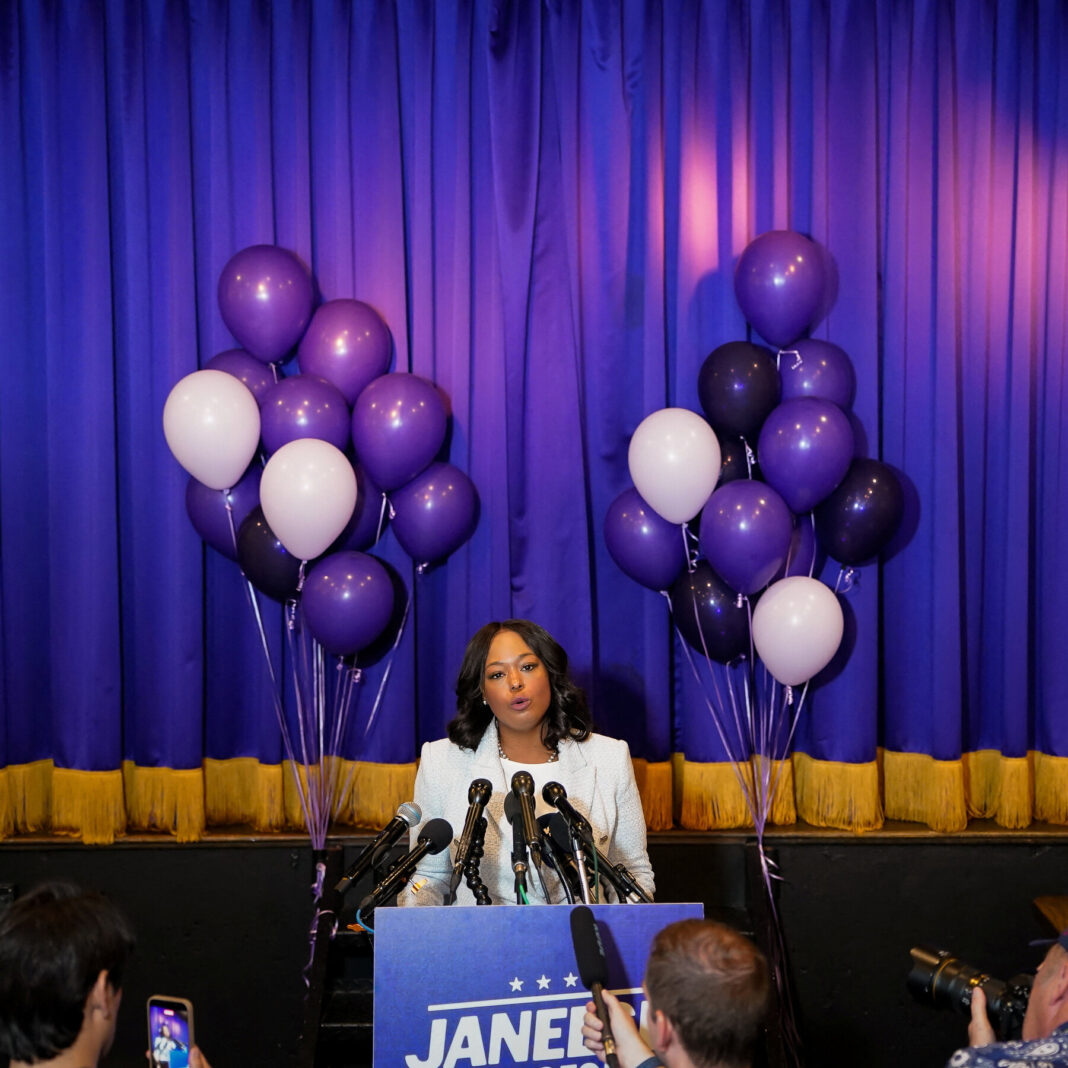
Janeese Lewis George, the democratic socialist who won Washington’s Democratic primary last week, is now the presumptive next mayor of the District of Columbia. In a recent interview, she struck a defiant tone, declaring, “We’re going to find ways to resist.” The statement signals her readiness to confront potential challenges from a possible second Trump administration.
As mayor, George would inherit a unique relationship with the federal government. Washington, D.C., lacks full statehood, meaning Congress retains significant authority over its local laws and budget. This dynamic could intensify if former President Donald Trump returns to the White House.
Trump has previously clashed with District leaders over policies and funding. During his first term, he threatened to intervene in local matters, including policing and homelessness. George’s progressive platform, which includes expanding social services and reforming public safety, may face direct opposition from a hostile federal executive.
The mayor-elect’s background as a former public defender and councilmember shapes her approach. She has consistently advocated for reducing police funding and reinvesting in communities. This stance could put her at odds with a Trump administration that emphasizes law and order.
George’s primary victory signals a shift in the District’s political landscape. She defeated a more moderate incumbent, reflecting growing support for progressive policies among local voters. Her base includes young activists and residents frustrated with the status quo.
The coming months will test her ability to navigate these federal-local tensions. George plans to use legal avenues and coalition-building to protect D.C.’s autonomy. She has already begun reaching out to allies in Congress to shore up support.
Observers note that her resistance strategy mirrors that of other Democratic leaders in Republican-controlled states. The key difference is that D.C. has no vote in Congress, limiting its formal power. George will rely on public pressure and media attention to amplify her cause.
For now, her focus remains on the general election in November, which is heavily Democratic. If elected, she would become the city’s first Black woman mayor and a prominent figure in the national debate over local control. The stakes are high, both for the District and for the broader fight against federal overreach.