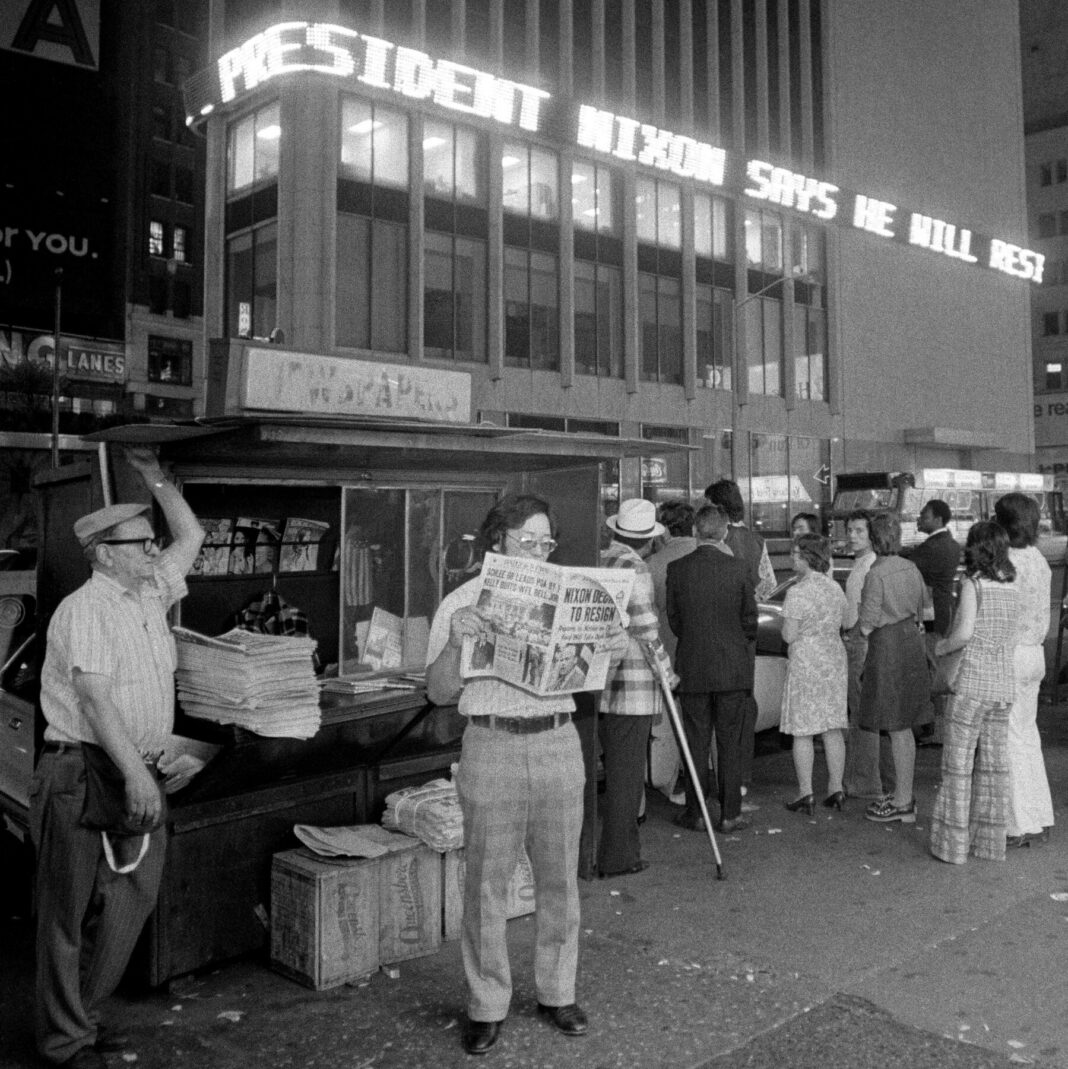
When compared to the constant stream of political turmoil in the modern era, the Watergate scandal can resemble a brief, isolated event. This perspective, recently suggested by Senator JD Vance, may hold more truth than many critics are willing to admit. The offenses committed by President Richard Nixon were not a fabrication of a so-called “deep state,” but rather a documented abuse of power.
The political landscape has shifted dramatically since the 1970s. In the age of Donald Trump, the public has been exposed to a relentless cycle of investigations, impeachment proceedings, and contested elections. This constant exposure has fundamentally changed how voters perceive political scandal.
A fractured media environment plays a key role in this shift. Where once three major networks shaped a unified national narrative, today’s audiences can choose news sources that align with their existing beliefs. This fragmentation dilutes the impact of any single story, allowing scandals to be dismissed or ignored by large segments of the population.
Voters have become increasingly inured to the shock of high-level misconduct. Behaviors that would have ended a political career in Nixon’s time are now often met with a shrug or partisan defense. The gravity of breaking into a political opponent’s headquarters now seems almost quaint compared to the scale of later allegations.
This desensitization does not mean the Watergate crimes were minor. The break-in and subsequent cover-up represented a direct threat to democratic institutions. However, the public’s capacity for outrage has been significantly eroded by the sheer volume of political crises that have followed.
The Vance argument highlights a troubling evolution in public expectations. It suggests that the baseline for acceptable conduct has been lowered, making past scandals appear as mere blips in a darker history. This normalization is a quiet but powerful force in modern politics.
Ultimately, the comparison serves as a warning. If Watergate can be reframed as a minor event, the standards for accountability have clearly changed. The challenge for the future will be finding a way to restore a shared sense of political integrity.