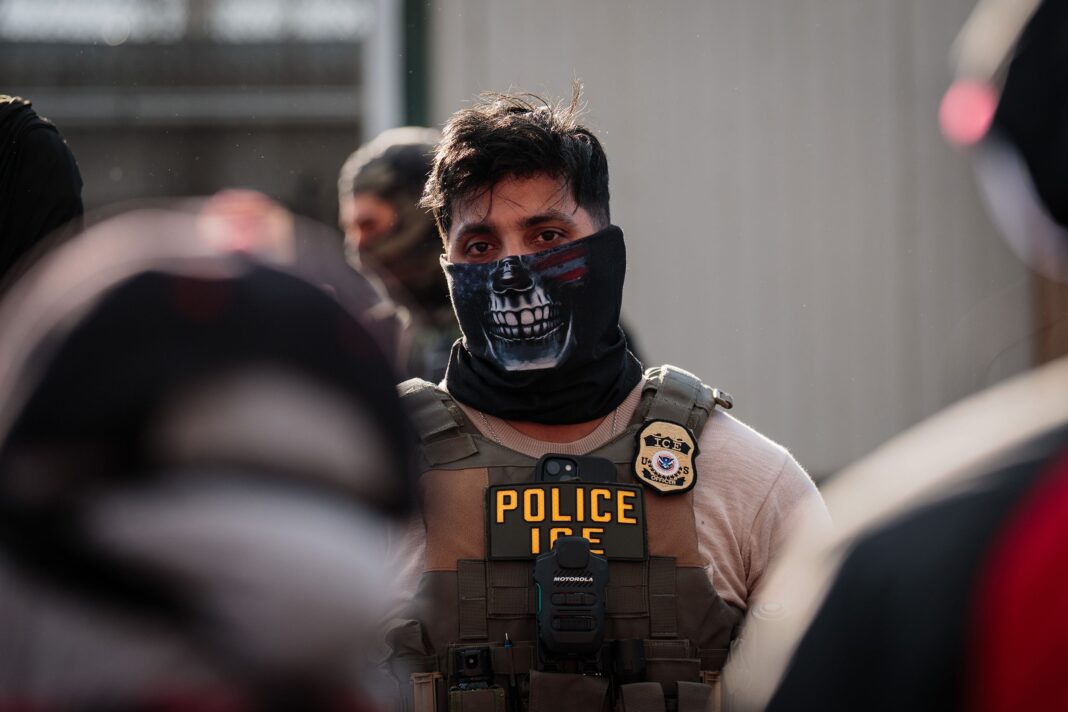
The Trump administration is preventing state and local governments from enforcing laws that would require Immigration and Customs Enforcement (ICE) agents to show their faces in public. Legal arguments against these so-called anti-mask laws cite concerns for agent safety.
Federal lawyers argue that requiring ICE agents to be visibly identifiable would endanger their lives and compromise ongoing operations. They claim anonymity is essential for protecting officers from retaliation during enforcement actions.
To support this position, the administration has pointed to an ICE-affiliated facial recognition art project. Officials describe the project as a potential tool for identifying agents, raising concerns about doxxing and targeted threats.
However, the cited art project does not actually function as a working surveillance system. It is a conceptual work that lacks the technical capability to track or identify ICE personnel in real time.
State-level efforts to enforce anti-mask laws have faced legal pushback from the Department of Justice. These conflicts highlight a growing tension between federal immigration enforcement and local oversight measures.
Critics argue that blocking these laws undermines transparency and public accountability. They contend that agents operating without visible identification erodes trust between communities and federal authorities.
The legal battles are expected to continue, with multiple states pushing back against the federal stance. The outcome could reshape how immigration enforcement is conducted in public spaces across the country.