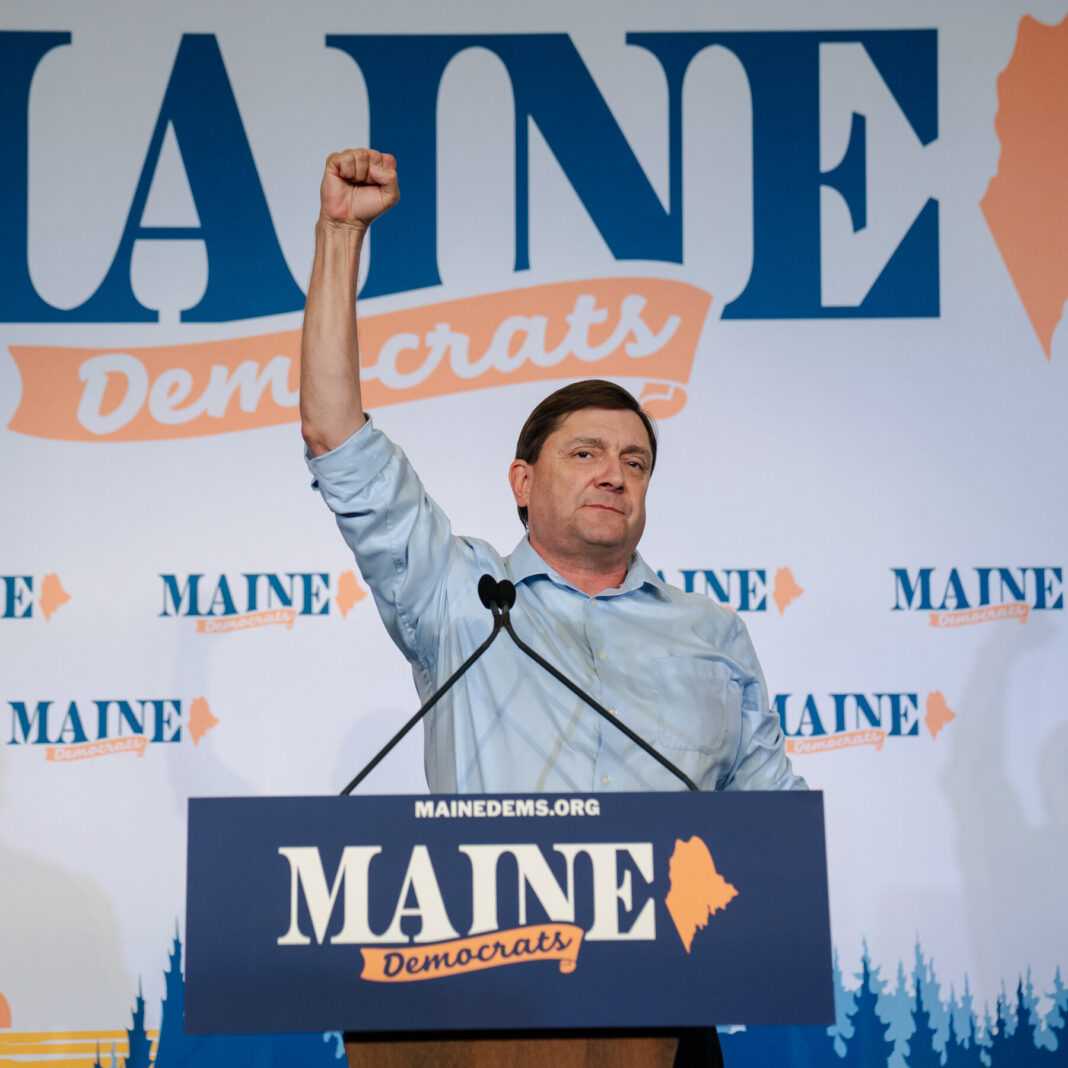
Troy Jackson, a Democratic state senator and former logger from northern Maine, is emerging as a potential challenger to Republican Senator Susan Collins. His blue-collar background and populist messaging have positioned him as a working-class alternative in a state where Collins has long held sway.
Jackson grew up in Allagash, a small town near the Canadian border, and spent years working in the timber industry. His experience in the woods and mills gives him firsthand credibility on labor and rural economic issues, which he frequently highlights in his public remarks.
In the Maine State Senate, Jackson has championed policies aimed at boosting wages, expanding health care access, and supporting union rights. His legislative record reflects a focus on economic fairness that appeals to voters in struggling mill towns and rural communities.
The challenge for Jackson is significant. Collins has won five Senate terms by building a reputation for bipartisanship and securing federal funding for Maine projects. She also maintains strong support among moderate and independent voters.
Jackson’s campaign strategy emphasizes the gap between Collins’s voting record and the needs of working families. He criticizes her support for tax cuts and corporate deregulation, arguing these policies benefit the wealthy at the expense of middle-class and rural residents.
Political analysts note that Jackson’s path to victory requires winning over voters in traditionally Republican areas. He must also counter Collins’s fundraising advantage, which allows her to dominate television advertising and direct mail.
Labor unions and progressive groups have rallied behind Jackson, viewing him as a genuine advocate for workers. Their endorsement brings ground-level organizing and volunteer support, which could help narrow the resource gap.
The race remains competitive, with Collins currently holding an edge in name recognition and campaign funding. Jackson continues to build his profile through town halls, local media appearances, and targeted policy proposals.
The outcome may depend on voter turnout in rural and working-class regions. Jackson’s success in mobilizing these communities will be critical to any upset.
Maine’s independent streak makes the contest unpredictable. Voters have split their tickets in recent elections, supporting Republican Collins alongside Democratic presidential candidates.
Jackson’s biography offers a stark contrast to Collins’s establishment image. Whether that distinction translates into enough votes remains the central question of the campaign.
The election cycle will test whether Democratic working-class messaging can overcome the structural advantages of an entrenched incumbent. Troy Jackson now carries those hopes on his shoulders.