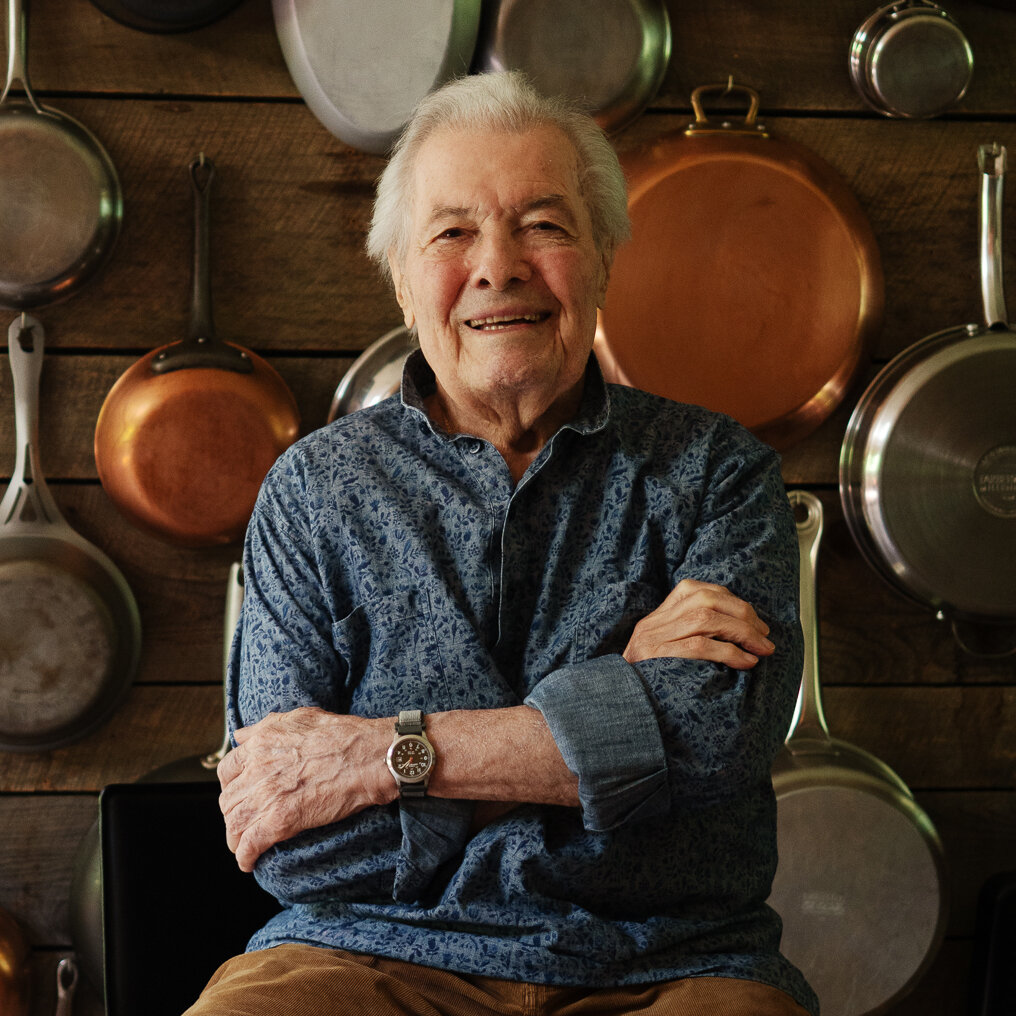
Jacques Pépin’s influential cookbook, “La Technique,” marks its 50th anniversary this year. The book introduced American home cooks to professional methods that were once considered out of reach. It covered a wide range of skills, from the delicate art of carving apple swans to the precise work of breaking down a whole lamb.
Published in 1976, the book arrived at a time when American cuisine was undergoing significant change. Pépin’s approach was direct and visual, relying heavily on step-by-step photography to demystify complex kitchen tasks. This format allowed readers to see exactly how each technique should look at every stage of the process.
The book’s legacy lies in its thorough scope. It did not focus on a single dish or style but instead built a foundational library of skills for the home cook. Topics ranged from basic knife cuts and vegetable preparation to advanced pastry work and meat butchery. This comprehensive structure set a new standard for culinary instructional books.
Pépin, a French-born chef with experience in some of the world’s most prestigious kitchens, brought a level of rigor to the home market that was uncommon at the time. His teaching style was patient and precise, never condescending. He assumed that with the right guidance, any dedicated cook could master professional techniques.
The cookbook’s impact is still visible in modern culinary education. Many of the techniques Pépin outlined remain standard practice in cooking schools today. His insistence on proper hand position, tool handling, and efficient movement continues to influence how chefs are trained.
The anniversary comes as interest in foundational cooking skills sees a resurgence among younger generations. As home cooks seek to improve their proficiency, “La Technique” remains a relevant and reliable reference. Its straightforward layout makes complex tasks feel achievable without oversimplifying the craft.
Pépin’s work has remained in print for five decades, a testament to its enduring value. While many cookbooks become dated as trends shift, the core principles of technique remain timeless. The book stands as a bridge between professional chefdom and the home kitchen, proving that skill comes from practice and instruction rather than from expensive equipment.
For the past 50 years, “La Technique” has served as a trusted manual for those who want to cook with confidence and purpose. It has taught generations that meticulous preparation leads to better outcomes in the final dish. The anniversary is not just a celebration of a book, but a recognition of a philosophy that has shaped modern home cooking.