President Trump has turned to North Korea’s leader, Kim Jong-un, as he seeks a path forward on stalled negotiations with Iran. The move brings back a familiar dynamic from his first term, when talks with Pyongyang ultimately collapsed without a deal. The White House has not confirmed the nature of the outreach, but the signal is clear.
Seven years ago, Trump failed to secure a denuclearization agreement with North Korea and walked away from the table. Now, facing a similar quagmire in Iran, he is revisiting the same playbook. The decision has raised questions among allies and diplomats about the likelihood of a breakthrough.
Iran’s nuclear program has advanced significantly since the collapse of the 2015 nuclear deal. Enrichment levels are far beyond the limits set by that agreement, and international inspectors have reported reduced access to key sites. The pressure on Washington to respond has grown, with no clear diplomatic off-ramp in sight.
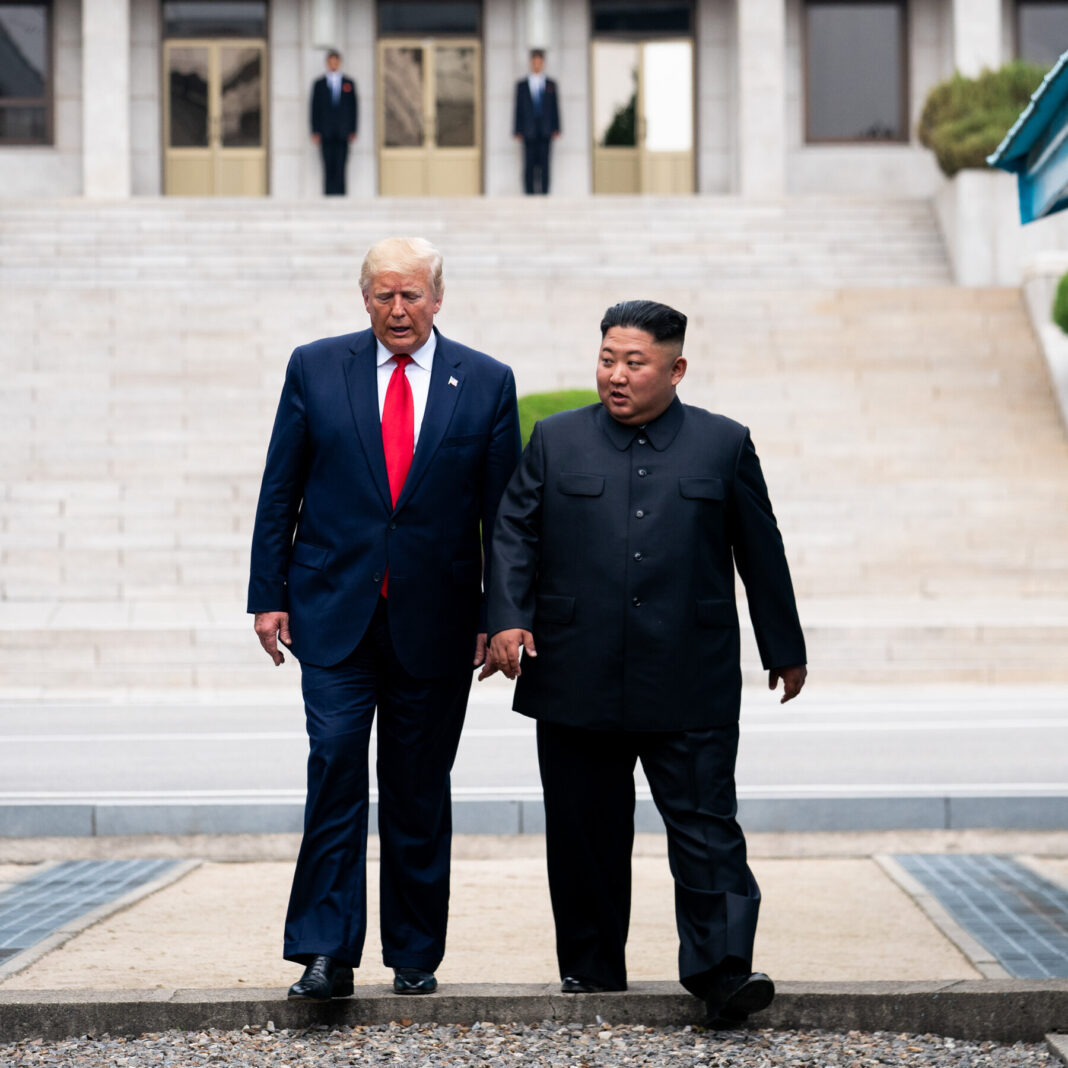
Kim Jong-un, for his part, has remained a complex counterpart. His meetings with Trump produced historic images but little tangible progress. North Korea’s weapons arsenal has only expanded in the years since their summits. Analysts note that any role Kim plays in Iran talks would be largely symbolic and unlikely to alter Tehran’s calculations.
Regional dynamics further complicate the picture. Israel and Gulf states have urged a firmer stance against Iran, while European powers push for renewed diplomacy. Trump’s tilt toward Kim suggests a search for unconventional leverage rather than a coordinated strategy with allies. That approach carries its own risks.
The parallel between North Korea and Iran is not lost on former officials who watched the earlier effort dissolve. They point to a pattern of personal diplomacy that generated headlines but failed to produce enforceable commitments. The unresolved nature of the North Korea file serves as a cautionary tale for those expecting a different outcome with Iran.
No formal talks have been announced, and the timeline for any engagement remains unclear. The administration has signaled openness to direct contact, though conditions have been set that Tehran has so far not met. The coming weeks may reveal whether this renewed focus yields a change in course.
For now, the move underscores a broader strategy of relying on high-stakes personal engagement. Whether that strategy can succeed where it previously failed is the central question. The lessons of 2019 loom large over any new attempt to broker a deal.