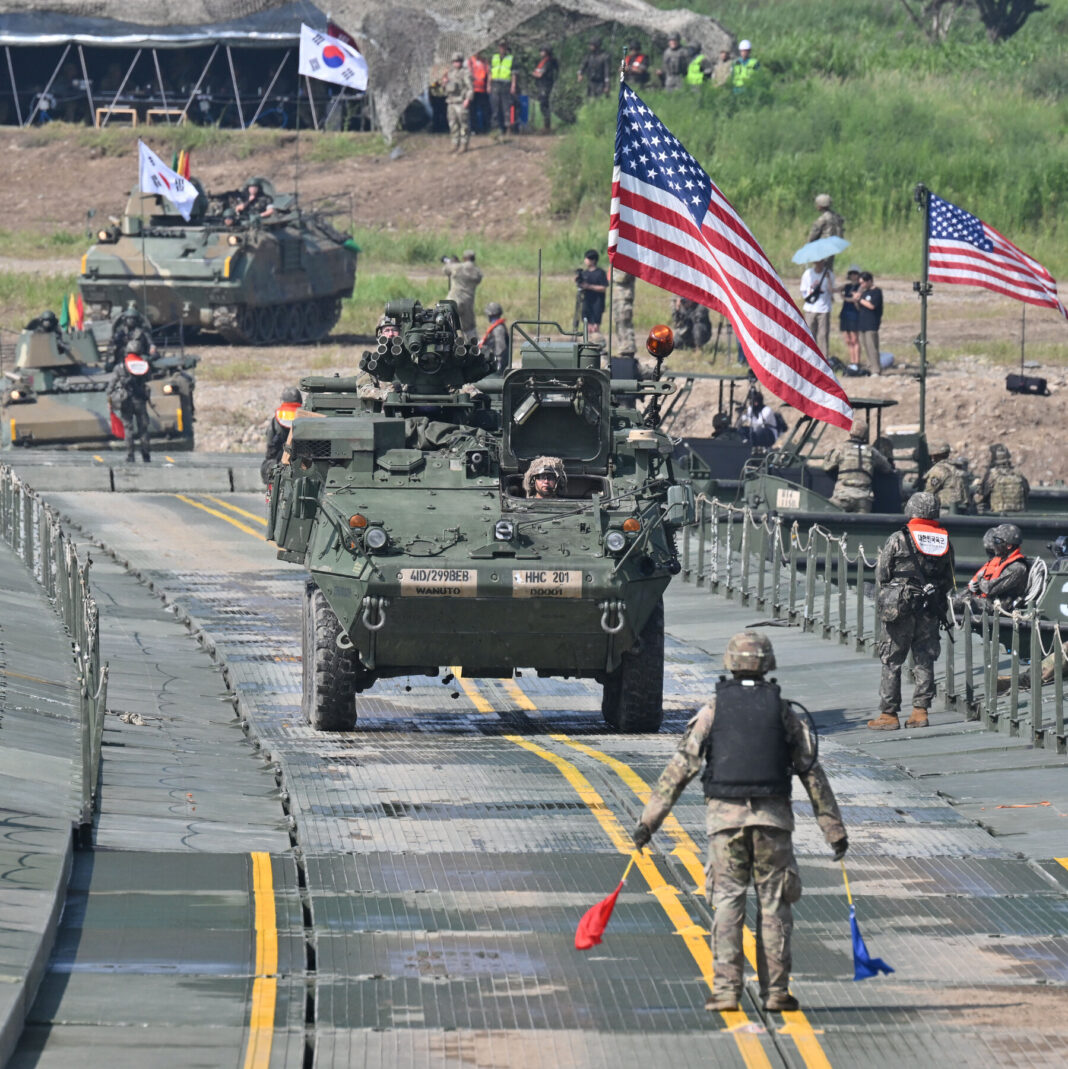
President Trump’s decision to curtail military exercises with South Korea has raised concerns among defense experts about the stability of the long-standing alliance. The move comes at a time when allies are questioning the reliability of U.S. security commitments.
The order, announced without prior public consultation with Seoul, marks a significant shift in the region’s defense posture. Analysts note that joint drills have served as a cornerstone for deterrence and operational readiness against potential threats.
Reducing the scale and frequency of these exercises may weaken the combined forces’ ability to respond swiftly. Military officials point out that routine training is essential for maintaining coordination between the two nations’ troops.
The decision also sends a diplomatic signal that could be interpreted as a concession to adversaries. Experts warn that such a perception might embolden aggressive actions and undermine negotiated positions.
South Korean leaders have expressed cautious public support, but behind closed doors, there is concern over the lack of detailed planning. Some officials worry that the abrupt change leaves little room for a structured transition to alternative training methods.
Pentagon spokespersons have insisted that the adjustments are necessary for cost efficiency and diplomatic progress. However, internal documents suggest that no comprehensive risk assessment was completed before the order was issued.
Former military commanders have highlighted the importance of continued engagement, arguing that the exercises are not merely symbolic. They provide real-world experience and build trust between rank-and-file service members.
The broader impact on regional security remains unclear, but the immediate effect is a growing sense of uncertainty. Allies in the region are now watching closely to see if similar reductions are applied to other partnerships.
The administration defends the move as part of a broader strategy to reduce overseas military commitments. Yet, critics argue that the cost-saving measure may ultimately lead to higher expenses if tensions escalate or a crisis occurs.
Without a clear public timeline for resuming full-scale exercises, the future of the alliance’s military component stays in question. For now, both nations’ forces must adapt to a new, constrained operational environment.
Experts urge clearer communication and a detailed plan to mitigate the risks associated with the reduced presence. The need for transparency has never been more pressing, as the strategic balance in the region begins to shift.