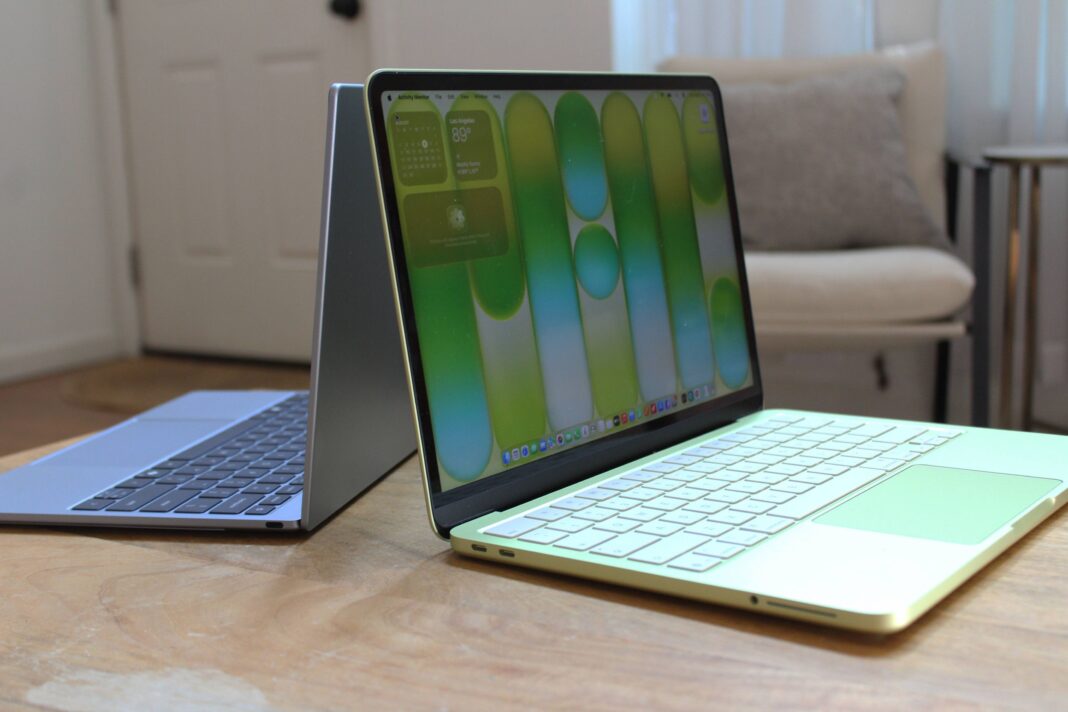
The Dell XPS 13 and MacBook Neo both arrive as premium-feeling laptops, yet they share a modest 8 GB of RAM. Priced around $700, the two devices compete directly for budget-conscious buyers seeking a high-end build. The question remains which model delivers the better value for everyday users.
The MacBook Neo surprises with its aluminum unibody chassis, a design that feels more expensive than its price suggests. Its keyboard offers a comfortable typing experience, though the trackpad remains slightly smaller than competitors. Dell’s XPS 13 counters with a carbon-fiber palm rest and a near-borderless display, providing a modern aesthetic that has long defined its lineup.
Performance testing reveals a clear upset in daily tasks. The MacBook Neo’s newer chip architecture handles multitasking and web browsing with fewer hitches than the XPS 13’s older processor. Benchmark scores show a solid lead for the Neo in single-core operations, which translates to snappier app launches. The XPS 13 still holds an advantage in sustained workloads, but most users will rarely push it to that limit.
Battery life flips the narrative in Dell’s favor. The XPS 13 lasts nearly two hours longer on a single charge under mixed usage, a critical edge for commuters. The MacBook Neo, however, charges faster and runs cooler during video playback. Both laptops maintain quiet fan profiles, but the Neo’s efficiency becomes noticeable during light office work.
Display quality separates the two further. The XPS 13 features a brighter 13.4-inch panel with richer color accuracy, ideal for photo editing. The MacBook Neo’s screen offers adequate sharpness but struggles with outdoor visibility due to lower peak brightness. Port selection remains limited on both, though Dell includes a USB-A port alongside two Thunderbolt connections, while the Neo sticks to two USB-C ports.
Connectivity and software create additional trade-offs. The XPS 13 runs Windows 11, allowing broader hardware compatibility and easy upgrades for storage. The MacBook Neo relies on macOS, which offers tighter integration with iPhones and a simpler user interface. Users invested in either ecosystem will find their existing accessories sway the decision.
Design portability favors the Neo, which weighs less than the XPS 13 and fits more easily into smaller bags. Dell’s model, however, provides a more rigid hinge and sturdier build quality. Neither laptop includes a touchscreen, but the XPS 13’s optional 4K upgrade remains a selling point for those willing to stretch the budget.
Ultimately, the $700 price tag pairs both laptops against stronger rivals at similar costs. The MacBook Neo wins for everyday responsiveness, lighter carry, and efficient cooling. The Dell XPS 13 takes the crown for battery endurance, screen brightness, and port versatility. Buyers should prioritize their daily habits, with the Neo suited for portable productivity and the XPS 13 for media consumption and longer away-from-desk sessions.