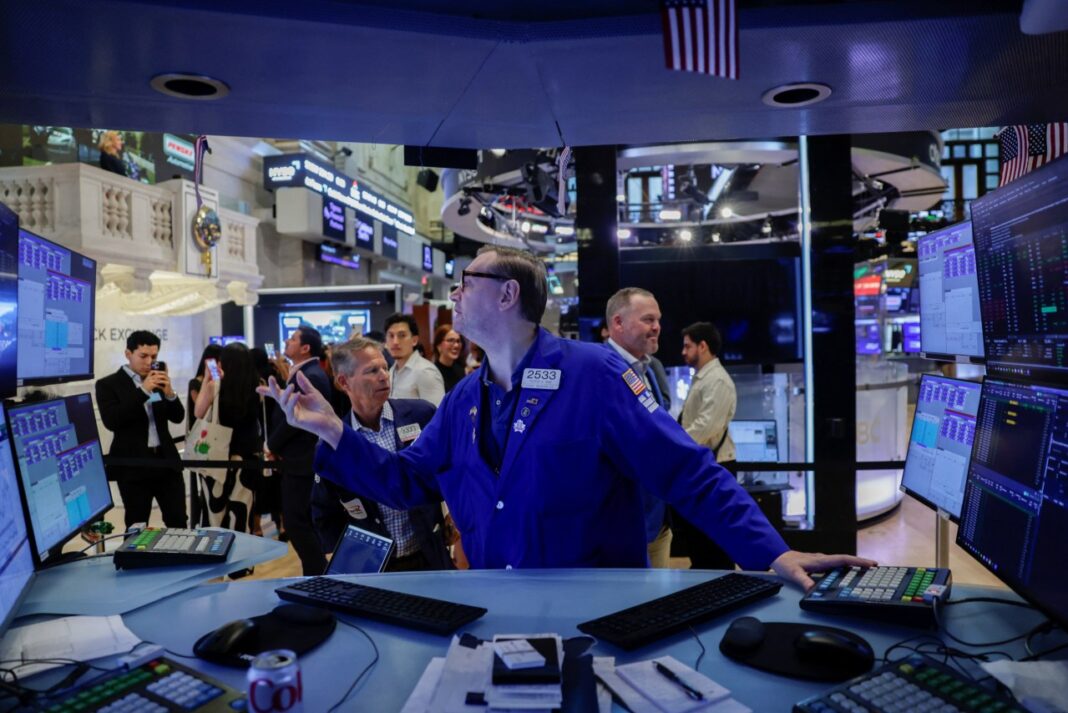
Wall Street’s momentum trade has reversed sharply, leaving investors who bet on rising winners facing sudden losses. The strategy, often described as a self-fulfilling prophecy, had delivered steady gains for months. Recent market conditions have disrupted that pattern, catching many participants off guard.
The shift marks a notable change in market dynamics. Traders had piled into stocks with strong recent performance, expecting the trend to continue. That approach worked until it didn’t, and the unwind has been rapid. Analysts point to changing sentiment and economic data as triggers for the reversal.
Losses have concentrated in sectors that previously led the rally. High-growth technology and other speculative names have seen the steepest declines. Meanwhile, value-oriented stocks have gained favor, indicating a rotation rather than a broad selloff. This rotation suggests investors are repositioning, not exiting the market entirely.
The speed of the move has raised questions about market stability. Some fund managers had increased leverage to amplify momentum gains, which likely accelerated the downturn. Forced selling to meet margin requirements may have compounded the losses. Market volatility has spiked as a result.
Historical patterns show momentum strategies tend to experience periodic crashes. These events, known as momentum reversals, can be severe when crowded trades unwind. The current episode fits that historical context, though its intensity has surprised seasoned observers.
Retail investors who entered momentum stocks during the rally are now facing outsized pain. Many had chased returns without hedging their positions. Financial advisors are cautioning against panic selling, noting that long-term portfolios should weather short-term swings.
Institutional players are reassessing their risk models in response to the turmoil. Some have already reduced exposure to momentum factors. Others are looking for signals that the correction has run its course before re-entering.
The broader market impact remains uncertain. If the rotation stabilizes, the selloff could be contained. However, further declines in momentum stocks may drag down index-level performance, affecting passive investors as well.
For now, the lesson from Wall Street is that easy gains do not last forever. The sudden unraveling serves as a reminder of the fragility inherent in trend-following strategies. Traders will watch for signs of stability before confidence returns.