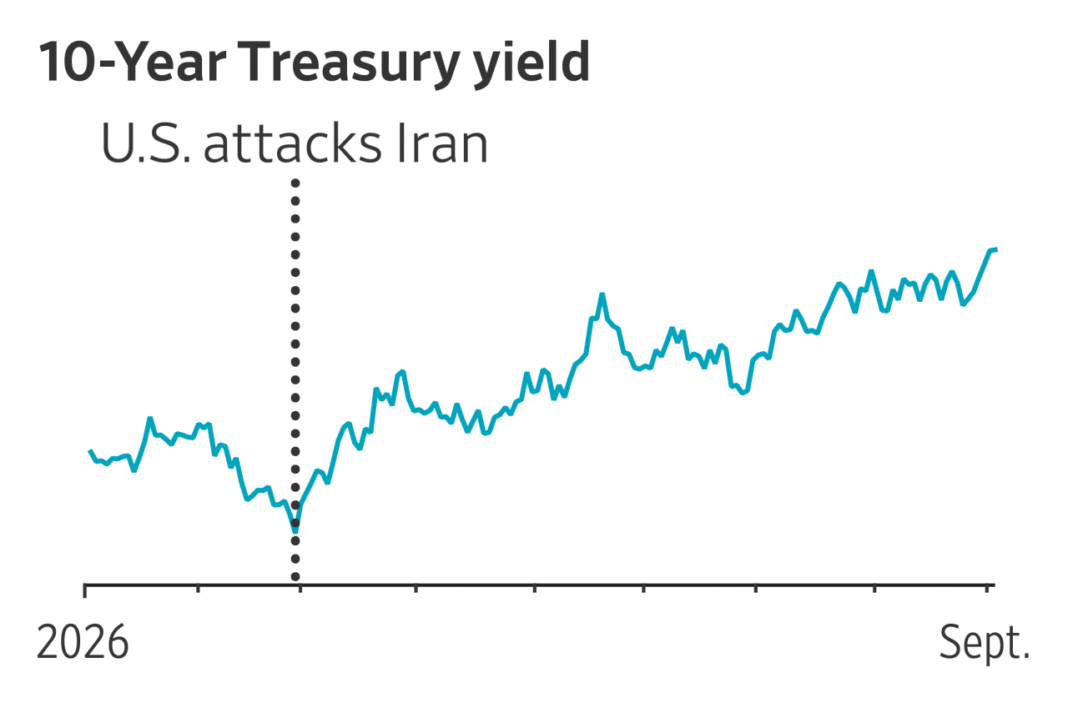
Fiscal concerns, Federal Reserve leadership changes, and a surge in AI-related debt issuance are contributing to rising bond yields, according to market analysts.
The escalating conflict in the Middle East ranks as the primary factor pressuring government bonds. Investors are seeking clarity on how prolonged hostilities might affect global energy prices and inflation trajectories. Uncertainty surrounding the conflict’s duration has pushed yields upward as traders adjust their expectations for central bank policy.
A second force stems from worsening fiscal conditions in major economies. Government spending levels remain elevated, while debt issuance continues to expand. Bond investors are demanding higher compensation for the increased supply of sovereign paper. That dynamic has widened yield premiums on longer-dated securities.
The upcoming change in Federal Reserve leadership adds another layer of complexity. Market participants are speculating on the pace of future interest rate adjustments under a new chair. This transition creates unpredictability, prompting some investors to reduce their bond holdings until the policy direction becomes clearer.
The rapid growth of corporate debt linked to artificial intelligence infrastructure is also absorbing significant capital. Tech giants are issuing large volumes of bonds to fund data centers and computing capacity. This heavy issuance competes directly with government bonds for investor dollars.
The combination of these four elements has created a persistent upward drift in yields over recent weeks. The key question for bondholders remains whether these pressures will subside or continue to escalate alongside geopolitical and political developments. Each factor influences the other, making near-term market forecasts particularly difficult for portfolio managers.