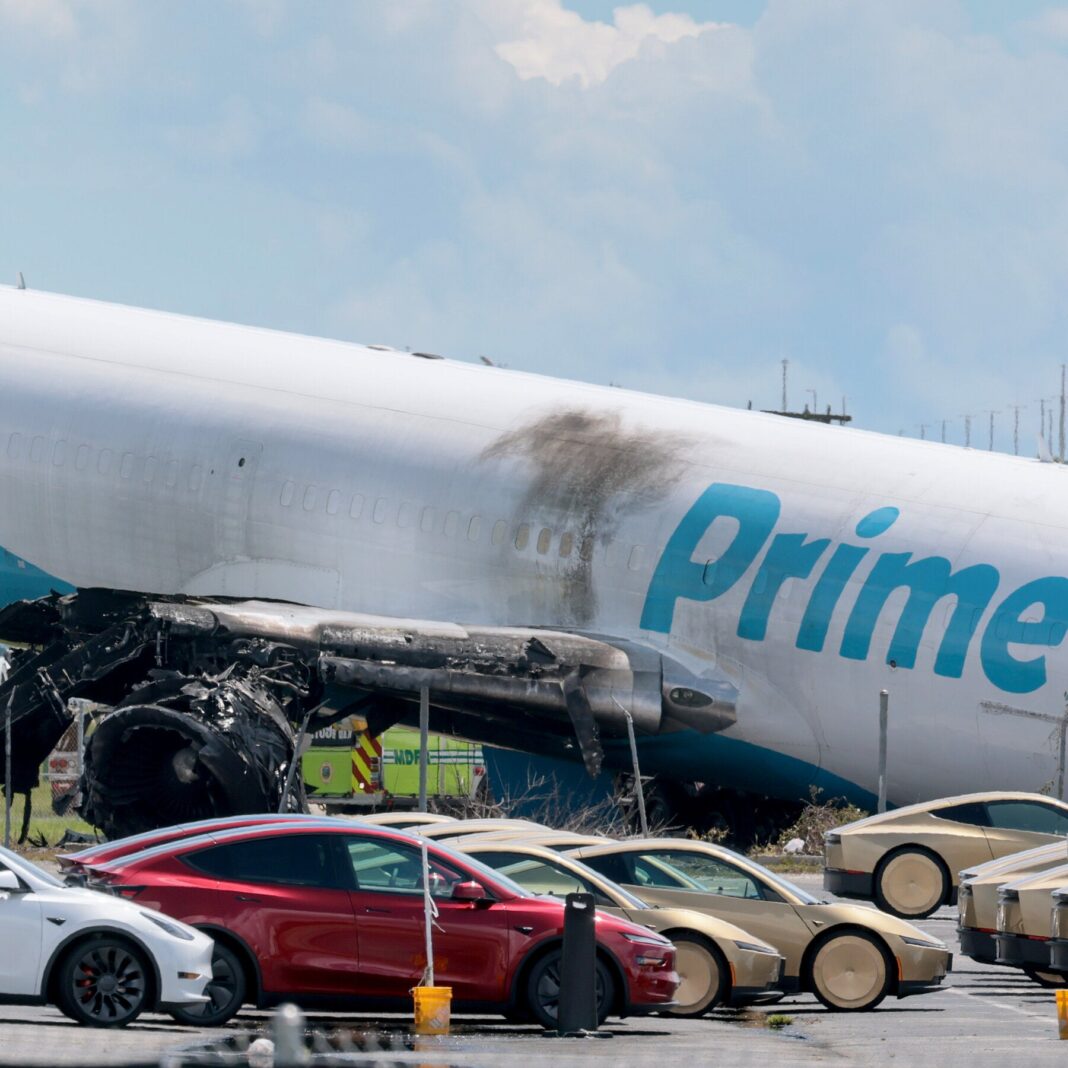
Federal investigators released a report on the 2023 Amazon cargo jet crash in Miami. The National Transportation Safety Board found that pilots never received warnings about dangerous wind conditions. The report highlights serious gaps in weather communication before the accident.
The two pilots had never flown together before the day of the crash. They met for the first time shortly before departure. This lack of familiarity may have affected their teamwork during a critical landing phase.
The aircraft approached the runway at an abnormally high speed. Standard landing procedures require a slower, more controlled descent. The excessive speed reduced the margin for error as the plane touched down.
No wind shear alerts or microburst warnings reached the cockpit. Such warnings help pilots adjust their approach or abort a landing. Their absence left the crew unaware of sudden wind shifts near the ground.
The crash occurred during a period of unstable weather in the Miami area. Thunderstorms and shifting winds were reported nearby. However, the specific threats to the flight path were not communicated.
The NTSB report also noted that the crew did not discuss the high speed before landing. Neither pilot called for a go-around. The plane struck the runway hard and burst into flames.
Federal investigators recommend improved weather warning systems for cargo flights. They suggest better coordination between dispatchers and air traffic control. The goal is to prevent similar communication failures in the future.
Amazon has not commented publicly on the report’s findings. The airline operator involved is reviewing the recommendations. Safety experts say the case highlights risks in mixed crew operations.
The crash destroyed the aircraft and killed both pilots. No survivors were found at the scene. The investigation continues into other possible contributing factors.