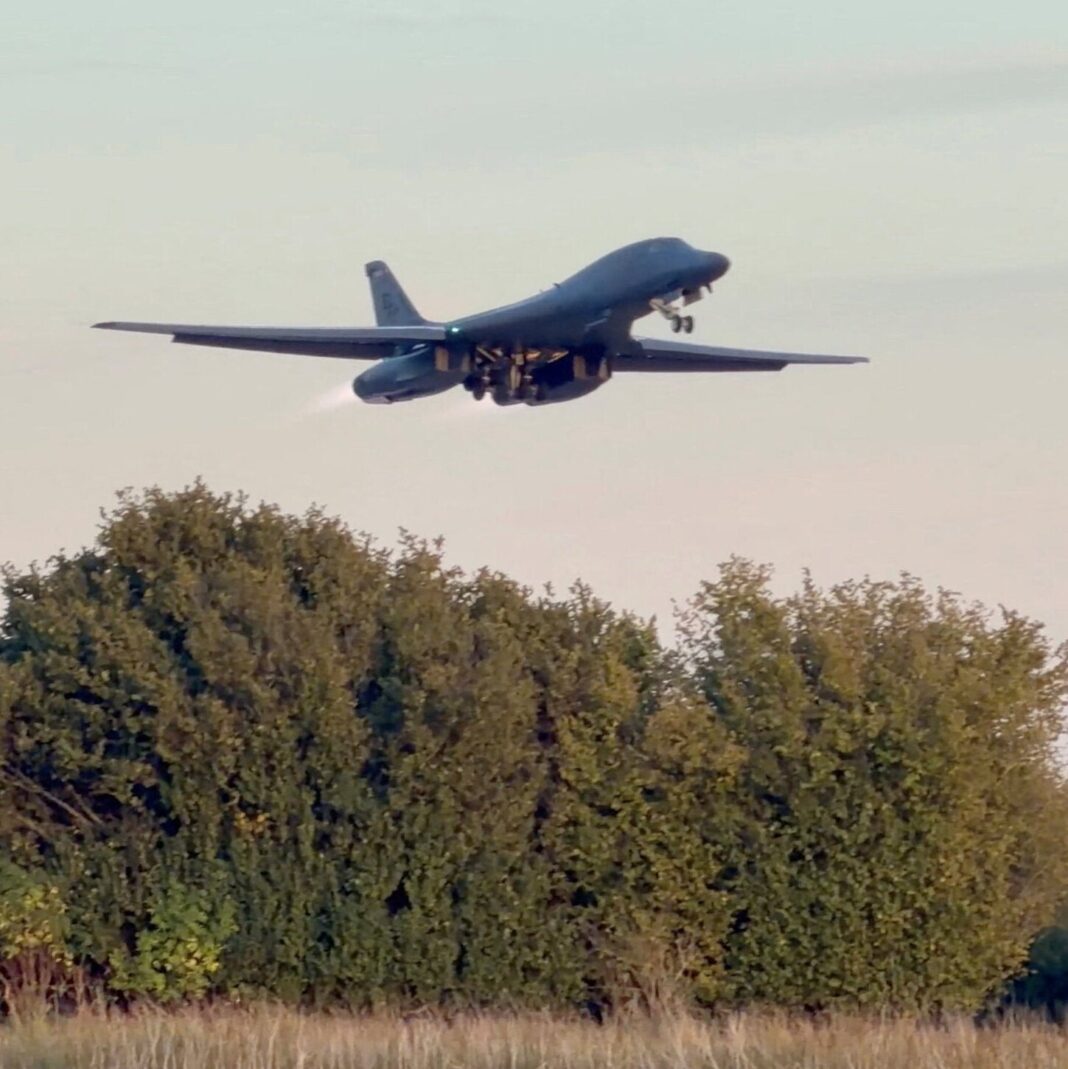
U.S. and British officials reported that 12 B-1 Air Force bombers were withdrawn from R.A.F. Fairford air base. The withdrawal followed intelligence indicating a potential drone attack. Iran’s Islamic Revolutionary Guard Corps allegedly ordered the threat.
The bombers left the British base as a precautionary measure. Officials did not specify the exact timing of the move. The decision aimed to protect military assets and personnel.
The Islamic Revolutionary Guard Corps is a branch of Iran’s armed forces. It has previously been linked to regional drone operations. The unit often operates outside conventional military channels.
R.A.F. Fairford serves as a forward operating base for U.S. strategic bombers. The base hosts periodic deployments and joint training exercises. Its location makes it a key asset for NATO operations.
Drone threats have become a growing concern for military installations. Small unmanned aircraft can evade traditional air defenses. They offer a low-cost method for asymmetric attacks.
The withdrawal highlights rising tensions between the U.S. and Iran. Both nations have exchanged warnings over regional security. Maritime and air incidents have increased in recent months.
Officials have not confirmed whether the threat was imminent. No drone was intercepted or fired upon. The bombers are expected to return once the risk subsides.
The incident underscores the vulnerability of fixed air bases. Defending against drone swarms remains a technical challenge. Military planners are adapting to these evolving threats.