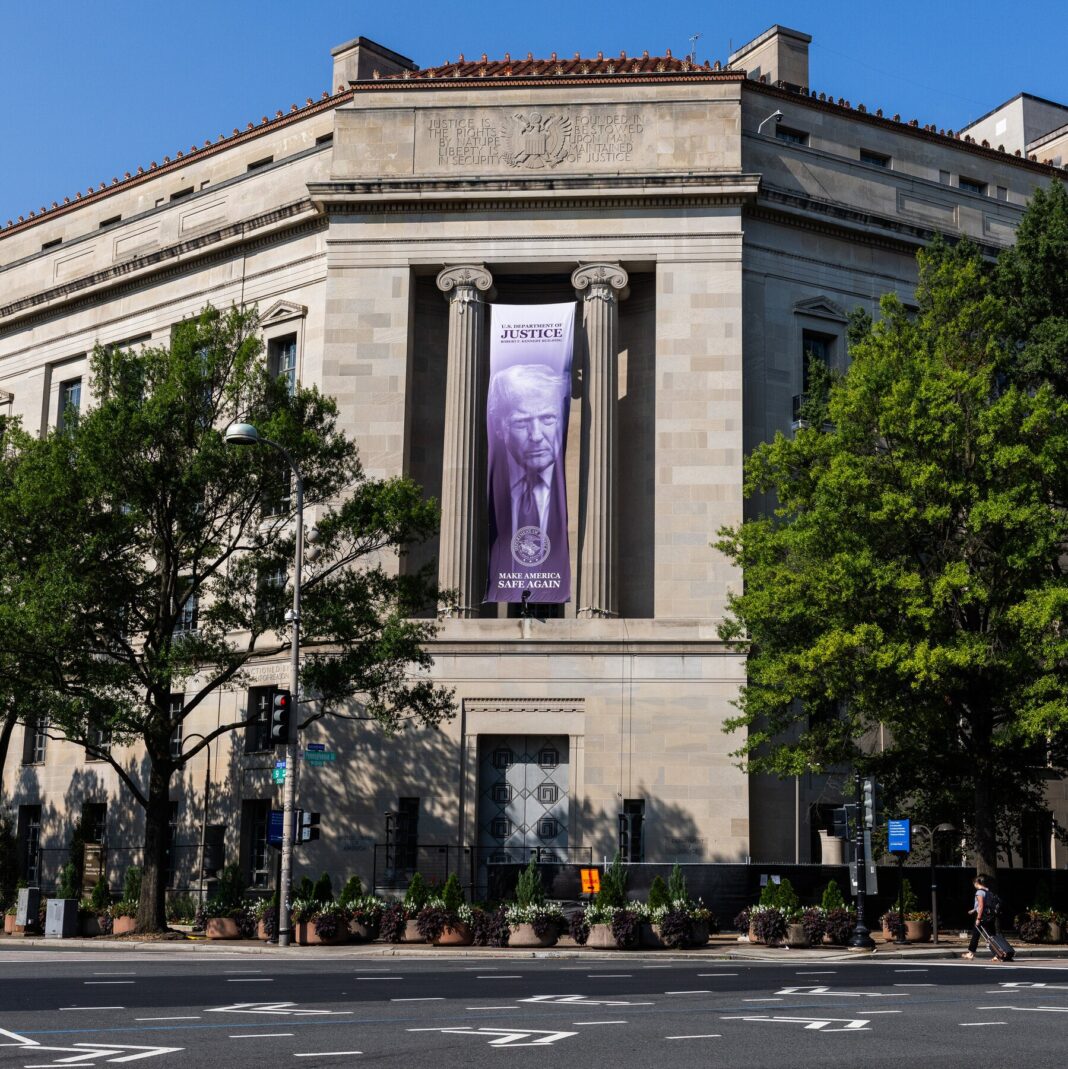
President Trump’s allies launched a sweeping Justice Department inquiry to prove a “grand conspiracy” against him. The effort has since buckled under staffing shake-ups and internal disputes. Investigators have also struggled to find supporting evidence.
The inquiry began with broad ambitions to uncover coordinated wrongdoing by political opponents. Officials expected a far-reaching case that would validate longstanding claims. Those expectations have not materialized.
Staffing problems emerged early and worsened over time. Several prosecutors and investigators left or were reassigned. The turnover slowed progress and disrupted key lines of inquiry.
Internal disagreements further complicated the effort. Justice Department officials clashed over legal strategy and the scope of the probe. Some questioned whether the evidence justified the investigation’s direction.
Evidence has been difficult to obtain despite aggressive tactics. Witnesses offered conflicting accounts and little documentation. Grand jury testimony produced few concrete leads.
The president’s allies publicly defended the inquiry while privately expressing frustration. They blamed career officials for resisting their demands. Critics said the probe relied on conspiracy theories rather than facts.
Legal analysts noted that sprawling investigations often collapse without clear evidence. The Justice Department has not announced major charges connected to the core claims. The inquiry continues amid uncertainty about its future.