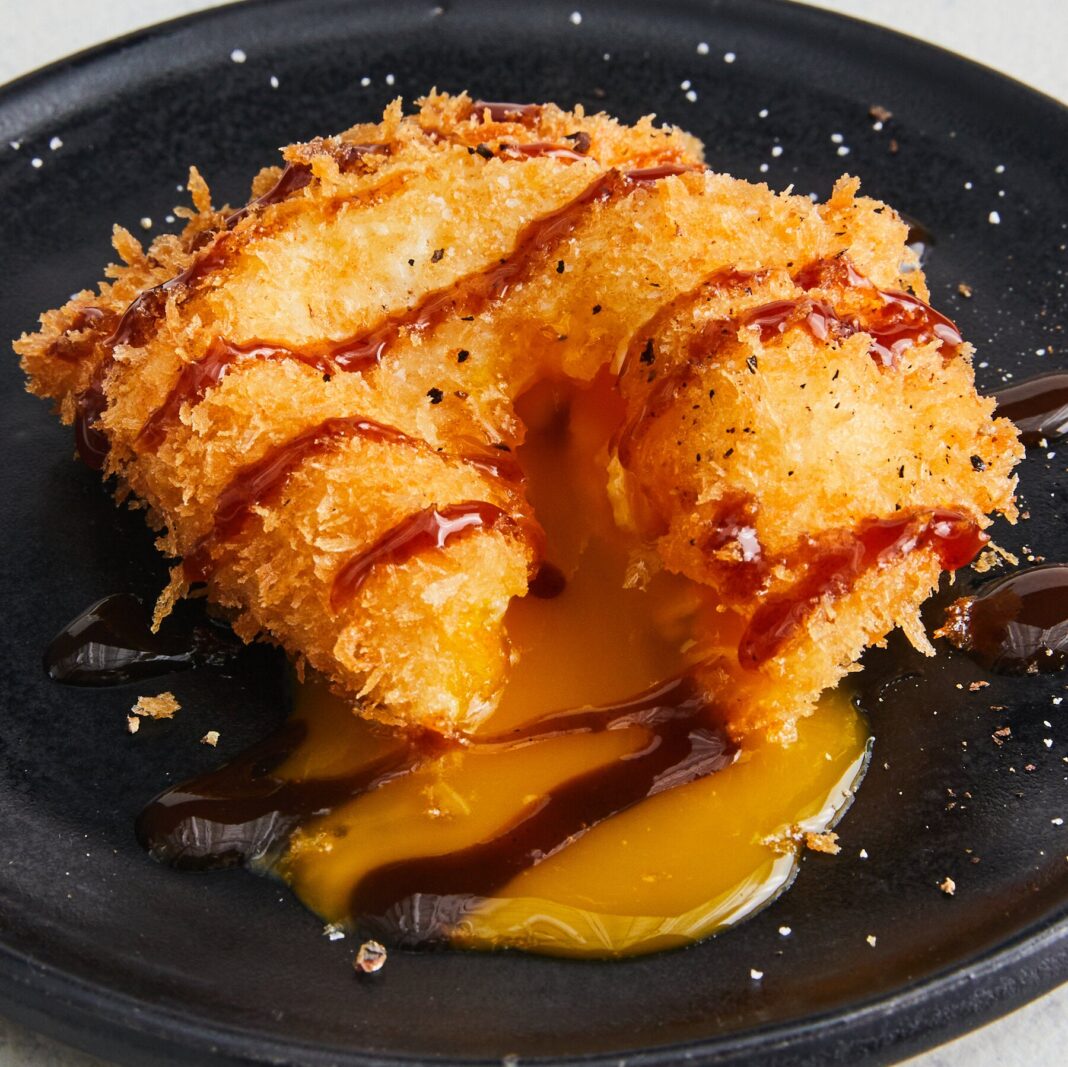
Egg katsu has become a favorite online, drawing attention for its crisp coating and soft, jammy center. The dish is a variation of Japanese katsu, where a boiled egg replaces the usual meat cutlet. It works as a snack, a topping, or a standalone meal at any time of day.
The technique is simple but precise. A soft-boiled egg is chilled, peeled, and carefully dried before coating. Any moisture on the surface can prevent the breading from sticking properly.
The egg is then rolled in flour, dipped in beaten egg, and covered in panko breadcrumbs. A second layer of egg and panko creates a sturdier shell that holds up during frying. This double coating is key to the dish’s signature crunch.
Frying requires steady heat, typically around 350 degrees Fahrenheit. The coated egg cooks quickly, usually in under a minute, since the inside is already cooked. Overfrying risks a dark crust and an overcooked, rubbery yolk.
The result is a contrast in textures: a golden, brittle exterior around a creamy, soft-cooked egg. It can be served over rice, added to curries, or eaten on its own with a dipping sauce. The dish’s visual appeal has helped it spread widely on social media.
Home cooks can adjust the yolk firmness by varying the initial boiling time. A six-minute boil yields a runny center, while eight minutes produces a firmer set. Chilling the eggs in ice water stops the cooking and makes peeling easier.
Egg katsu offers a low-cost way to try a restaurant-style dish at home. The ingredients are basic, and the process demands attention but no special equipment beyond a pot and a frying pan. For many, the appeal lies in turning a simple egg into something unexpected.