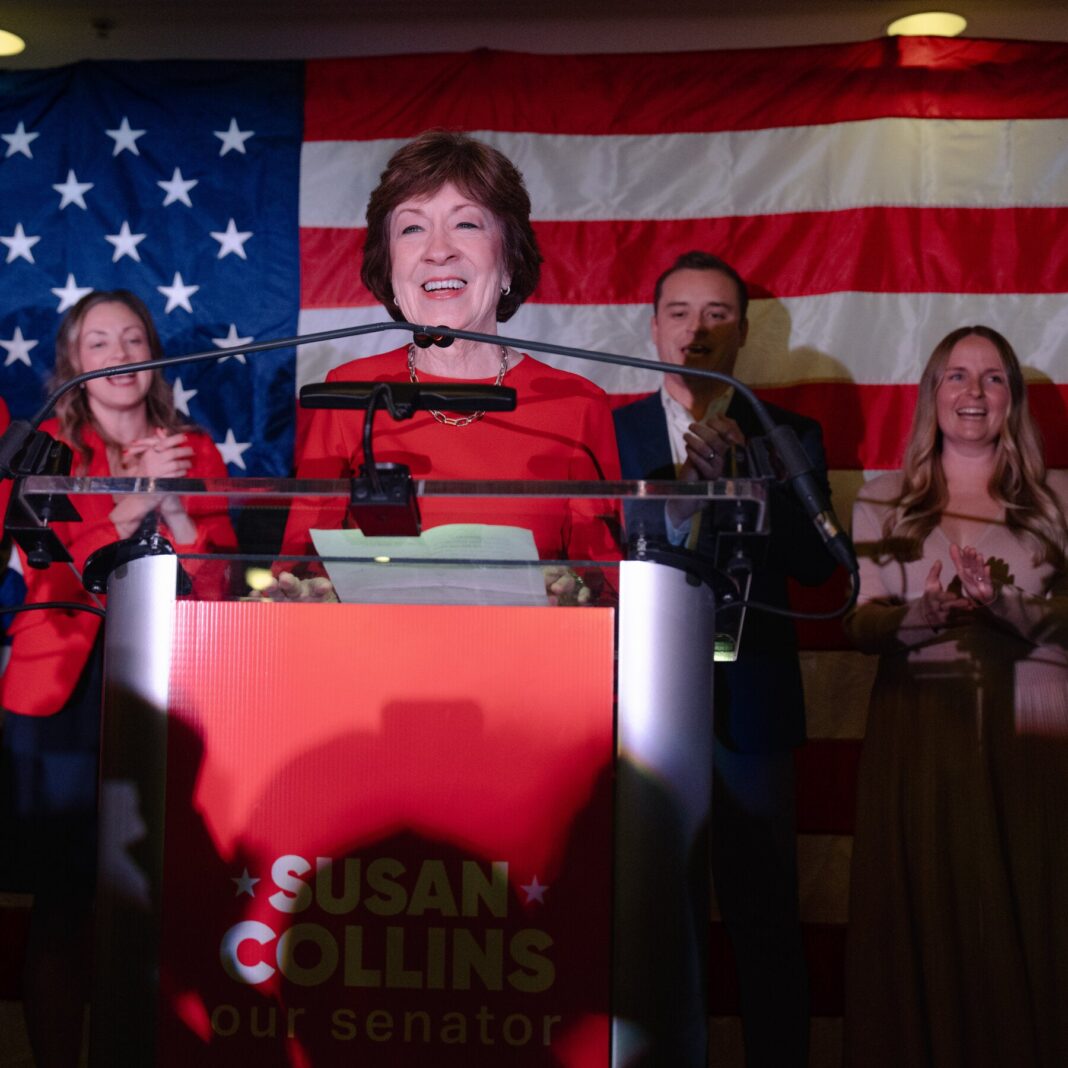
Senator Susan Collins has lost her seat in the U.S. Senate. The Maine Republican fell to a challenger amid intense anti-Trump sentiment in her state.
Collins had survived difficult election cycles before. She built a reputation as a centrist willing to break with her party on key votes. That approach had kept her in office for decades.
This cycle proved different. Maine voters showed strong opposition to President Trump and his influence on the Republican Party. Collins could not separate herself from that backlash.
Her campaign emphasized independence and local priorities. Those themes failed to resonate with voters focused on national politics. The political ground shifted faster than her message could adapt.
Turnout was high across the state. Democratic and independent voters united behind her opponent. The coalition proved too broad for Collins to overcome.
Collins had won tough races in 2018 and 2016. Those victories relied on splitting the opposition. This time, voters remained unified against her.
Her defeat marks a significant loss for Senate Republicans. It also signals the reach of anti-Trump sentiment in once-reliable battlegrounds. Maine now joins a growing list of states where that backlash has reshaped races.