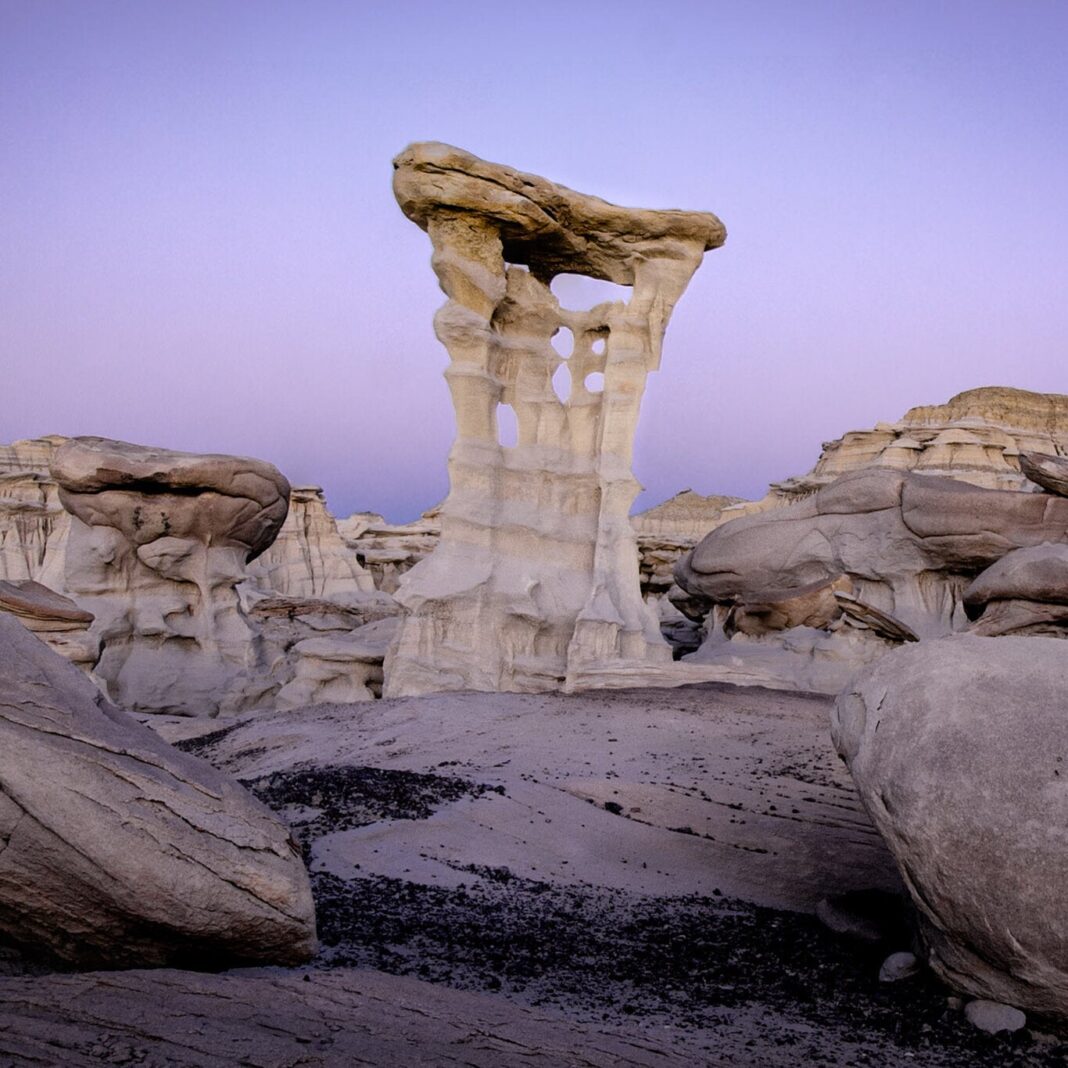
The Alien Throne, a well-known rock formation in New Mexico, collapsed after heavy rains drenched the region. The oddly shaped pillar stood about 15 feet tall and drew visitors to the remote badlands of the Navajo Nation.
Torrential rain saturated the surrounding terrain before the structure gave way. The exact timing of the collapse was not immediately clear. Local officials confirmed the loss days later as conditions improved.
The formation was often compared to a throne because of its wide, flattened top and narrow base. Photographers prized it for its otherworldly silhouette against the desert sky. Social media helped turn the site into a popular destination in recent years.
Its remote location required visitors to travel over rough dirt roads. The route discouraged casual tourists but rewarded those who made the trip. Many described the formation as a highlight of the region’s stark landscape.
The collapse marks the second loss of a striking rock formation in the area in less than a month. Erosion and intense weather have long shaped and reshaped this terrain. Geologists note that such pillars are naturally fragile and temporary.
Heavy rain can weaken the soft sandstone that holds these structures together. Water seeps into cracks and loosens the bonds between rock layers. A single storm can bring down formations that stood for centuries.
The loss has disappointed travelers who had planned to see the Alien Throne. Guides and local businesses expect a drop in visits to that particular site. Other formations in the region remain accessible and continue to attract interest.
Land managers remind visitors that desert landscapes change quickly and unpredictably. They urge caution around fragile rock structures, especially after storms. The region’s geology will keep evolving, even as individual landmarks disappear.