
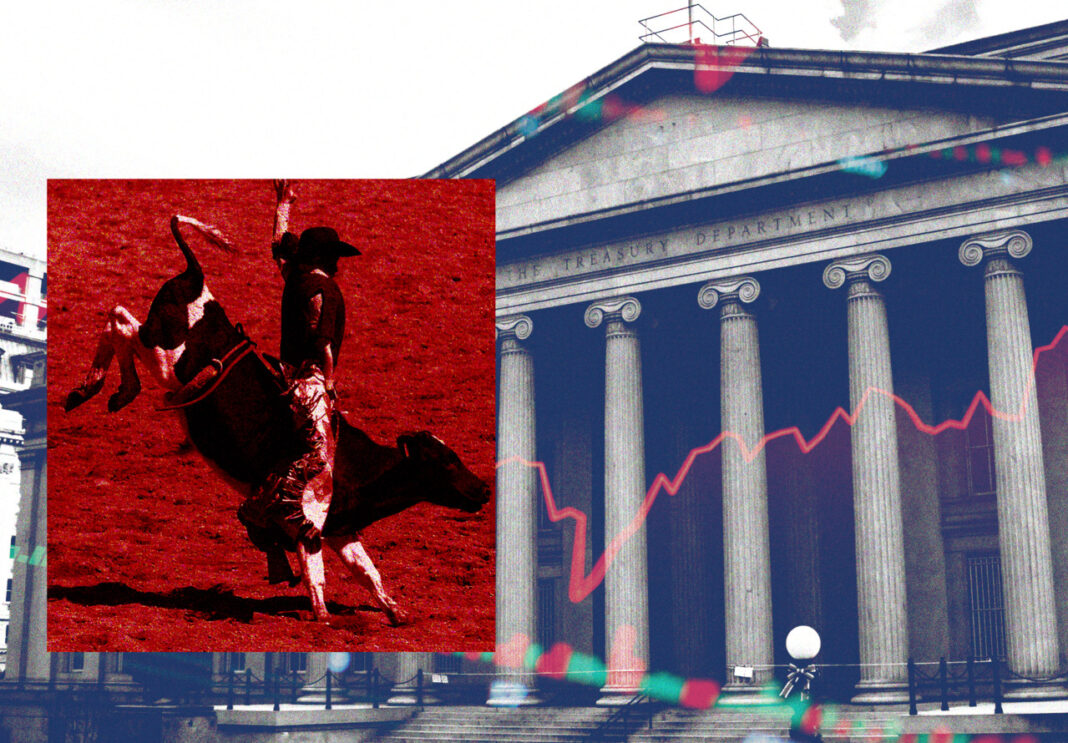
Bond-market volatility is rising sharply, and investors may need to adjust their expectations. Market conditions that once seemed temporary now look increasingly persistent.
The shift comes as Treasury yields swing widely on economic data and shifting interest-rate expectations. Rapid moves have become more common than in recent years.
David Royal at Thrivent notes that longer-duration bonds can act as “insurance” if the AI trade falters. Such bonds tend to gain when investors seek safety during equity selloffs.
Longer-duration bonds are more sensitive to interest-rate changes. That sensitivity can help in a flight to quality, but it also amplifies losses when yields climb.
Elevated volatility raises the cost of hedging and complicates duration management. Investors who rely on bonds for stability must weigh those tradeoffs more carefully.
The potential for a new normal in volatility has broad implications for portfolios. Balanced strategies may need more frequent review and clearer risk limits.
Shifting rate expectations remain a key driver of the turbulence. Investors should watch central-bank signals and economic data for signs of further swings.